¡Acompáñanos a viajar por el mundo de los libros!
Añadir este libro a la estantería
Grey
Escribe un nuevo comentario Default profile 50px
Grey
Suscríbete para leer el libro completo o lee las primeras páginas gratis.
All characters reduced
Doctrine of the Mean - The Confucian Path to Balance Harmony and Moral Clarity - cover

Doctrine of the Mean - The Confucian Path to Balance Harmony and Moral Clarity

Zi Zisi, Zenith Evergreen Literary Co.

Editorial: Zenith Evergreen Literary Co.

  • 0
  • 0
  • 0

Sinopsis

Harmony lies not in extremes, but in the balance between them.

The Doctrine of the Mean, attributed to Zisi, the grandson of Confucius, is one of the core texts of Confucian philosophy. It explores the path to moral development, societal harmony, and spiritual balance by embracing moderation, reflection, and alignment with nature.

This elegant and thought-provoking classic teaches how to live a virtuous life—by following the Middle Way—a concept that has shaped Chinese ethics, governance, and cultural tradition for over two millennia.

💬 "A guiding light in turbulent times—this text teaches how to walk the path of virtue without veering to extremes."

🧭 Why Readers Embrace This Work:
One of the Four Confucian Classics, central to Chinese philosophy

For readers of The Analects, Tao Te Ching, and The Great Learning

Offers practical wisdom for leaders, thinkers, and mindful readers

📣 Live with Purpose. Act with Balance.
Buy Doctrine of the Mean today and begin your journey toward clarity and self-cultivation.
Disponible desde: 22/04/2025.
Longitud de impresión: 37 páginas.
Otros libros que te pueden interesar

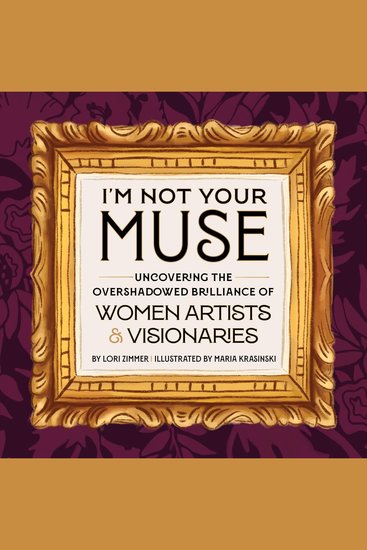
  • I'm Not Your Muse - Uncovering the Overshadowed Brilliance of Women Artists & Visionaries - cover

    I'm Not Your Muse - Uncovering...

    Lori Zimmer

    • 0
    • 0
    • 0
    An illuminating exploration of 31 incredible women—across art, architecture, dance, literature, and more—whose culture-defining contributions have, until now, been overshadowed by their role as "muses" to history's better-known men.  What does it mean to be someone's "muse"? Historically, to be called a “muse” among artistic circles has been marketed as a flattering title. It is a commendation that most often refers to a woman whose vivacity and beauty are the source of inspiration for a (usually) male artist or creator. Perhaps her inspiring presence is even credited in the story of his success. But the very concept of a muse underestimates these women and their abilities. At its root, muse is a support role, the title a consolation prize that claims to recognize a woman’s greatness—but only in her support of another.I'm Not Your Muse reclaims the narrative of 31 of these extraordinary women, from "The Mother of the Movies" Alice Guy-Blaché to Modernist designer Eileen Gray, prima ballerina Maria Tallchief, storied Harlem Renaissance editor Jessie Redmon Fauset, and many more. Each of these women advanced the narrative of culture and society, pushing the boundaries of visual arts, dance and movement, commercial architecture, music, journalism, and the performing arts. Whether by historical accident or cruel design, their contributions have historically been overshadowed by those of their male counterparts, and often collaborators. In this briskly written, incisively researched compendium, author and researcher Lori Zimmer repositions these women as the main characters of their own lives. Each profile is accented with original illustrations—including jaunty portraits in playfully constructed frames—by artist Maria Krasinski. Together, they highlight the contemporary accomplishments and historical legacies of a wide-ranging group of revolutionary women. Featured women include:  Louise Blanchard Bethune  Claude Cahun and Marcel Moore  Minnette de Silva  Clara Driscoll  Jessie Redmon Fauset  Loie Fuller  Martha Gellhorn    Eileen Gray  Belle da Costa Greene  Alice Guy-Blaché  Miss La La  Edmonia Lewis  Neysa McMein  Hildreth Meière  Lucia Moholy  May and Jane Morris    Na Hye-Sŏk  Fernande Olivier  Pan Yuliang    Ethel Reed    Clara Rockmore    Ada Bricktop Smith  Maria Tallchief  Alice B. Toklas  Suzanne Valadon    Baroness Elsa von Freytag-Loringhoven  Leonora Carrington  Remedios Varo  Kati Horna
    Ver libro
  • Forbidden - A 3000-Year History of Jews and the Pig - cover

    Forbidden - A 3000-Year History...

    Jordan D. Rosenblum

    • 0
    • 0
    • 0
    Jews do not eat pig. This (not always true) observation has been made by both Jews and non-Jews for more than three thousand years and is rooted in biblical law. Though the Torah prohibits eating pig meat, it is not singled out more than other food prohibitions. Horses, rabbits, squirrels, and even vultures, while also not kosher, do not inspire the same level of revulsion for Jews as the pig. The pig has become a symbol for people to signal their Jewishness, non-Jewishness, or rebellion from Judaism. 


    Starting with the Hebrew Bible, Jordan D. Rosenblum historicizes the emergence of the pig as a key symbol of Jewish identity, from the Roman persecution of ancient rabbis, to the Spanish Inquisition, to Shakespeare's writings, to modern memoirs of those leaving Orthodox Judaism. The pig appears in debates about Jewish emancipation in eighteenth-century England and in vaccine conspiracies; in World War II rallying cries, when many American Jewish soldiers were "eating ham for Uncle Sam;" and in recent deliberations about the kosher status of Impossible Pork. 


    All told, there is a rich and varied story about the associations of Jews and pigs over time, both emerging from within Judaism and imposed on Jews by others. Expansive yet accessible, Forbidden offers a captivating look into Jewish history and identity through the lens of the pig.
    Ver libro
  • Badass Living - cover

    Badass Living

    Victor Waid

    • 0
    • 0
    • 0
    Feeling stuck in life? BADASS LIVING is your no-nonsense guide to rediscovering your energy, redefining your goals, and reigniting your passion for living. Step onto the path to personal transformation and take back control of your journey.
    Ver libro
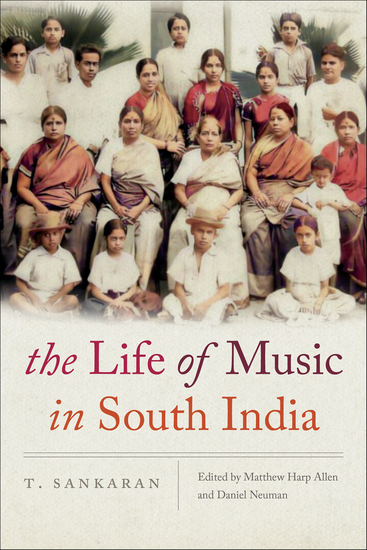
  • The Life of Music in South India - cover

    The Life of Music in South India

    T. Sankaran

    • 0
    • 0
    • 0
    This book offers an account of Carnatic music culture drawing on the knowledge of T. Sankaran, a musician raised in an illustrious non-Brahmin devadasi family, and his long affiliation with cultural institutions including All India Radio (AIR) and the Tamil Isai Sangam (Tamil Music Academy). Sankaran examines the cultural and social matrix in which Carnatic music was cultivated and consumed in mid-twentieth century India, including the ways that musicians negotiated caste politics and the double standard for male and female musicians. The memoir provides insight into the way AIR worked as a modern, bureaucratic institution, and how the opening of government music colleges interacted with caste politics and shifted women's participation in public performance. The book is polyvocal, as Sankaran's writing is interwoven with passages from Daniel M. Neuman's book The Life of Music in North India, which inspired Sankaran's project, as well as transcripts from interviews with Sankaran by Matthew Allen. Includes rare archival photos.
    Ver libro
  • We Will Not Cease - cover

    We Will Not Cease

    Archibald Baxter

    • 0
    • 0
    • 0
    We Will Not Cease is the unflinching account of New Zealander Archibald Baxter's brutal treatment as a conscientious objector during World War I. 
    In 1915, when Baxter was 33, he was arrested, sent to prison, then shipped under guard to Europe where he was forced to the front line against his will. Punished to the limits of his physical and mental endurance, Baxter was stripped of all dignity, beaten, starved and left for dead by the New Zealand military. In the final attempt to discredit him authorities consigned him to a mental institution, an experience that would haunt him for the rest of his life.
    Ver libro
  • You Got In! Now What? - 100 Insights into Finding Your Best Life in College - cover

    You Got In! Now What? - 100...

    James T. Hamilton

    • 0
    • 0
    • 0
    Once you've been admitted to college, the next step is to develop a strategy of how to find your best life there. But for decades, Professor James T. Hamilton has seen students struggle with their college journey. Some avoid challenging experiences, follow a path of familiar expectations, and rely on shortcuts. Others aim for perfection, ignore their friends and health, labor over what subjects to study, and neglect spending time outside the classroom. The pressure to make college valuable and interesting can feel overwhelming. 


    If only students could learn how others have navigated these challenges. You could ask alums to look back on friendships and college-to-career paths and provide advice. Now, you don't have to wish because You Got In! Now What? tackles the burning questions you have. 


    Hamilton designs lessons to help you find purpose, manage time, maintain friendships and family relationships, stay physically and mentally healthy, and choose classes, majors, and careers. Each lesson is accompanied by an essay based on research and reflections from students, alums, and professors to provide observations for how you can embrace the best that college has to offer. With these insights, you'll explore new ideas, meet people, have adventures, and most importantly, beyond just earning a degree, get an education.
    Ver libro