¡Acompáñanos a viajar por el mundo de los libros!
Añadir este libro a la estantería
Grey
Escribe un nuevo comentario Default profile 50px
Grey
Suscríbete para leer el libro completo o lee las primeras páginas gratis.
All characters reduced
Violin part "3 Choros" by Zequinha De Abreu for Violin & Piano - Levanta Poeira - Os Pintinhos No Terreiro - Sururu Na Cidade - cover

Violin part "3 Choros" by Zequinha De Abreu for Violin & Piano - Levanta Poeira - Os Pintinhos No Terreiro - Sururu Na Cidade

Zequinha De Abreu

Editorial: Glissato Edizioni Musicali

  • 0
  • 0
  • 0

Sinopsis

Violin part of 3 Choros by Zequinha De Abreu (author of Tico Tico) arranged for Violin and Piano, Intermediate level, duration 7.00 (+-). Content titles: 1. Levanta Poeira 2. Os Pintinhos No Terreiro 3. Sururu Na Cidade. Piano part available in series. Scan Qr code (in cover) for audio demo or visit www.glissato.it. product code: EG1439.

	To enhance the understanding of the compositions and the maestro behind them, multilingual sheets are provided. These sheets, invaluable for concert presentations, are available in English, French, German, Spanish, Portuguese, Italian, Korean, Japanese, and Chinese.
	Choro, also popularly called chorinho ("little cry" or "little lament"), is an instrumental Brazilian popular music genre which originated in 19th century Rio de Janeiro. Despite its name, the music often has a fast and happy rhythm. It is characterized by virtuosity, improvisation and subtle modulations, and is full of syncopation and counterpoint. Choro is considered the first characteristically Brazilian genre of urban popular music.

- partition pour violon et piano, Geige und Klaviernoten, partitura para violín y piano, partitura para violino e piano, noder for violin og klaver, bladmuziek voor viool en piano, noter for fiolin og piano, παρτιτούρα για βιολί και πιάνο, скрипка та ноти для піаніно, hegedű és zongora kották, partitură pentru vioară și pian -
Disponible desde: 11/03/2022.

Otros libros que te pueden interesar

  • A methodical approach to learning and playing the historical clarinet History practical experience fingering charts daily exercises and studies repertoire and literature guide 2nd edition - cover

    A methodical approach to...

    Evgeni Orkin

    • 0
    • 0
    • 0
    This practice-oriented book is aimed at musicians who are interested in playing the historical clarinet but have so far set or had to set other professional priorities. It contains - without any scientific claim - an overview of historical developments of the instrument as well as considerations on the choice of the instrument in the context of historically informed performance (HIP). Fingering charts for the individual categories of historical clarinet instruments are presented graphically, as is customary today. Finger exercises and studies are specially developed and designed to the fingering problems of historical instruments.Information and tips from practice are intended to be a guide for those interested and to help answering questions. A repertoire excerpt and references to further specialist literature are intended to stimulate the deepening of already acquired knowledge.
    Ver libro
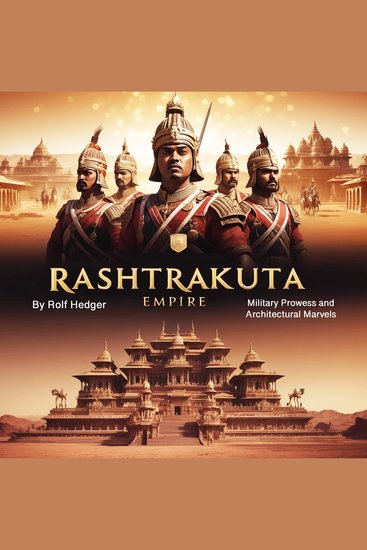
  • Rashtrakuta Empire - Military Prowess and Architectural Marvels - cover

    Rashtrakuta Empire - Military...

    Rolf Hedger

    • 0
    • 0
    • 0
    The Rashtrakutas were one of the most powerful dynasties in Indian history, ruling vast territories across the Deccan and beyond. Their origins, however, remain a subject of debate among historians due to conflicting inscriptions and interpretations. Some sources trace their roots to the Kannada-speaking regions, while others suggest connections to northern India. Despite the uncertainty, it is widely accepted that the Rashtrakutas emerged as a prominent force in the Deccan by the 8th century. 
    The dynasty first gained prominence under the rule of Dantidurga, who established Rashtrakuta authority by overthrowing the Chalukyas of Badami. However, evidence suggests that the Rashtrakutas had been a significant regional power even before his reign. The earliest references to the name "Rashtrakuta" appear in inscriptions from the 6th and 7th centuries, indicating that they were already influential feudatories before rising to imperial status. Some scholars believe they originally served as administrators or military governors under the Chalukyas before asserting their independence. 
    The question of the dynasty’s ethnic and linguistic identity has long been debated. Some sources claim that they were of Kannada origin, citing inscriptions and literary works composed in the Kannada language under their patronage. Others argue that they may have had northern Indian roots, pointing to their interactions with Rajput and Gurjara clans. Regardless of their precise origins, the Rashtrakutas embraced the cultural diversity of the Deccan, ruling over a population that spoke multiple languages, including Kannada, Sanskrit, and Marathi.
    Ver libro
  • Cliché-Verre - Miniatures On Glass - cover

    Cliché-Verre - Miniatures On Glass

    Brian Allan Skinner

    • 0
    • 0
    • 0
    Cliché-verre is a technique of etching and painting directly on photographic negatives. The term means “glass negative” in French and is as old as photography itself, dating to the 1840s and earlier. The first successful photographic process involved coating glass plates with light-sensitive chemicals from which reversed (positive) prints could be made. Artists experimented with drawing, etching, and combining images directly on the glass, resulting in fanciful black-and-white prints. But few artists were inspired to develop the idea further until the advent of color photography in the early 20th Century. 
    The Magic Lantern, long predating photography, was invented by Christiaan Huygens, a Dutch astronomer and physicist, in the 1600s. It is a simple device for projecting images, based upon the centuries-old principles of the “camera obscura” or “darkened room.” When the photographic process evolved to  
    film rather than glass plates, the technology spread. Color film arrived in the 1930s. There were now both film negatives and positives (slides). 
    Brian Allan Skinner is the author of six volumes of illustrated fiction. His experiments with cliché-verre began in the 1960s. Here are 50 examples of his work from the past half-century, in brilliant color. In the epilogue, he explains his process in detail.
    Ver libro
  • The 5 Steps to Get Your Songs Heard - A Congregational Songwriting Plan - cover

    The 5 Steps to Get Your Songs...

    Stephen Robert Cass

    • 0
    • 0
    • 0
    Do you have the dream of honoring God and hearing your songs sung in local churches? 
    Throw away the thinking that says you're not a good enough songwriter. 
    Any person called by God to write songs can fulfill their dreams. Young or old. Experienced writer or not. Let me show you how to get your songs heard by learning the ways of congregational songwriting in this 2023 Christian Indie Award finalist book. 
    Would you like a well-defined process to help make that a reality? Join Stephen Robert Cass as he shines a light on the pathway of ministry and song success showing you the value of congregational songwriting. 
    Stephen Robert Cass has been playing, singing, and leading worship for over 50 years. He has 70+ songs in his CCLI catalog and wants to show you and like-minded songwriters how to get your songs published there. Fulfill your dreams and honor God by learning this unique songcraft, using custom tools and a blueprint in touch with the heart of worship. 
    This strategy and the custom song crafting tools are inspired by Proverbs 27:17, "As iron sharpens iron, so we sharpen each other." This plan finds strength in God's wisdom and the power of group learning. Let it take your songs to churches in your community and around the world.
    Ver libro
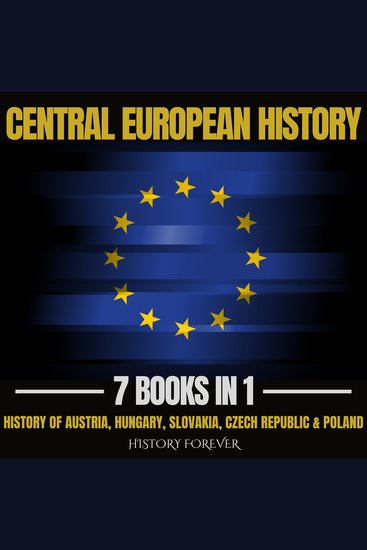
  • Central European History 7 Books In 1 - History Of Austria Hungary Slovakia Czech Republic & Poland - cover

    Central European History 7 Books...

    HISTORY FOREVER

    • 0
    • 0
    • 0
    Book 1 - The History Of Hungary: Pagan Nomads To Kingdom Of Hungary: Magyars, Austro-Hungarian Empire And The Royal Hungarian Army In World War 1 & 2 
    Book 2 - Hungarian History: Hungary In World War 1 & 2, The Golden Age Of Football, The Worst Inflation Ever Recorded And The Collapse Of Communism  
    Book 3 - History of Czech Republic & Yugoslavia: Bohemia, Czechoslovakia, Czech Republic & Czechia 
    Book 4 - History of Czechoslovakia: Czech Republic, Slovakia, Czechia & Habsburg Monarchy 
    Book 5 - History of Poland between 966-1919: The Rise and Fall of the Polish Lithuanian Commonwealth 
    Book 6 - History Of Poland Between 1933-1945: Holocaust In Auschwitz & Genocide Of The European Jews 
    Book 7 - Polish History Between 1919-2022: Communism To Capitalism: The Sovietization Of Poland, Poznan Protest And Modern Capitalist Poland
    Ver libro
  • The Mysterious Romance of Murder - Crime Detection and the Spirit of Noir - cover

    The Mysterious Romance of Murder...

    David Lehman

    • 0
    • 0
    • 0
    Why do we keep returning to Agatha Christie's ingenious puzzles and Raymond Chandler's hard-boiled murder mysteries? What do spy thrillers teach us, and what accounts for the renewed popularity of morally ambiguous noirs? In The Mysterious Romance of Murder, the poet and critic David Lehman explores a wide variety of outstanding books and movies—some famous (The Maltese Falcon, Double Indemnity), some known mainly to aficionados—with style, wit, and passion. 


    Lehman revisits the smoke-filled jazz clubs from the classic noir films of the 1940s, the iconic set pieces that defined Hitchcock's America, the interwar intrigue of Eric Ambler's best fictions, and the intensity of attraction between Humphrey Bogart and Lauren Bacall, Robert Mitchum and Jane Greer, Cary Grant and Ingrid Bergman. He also considers the evocative elements of noir—cigarettes, cocktails, wisecracks, and jazz standards—and offers five original noir poems (including a pantoum inspired by the 1944 film Laura) and ironic astrological profiles of Barbara Stanwyck, Marlene Dietrich, and Graham Greene. Written by a connoisseur with an uncanny feel for the language and mood of mystery, espionage, and noir, The Mysterious Romance of Murder will delight fans of the genre and newcomers alike.
    Ver libro