¡Acompáñanos a viajar por el mundo de los libros!
Añadir este libro a la estantería
Grey
Escribe un nuevo comentario Default profile 50px
Grey
Suscríbete para leer el libro completo o lee las primeras páginas gratis.
All characters reduced
City Living - cover

City Living

Zara Sagan

Traductor A AI

Editorial: Publifye

  • 0
  • 0
  • 0

Sinopsis

"City Living" offers a comprehensive exploration of urban existence, delving into the practicalities, challenges, and opportunities of metropolitan life in the 21st century. The book examines the intricate balance between urban infrastructure, socioeconomic dynamics, and environmental sustainability, providing readers with a holistic view of modern cities as complex ecosystems.

 
Through a blend of historical context, case studies, and expert insights, the book traces the evolution of urban environments from ancient civilizations to today's megacities. It highlights how effective city living requires a delicate equilibrium between technological innovation, social cohesion, and environmental consciousness.

 
The narrative progresses from fundamental urban concepts to physical aspects of city living, such as housing and transportation, before exploring social dynamics and future urban models. What sets "City Living" apart is its interdisciplinary approach, connecting urban studies with economics, environmental science, and public health.

 
By combining academic rigor with real-world examples and personal narratives, the book offers valuable insights for urban professionals, policymakers, and curious city dwellers alike. It not only analyzes current urban challenges but also presents strategies for creating more livable, sustainable, and equitable urban environments in an era of rapid global urbanization.
Disponible desde: 16/10/2024.
Longitud de impresión: 228 páginas.
Otros libros que te pueden interesar

  • The Meaning of Truth - cover

    The Meaning of Truth

    William James

    • 0
    • 0
    • 0
    The Meaning of Truth by William James is a collection of essays exploring the nature of truth through the lens of pragmatism. James argues that truth is not a fixed, abstract concept but rather a practical relationship between ideas and their consequences. He proposes that the "truth" of an idea lies in its ability to guide action and produce positive results in the world. This pragmatic approach to truth contrasts with traditional philosophical views that often emphasize the correspondence between ideas and reality.
    Ver libro
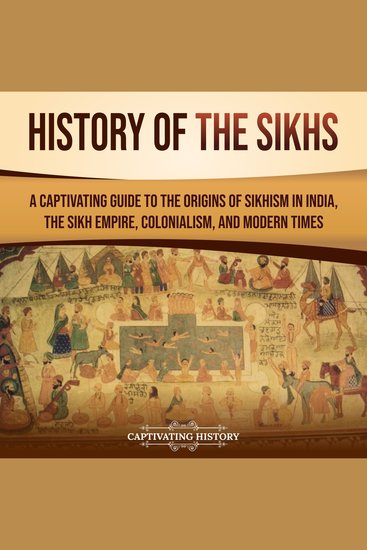
  • History of the Sikhs: A Captivating Guide to the Origins of Sikhism in India the Sikh Empire Colonialism and Modern Times - cover

    History of the Sikhs: A...

    Captivating History

    • 0
    • 0
    • 0
    Embark on an enlightening journey and explore the resilient spirit and profound legacy of the Sikhs. 
    Through engaging storytelling and detailed analysis, this work offers a comprehensive look into the remarkable history of Sikhism, from its origins in the fertile lands of India to its spread across the globe. 
    Here’s what's included:Unveil the Birth of Sikhism: Discover the roots of this world religion, its foundational beliefs, and how it emerged in the complex tapestry of Indian society.Witness the Struggle for Survival: Delve into the dark times of persecution under the Mughals and the unyielding courage of the Sikhs in the face of adversity.From Ashes to Empire: Trace the rise of the Sikh Empire, its golden age, and its eventual fall, painting a picture of an era defined by valiant leadership and formidable challenges.Against All Odds: Learn about the Sikhs’ heroic confrontations with the British Empire, showcasing their strategic prowess and bravery.Warriors of World Wars: Discover the significant contributions of Sikh soldiers in WWI and WWII, highlighting their bravery and dedication on the global stage.The Turmoil of Partition: Understand the heart-wrenching bloodshed and massacres during the partition of India, a pivotal moment that reshaped lives and borders.Struggle for Independence: Gain insights into the contemporary fight for independence, reflecting the ongoing spirit of resilience within the Sikh community.Global Diaspora: Explore the widespread Sikh communities around the world, illustrating their influence and integration into diverse societies. 
    Scroll up and click the “add to cart” button to begin learning about the Sikhs today!
    Ver libro
  • A Brilliant Commodity - Diamonds and Jews in a Modern Setting - cover

    A Brilliant Commodity - Diamonds...

    Saskia Coenen Snyder

    • 0
    • 0
    • 0
    During the late nineteenth century, tens of thousands of diggers, prospectors, merchants, and dealers extracted and shipped over 50 million carats of diamonds from South Africa to London. The primary supplier to the world, South Africa's diamond fields became one of the formative sites of modern capitalist production. At each stage of the diamond's route through the British empire and beyond—from Cape Town to London, from Amsterdam to New York City—carbon gems were primarily mined, processed, appraised, and sold by Jews. 


    In A Brilliant Commodity, historian Saskia Coenen Snyder traces how once-peripheral Jewish populations became the central architects of a new, global exchange of diamonds. Centuries of restrictions had limited Jews to trade and finance, businesses that often heavily relied on internal networks. Jews were well-positioned to become key players in the earliest stage of the diamond trade and its growth into a global industry. Relying on mercantile and familial ties across continents, Jews created a highly successful commodity chain that included buyers, brokers, cutters, factory owners, financiers, and retailers. 


    Working within a diasporic ethnic community that bridged city and countryside, metropole and colony, Jews helped build a flourishing diamond industry and a place for themselves in the modern world.
    Ver libro
  • Crusading against Christians: The History and Legacy of the Catholic Church’s Crusades against Other Christians during the Middle Ages - cover

    Crusading against Christians:...

    Editors Charles River

    • 0
    • 0
    • 0
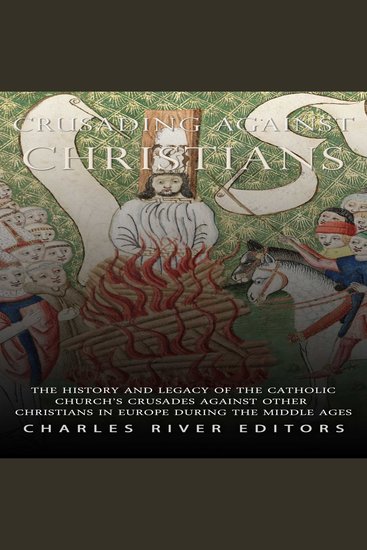
    After the fall of the Western Roman Empire in the 5th century, when Western Europe was governed by a Germanic warrior-caste, the theory of a just and virtuous war took root. The Roman Church enhanced its authority by sanctifying oaths taken for just military purposes, and Bishop Anselm of Lucca (d. 1086) was the first to suggest that military action for the cause of religion could remit sin. At the Council of Clermont in July 1095, Pope Urban II canonized religious war by urging Western Europe's nobility to take up arms in defense of the Byzantine Empire against the Muslims, thus launching the Crusades. Religious military orders such as the Knights of Saint John, the Templars, and the Hospitallers arose, ostensibly founded to protect the weak and the sick but also to extend the boundaries of Christianity and the power of the Church. In Europe, the knight, originally a mounted warrior, became a consecrated soldier of Christ, dedicated to the defense of the Church by solemn vows made before an altar. 
    Naturally, the question remained concerning the use of arms against other Christians. Eastern Christians did not acknowledge the Pope's supremacy, and many held that it was lawful for him to declare a crusade to bring schismatics back to the obedience of Rome. German knights fighting the Orthodox Russians at the Battle on the Ice in 1242 believed this, as did the Hungarian prosecutors of the 1235 invasion of Bosnia, which was thinly disguised as a crusade. The Church even extended the object of crusade to believers in communion with Rome, who refused to obey lawful authority. After peasants revolted against the Prince-Archbishop of Bremen in 1204 over tithes and land rights, Pope Gregory IX was persuaded to declare them heretics and proclaim a crusade against them.
    Ver libro
  • Common Sense - cover

    Common Sense

    Thomas Paine

    • 0
    • 0
    • 0
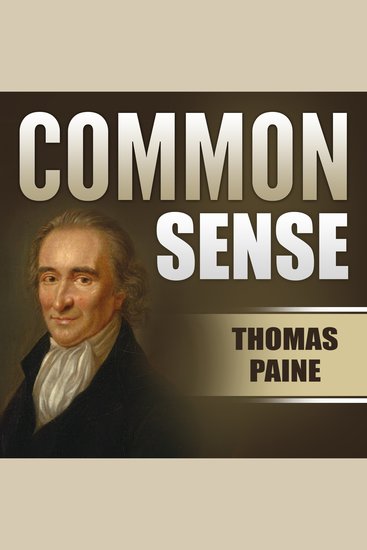
    Common Sense was a pamphlet written by Thomas Paine in 1775-1776 advocating independence from Great Britain to people in the 13 Colonies. Writing in clear and persuasive prose, Paine marshaled moral and political arguments to encourage common people in the Colonies to fight for egalitarian government. It was published anonymously on January 10, 1776, at the beginning of the American Revolution, and became an immediate sensation.  
    It was sold and distributed widely and read aloud at taverns and meeting places. In proportion to the population of the colonies at that time (2.5 million), it had the largest sale and circulation of any book published in American history. As of 2006, it remains the all-time best-selling American title, and is still in print today.  
    Common Sense made public a persuasive and impassioned case for independence, which before the pamphlet had not yet been given serious intellectual consideration. Paine connected independence with common dissenting Protestant beliefs as a means to present a distinctly American political identity, structuring "Common Sense" as if it were a sermon. Historian Gordon S. Wood described "Common Sense" as "the most incendiary and popular pamphlet of the entire revolutionary era".
    Ver libro
  • Little Women Podcast Q&A Your Questions Answered - cover

    Little Women Podcast Q&A Your...

    Niina Niskanen

    • 0
    • 0
    • 0
    How did I get started in Louisa May Alcott's research? Is Beth really just part of the sick girl trope or is there more in her? and why is Friedrich from Germany? Why did the film-makers erase Laurie's backstory? What is Amy's relationship with Catholicism? was Louisa May Alcott religious? Did she want to get married? are Fritz and Laurie really based on men in her life? I've got so many questions from you guys that I will answer them in this excellent Little Women Q&A. One thing that surprised me was that it was really difficult to find studies on Laurie. I was interested in Laurie as an individual, and why he behaves the way he does. I was expecting to find a lot about him because Laurie is a popular character, at least according to the filmmakers, a lot more popular than Friedrich, and I didn't find anything about him. Nothing about him being an orphan. The tricky relationship that he has with his grandfather or why he's hanging in Jo´s apron strings. There are scenes in Little Women where Laurie is annoyed when Jo is lecturing him, but he's still addicted to her care. Maybe Amy's screen portrayals are the reason why there hasn't been that much research made on May Alcott by scholars .I think the same applies to Laurie and Friedrich in films. Laurie is this pretty guy who Jo rejects. Then in a lot of the studies that I read, the writer was asking why did Louisa May Alcott marry Jo to an old German and not to the rich and handsome young Laurie? Okay. Friedrich is not old. He's 39. If you read letters between Louisa and her publisher, Thomas Niles, Louisa was the one who came up with all the marriages.When I was reading these essays, it was so frustrating because the book doesn't show Laurie as this manic pixie dream boy, as the movies do, but more as a seriously troubled young man.
    Ver libro