¡Acompáñanos a viajar por el mundo de los libros!
Añadir este libro a la estantería
Grey
Escribe un nuevo comentario Default profile 50px
Grey
Suscríbete para leer el libro completo o lee las primeras páginas gratis.
All characters reduced
Wild Flower Defense - cover

Wild Flower Defense

Yves Earhart

Traductor A AI

Editorial: Publifye

  • 0
  • 0
  • 0

Sinopsis

Wild Flower Defense: The Hidden Strategies of Survival in Bloom reimagines wildflowers as master strategists in a hidden battlefield of survival. The book dismantles the myth of plant passivity, revealing how wildflowers deploy chemical deterrents like alkaloids and volatile organic compounds to repel herbivores—think of a sunflower silently releasing toxins that make deer recoil. It also uncovers symbiotic partnerships, such as ants defending Dalechampia vines in exchange for resin, showcasing nature’s barter system. These strategies aren’t just about individual survival; they underpin biodiversity and ecological resilience, making wildflowers unsung heroes in stabilizing ecosystems.

 
The book progresses from dissecting molecular warfare to exploring physical adaptations like thorns and timed flowering cycles, weaving biochemistry with ecology. Case studies, such as Nicotiana plants altering nectar chemistry to deter moths, ground abstract concepts in relatable examples. What sets this work apart is its interdisciplinary lens—linking lab research on plant communication to real-world applications like sustainable agriculture. By framing defenses as dynamic dialogues rather than static traits, it challenges readers to see plants as active participants in their ecosystems.

 
Accessible yet rigorous, Wild Flower Defense bridges academic study and practical stewardship. Its final chapters connect wildflower resilience to human impacts, offering actionable insights for gardeners and policymakers alike. Whether explaining how prairie restoration bolsters soil health or how natural pest deterrents could reduce synthetic pesticides, the book transforms curiosity into ecological advocacy—one bloom at a time.
Disponible desde: 25/01/2025.
Longitud de impresión: 58 páginas.

Otros libros que te pueden interesar

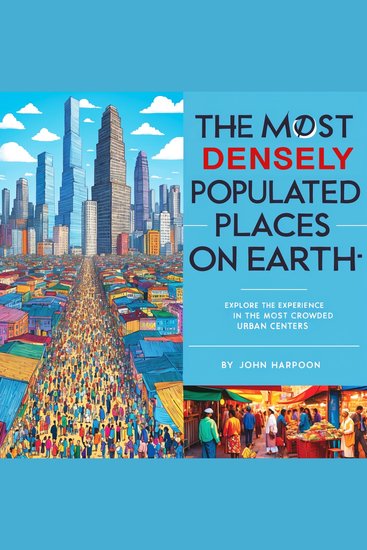
  • The Most Densely Populated Place on Earth - Explore the Experience in the Most Crowded Urban Centers - cover

    The Most Densely Populated Place...

    John Harpoon

    • 0
    • 0
    • 0
    Urbanization has been one of the most significant trends of the 21st century, with more than half of the world's population now living in cities. As global populations continue to grow, an increasing number of people are flocking to urban areas, resulting in the development of some of the most densely populated cities on Earth. These megacities, home to millions of individuals, represent both the wonders and the challenges of modern life. The intensity of life in such crowded spaces shapes the experiences of those who live there, from the social fabric to the environment. 
      
    This book explores the experiences of individuals living in the most crowded urban centers, where the pressure of population density influences every aspect of daily life. It aims to examine how these cities manage their growth, deal with the challenges of overcrowding, and provide a glimpse into the lives of those navigating these spaces. The urban centers featured in this book are marked not only by their size but also by the vibrancy and diversity they house. Yet, despite the potential for economic growth and cultural exchange, these cities face significant struggles related to infrastructure, health, safety, and quality of life. 
      
    The history of urban density is also a fascinating tale of human resilience and innovation. From the early days of civilization to the present, cities have been shaped by their environments, political systems, and technological advancements. As cities grow ever more populous, the boundaries of what can be managed are constantly tested, leading to new solutions, as well as failures. The story of overcrowding is not just one of increasing numbers but also of the social, economic, and environmental impacts that come with it.
    Ver libro
  • Our AI - My Journey Your Invitation Our Future - cover

    Our AI - My Journey Your...

    Felicity Hill

    • 0
    • 0
    • 0
    AI isn't just changing how we work; it's changing who holds power. 
    I didn't see that at first. When I fell in love with AI, I thought I'd simply found the perfect writing partner. Like millions of others, I jumped in without really understanding what I was getting into, using it daily, depending on it, unable to explain what it actually was. 
    Maybe your story is similar. Maybe you're still deciding whether to jump in at all. Either way, I have a feeling we all share the same mix of possibility and... something else. 
    That uneasy feeling led to a startling realisation: AI has agency. It acts, decides, shapes outcomes. Which made me ask, did I still have any? Or had I handed mine over without even noticing? 
    As a community engagement specialist, I'd spent my career helping people reclaim power in systems designed without them. The irony wasn't lost on me. Meanwhile, headlines were getting harder to ignore, everyone saying "get on board or get left behind," but no one explaining what we were actually boarding or what we might be giving up. 
    So, I set out on a journey to understand what I was seeing. That journey took me from microplastics to algorithms, from falling in love with AI to recognising familiar patterns of burden-shifting and power imbalances. If you're trying to make sense of what's happening without the tech jargon, this book is for you. 
    Our AI: My Journey, Your Invitation, Our Future is a wake-up call disguised as a love story, a guide for spotting the patterns, asking better questions, and finding your voice in conversations that are shaping our future, with or without us. 
    AI is here whether we like it or not. The question is: on whose terms?
    Ver libro
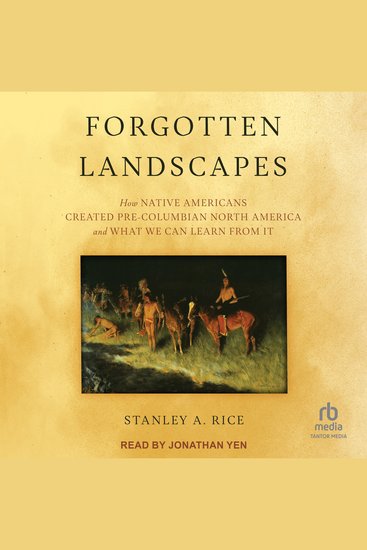
  • Forgotten Landscapes - How Native Americans Created Pre-Columbian North America and What We Can Learn From It - cover

    Forgotten Landscapes - How...

    Stanley A. Rice

    • 0
    • 0
    • 0
    North America was not empty nor were its inhabitants savages when Europeans arrived in 1492. Quite the opposite, North America was thickly populated by indigenous people who lived in clean cities, had a thriving economy, and transformed the landscape into bountiful productivity. Forgotten Landscapes reveals the incredible extent to which Native Americans manipulated and shaped their surrounding environs through agricultural practices and urban engineering, resulting in one of the most prosperous civilizations of their time.Well before European contact, North American cities and villages were bound together by an intricate trade network. Today, Spiro Mound in rural Oklahoma is a few piles of dirt, not on the road to anywhere. But at the time of the Mississippian civilization, about a thousand years ago, it was one of the largest cities in the world. With the controlled use of fire, Native Americans had transformed thick forests into open woodlands and expanded the ranges of prairies. Through organized hunting, Natives controlled the populations of prey animals such as passenger pigeons, and when Native populations grew large enough, they developed agriculture including irrigated crops, and even orchards. In this fascinating and overdue book, author Stanley A. Rice shows his audience the Pre-Columbian landscape of America that has been largely forgotten.
    Ver libro
  • Python Data Science for Beginners - Analyze and Visualize Data Like a Pro - cover

    Python Data Science for...

    Brian Murray

    • 0
    • 0
    • 0
    Python Data Science for Beginners: Analyze and Visualize Data Like a Pro is the ultimate guide to learning the fundamentals of data science with Python. This book is perfect for anyone who is new to data science or wants to expand their skills in this field. 
    In this book, you'll learn how to manipulate and transform data using the popular pandas library, explore and visualize data using matplotlib and seaborn, build and evaluate machine learning models with scikit-learn, and even delve into advanced topics such as time series analysis and deep learning with Keras. 
    The book follows a step-by-step approach to data science, with plenty of code examples and exercises to help you apply your knowledge. It also includes practical tips and best practices for data analysis and visualization, as well as real-world examples of data science projects. 
    Whether you're a student, professional, or hobbyist, Python Data Science for Beginners is the perfect resource to help you master data science with Python. Get ready to analyze and visualize data like a pro! 
     
    Ver libro
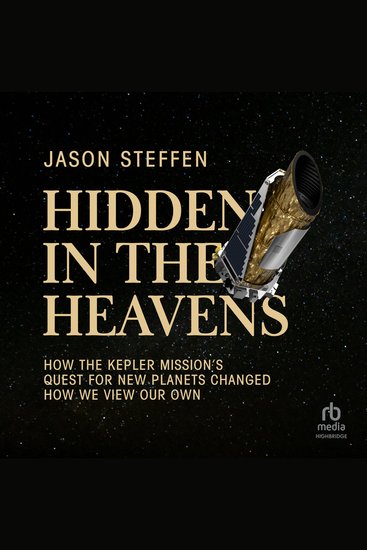
  • Hidden in the Heavens - How the Kepler Mission’s Quest for New Planets Changed How We View Our Own - cover

    Hidden in the Heavens - How the...

    Jason Steffen

    • 0
    • 0
    • 0
    Are we alone in the universe? It's a fundamental question for Earth-dwelling humankind. Are there other worlds like ours, out there somewhere? In Hidden in the Heavens, Jason Steffen, a former scientist on NASA's Kepler mission, describes how that mission searched for planets orbiting Sun-like stars—especially Earth-like planets circulating in Earth-like orbits. What the Kepler space telescope found, Steffen reports, contradicted centuries of theoretical and observational work and transformed our understanding of planets, planetary systems, and the stars they orbit. Kepler discovered thousands of planets orbiting distant stars—a bewildering variety of celestial bodies, including rocky planets being vaporized by the intense heat of their host star; super-Earths and sub-Neptunes; gas giants several times the size and mass of Jupiter; and planets orbiting in stellar systems that had only been imagined in science fiction. 


    Steffen offers a unique, inside account of the work of the Kepler science team (and the sometimes chaotic interactions among team members), mapping the progress of the mission from the launch of the rocket that carried Kepler into space to the revelations of the data that began to flow to the supercomputer back at NASA—evidence of strange new worlds unlike anything found in our own solar system.
    Ver libro
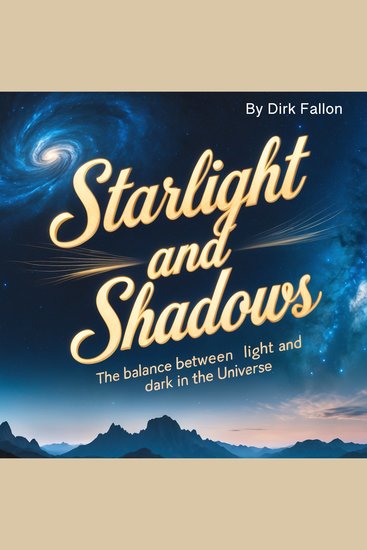
  • Starlight and Shadows - The Balance between Light and Dark in the Universe - cover

    Starlight and Shadows - The...

    Dirk Fallon

    • 0
    • 0
    • 0
    In the beginning, the universe was nothing more than a dense singularity—silent, timeless, and still. Then came the Big Bang, a colossal eruption that scattered matter and energy in every direction. From this explosion, light was born. It was the first visible sign of creation, a brilliant flash that broke the void and ignited the formation of stars, galaxies, and eventually life. Light traveled fast, racing across the empty stretches of the newborn cosmos. It became the symbol of birth and beginning, of knowledge and awareness. Without light, the universe would remain unseen and unknown, a place without structure or story. 
    But where there is light, there must also be darkness. Darkness is not just the absence of light—it is its counterpart. It filled the vast spaces between stars and galaxies, the silent shadows where light couldn’t reach. In many ways, darkness defines the boundaries of light, giving it contrast and shape. Without the dark, light would have no form. As stars began to shine and galaxies spun into form, so did the shadows. Black holes, vast voids, and mysterious dark matter began to shape the cosmic landscape. Darkness became more than empty space; it became a force of its own, influencing the movement of galaxies and the very structure of the universe. 
    The birth of stars played a crucial role in this balance. When matter began to clump together under gravity, stars ignited through nuclear fusion. These glowing spheres of heat and light pierced the darkness, scattering energy into the cosmos. But every star also cast shadows, created contrast, and eventually faded back into darkness when their fuel was spent. Supernovae, neutron stars, and black holes emerged from the deaths of stars, returning their light to the cosmic dark. This cycle of creation and destruction shows how light and darkness are deeply connected—each one gives rise to the other.
    Ver libro