¡Acompáñanos a viajar por el mundo de los libros!
Añadir este libro a la estantería
Grey
Escribe un nuevo comentario Default profile 50px
Grey
Suscríbete para leer el libro completo o lee las primeras páginas gratis.
All characters reduced
Whale Industry - cover

Whale Industry

Yves Earhart

Traductor A AI

Editorial: Publifye

  • 0
  • 0
  • 0

Sinopsis

"Whale Industry" presents a comprehensive exploration of humanity's complex relationship with whales, tracing the evolution of commercial whaling from its aggressive exploitation in the 17th century to today's conservation-focused approach.The book masterfully weaves together three interconnected narratives: the technological advancement of whaling practices, groundbreaking scientific discoveries about whale biology, and the emergence of global conservation movements that revolutionized our understanding of these magnificent marine mammals.Through meticulous research drawing from maritime records, declassified Soviet documents, and scientific journals, the book reveals stunning statistics, including the harvest of over two million whales between 1900 and 1970. The narrative tracks how whaling evolved from simple hand-held harpoons to industrial-scale operations with factory ships, while simultaneously documenting how scientific discoveries about whale intelligence, communication, and social structures gradually transformed public perception of these creatures from mere resources to essential components of marine ecosystems.What sets this work apart is its balanced analytical approach, avoiding simple condemnation of historical whaling practices in favor of examining the complex interplay between economic demands, scientific advancement, and environmental awareness. The book progresses chronologically while exploring parallel developments in technology, science, and conservation, culminating in a discussion of modern marine protection efforts and sustainable resource management.This multifaceted approach makes it an invaluable resource for anyone interested in environmental history, marine conservation, or the evolution of human relationships with marine mammals.
Disponible desde: 03/01/2025.
Longitud de impresión: 100 páginas.

Otros libros que te pueden interesar

  • The Power of Days - A Story of Resilience Dignity and the Fight for Women's Equity - cover

    The Power of Days - A Story of...

    Celeste Mergens

    • 0
    • 0
    • 0
    In 2008, Celeste Mergens was working with an overcrowded orphanage on the outskirts of Nairobi, Kenya, when she learned that menstruating girls sat on cardboard in their rooms for several days each month. 


    This set into motion a simple idea—combining a washable, long-lasting pad with taboo-breaking education—that became a catalyst for an unlikely global movement for equity. 


    Written in short, evocative chapters, The Power of Days tells the story of Mergens's quest to rally a global response to elevate menstrual health, increase universal access to menstrual supplies, shatter stigma through education, and advocate for global policy change. Raised in poverty by a mentally ill parent, Mergens learned early on that building the life she wanted would take equal parts determination and humility, traits that led her to create the kinds of inclusive conversations and solutions she is known for around the globe. 


    The challenges Mergens faced and the lessons she learned, personally and professionally, and the triumphs and resourcefulness of leaders all over the globe are illuminating to all who wish to make a difference and create a more equitable world. 


    This enhanced audio recording features an audio-exclusive Q&A between Days for Girls cofounders Celeste and Don Mergens.
    Ver libro
  • Deschooling Society - Why we must disestablish school - cover

    Deschooling Society - Why we...

    Iván Illich

    • 0
    • 0
    • 0
    This recording has been digitally produced by DeepZen Limited, using a synthesized version of an audiobook narrator’s voice under license. DeepZen uses Emotive Speech Technology to create digital narrations that offer a similar listening experience to human narration.  
     
    Schools and universities support misleading notions of 'progress' and development, fostered by the belief that ever-increasing production, consumption and profit are proper yardsticks for measuring the quality of human life. Our universities are the recruitment centres for the personnel of the consumer society, certifying citizens for service, while at the same time disposing of those judged unfit for the competitive rat race. In this bold and provocative book, Illich suggests some radical and exciting reforms for the education system.
    Ver libro
  • But Whose Fault? - The AK-47 Found - cover

    But Whose Fault? - The AK-47 Found

    AMOS ASEMONE

    • 0
    • 0
    • 0
    Do you keep an eye on world events through mainstream media? If so, chances are you have missed out on many essential news stories from countries around the world. 
    While many news outlets will cover European, U.K., and U.S. news in great detail, they often leave out essential news from other continents, especially Africa. 
    And yet, that doesn’t mean that newsworthy events occur there every day, just like in the UK. 
    In fact, some of the most newsworthy stories have occurred in Africa in recent years. 
    If you want to learn more about the conflicts of African communities, you have come to the right place. 
    Introducing, But, Whose Fault? Part One, a true story based in Ghana, where two AK-47s mysteriously vanished before reappearing without ammunition. 
    Not only does this book shed light on an incident that is still to be answered to this day, but it also highlights one of the many conflicts that African communities go through and are never displayed on the big screen. 
    In many ways, the conflict surrounding the missing rifles is a point of convergence of the exploitation of Africa and the negligence shown toward the local people and their value to the world. 
    It is one of the main reasons it continues to go unnoticed in many countries, yet it is a story that must be told. 
    Inside, But, Whose Fault? Part One, discover: 
    ●	essential background information about the local people and community 
    ●	the political context behind the events that unfolded 
    ●	the initial factors that influenced the confrontation 
    ●	the company behind the Nguvu mining project 
    ●	the disappearance, search, and fallout from the missing rifles 
    If you are at all interested in the rich history and real-life stories of Africa, this book is a must-read. 
    Grab a copy of But, Whose Fault? Part One today!
    Ver libro
  • Napoleon’s Escape from Elba: The History of the French Emperor’s Return from Exile and the Road to Waterloo - cover

    Napoleon’s Escape from Elba: The...

    Editors Charles River

    • 0
    • 0
    • 0
    Although Napoleon was exiled, he was allowed to retain the title of Emperor and was given de facto control over Elba. But it should not be surprising the man who once ruled Europe was not content with the island of Elba. Separated from his family and cast away on a small island, Napoleon attempted suicide by taking a poison pill, but he had first carried the pill with him on the retreat from Moscow, rightly concerned about an uncertain fate at the time. The aging process had fatally weakened the pill, which stopped it from fatally weakening Napoleon. 
    Though the emperor busied himself developing the island’s industries and had established a miniature army and navy, he must still have found time to brood upon his situation and could not have helped but think of himself as reduced to laughing stock. The “Emperor of Elba” was a poor title for a man who had once ruled over more than half of mainland Europe. Even some of Napoleon’s old Marshals, like Murat, now controlled more territory than the man who had raised them in the first place. To add insult to injury, the salary he had been promised in the Treaty of Fontainebleau and that was meant to keep him in relative luxury was often late and sometimes failed to arrive at all. Coupled with his deteriorating health and the express refusal of the Austrian court to let him speak or write to his wife and son, Napoleon must have felt himself well and truly slighted. Beaten, but not defeated, he resolved to show the Coalition powers he could still make Europe tremble. 
    Of all the incredible military feats Napoleon accomplished, none were more impressive than his escape from Elba and his return to France, which was literally a bloodless revolution. On February 26, 1815, Napoleon escaped from Elba, and in a desperate gamble, he landed on the French mainland with less than a thousand men and marched on Paris.
    Ver libro
  • Bridgebuilders - How Government Can Transcend Boundaries to Solve Big Problems - cover

    Bridgebuilders - How Government...

    Donald F. Kettl, William D. Eggers

    • 0
    • 0
    • 0
    Our government is in crisis, mired in bureaucracy and often unable to fix tough problems. This book provides an essential new model for transforming the system and getting things done. 


    COVID. Climate change. Refugee resettlement. Global supply chains. We're facing a new generation of complex problems, stretching across the public and private sectors. Historically we've looked to government for big solutions, but the reality is, the government we have now is a poor match for the problems we face. 


    We need a fresh, new approach. As William D. Eggers and Donald F. Kettl show in this indispensable book, we need a government of bridgebuilders—public managers and leaders who collaborate with partners, both inside and outside government, to get the job done. They manage horizontally instead of vertically, they see their role as connectors, and they identify which players have the assets needed to solve the problems at hand. 


    Each chapter examines one of the ten core principles of bridgebuilding and features practical tips and dynamic cases of how effective leaders have put each principle to work. Also included is a special section on creating a hundred-day bridgebuilding plan.
    Ver libro
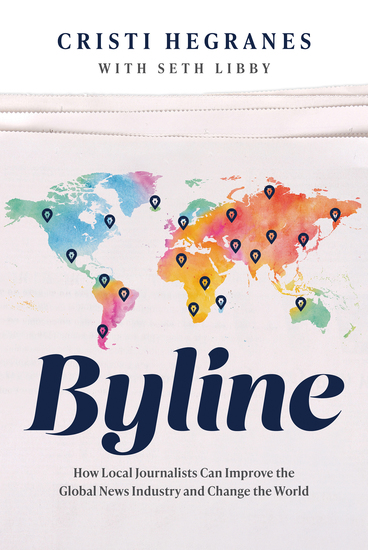
  • Byline - How Local Journalists Can Improve the Global News Industry and Change the World - cover

    Byline - How Local Journalists...

    Cristi Hegranes

    • 0
    • 0
    • 0
    International journalism needs a new paradigm, and this is the moment to forge one. In the wake of the pandemic and ongoing racial and environmental justice movements, news consumers are demanding better stories. International coverage prioritizes disasters and victim-centered narratives, ignores huge chunks of the world, and relies on outdated stereotypes. This kind of news reinforces the distrust people feel for the news.The solution, as Cristi Hegranes details throughout this book, lies with local journalists who live in the communities at the center of the stories. They can tell the accurate, precise, compelling stories readers across the world are desperate to read.By changing the mindset around who covers the news and how people in that coverage are depicted, Hegranes charts a path the entire industry can follow back to build trust, authority, and great er success.
    Ver libro