¡Acompáñanos a viajar por el mundo de los libros!
Añadir este libro a la estantería
Grey
Escribe un nuevo comentario Default profile 50px
Grey
Suscríbete para leer el libro completo o lee las primeras páginas gratis.
All characters reduced
Nature Therapy - cover

Nature Therapy

Yves Earhart

Traductor A AI

Editorial: Publifye

  • 0
  • 0
  • 0

Sinopsis

Nature Therapy: How the Outdoors Rewires the Brain and Restores Well-Being explores the profound connection between natural environments and human psychology, arguing that reconnecting with nature is essential for mental health in our urbanized world. Rooted in environmental psychology and neuroscience, the book unveils how evolutionary biology shapes our innate need for nature—a concept called the biophilia hypothesis. It pairs this with attention restoration theory, explaining how forests, parks, or even city greenery replenish cognitive resources drained by modern life. Striking studies reveal tangible benefits: reduced cortisol levels after nature exposure, improved focus in children with outdoor play access, and enhanced creativity linked to natural light patterns.

 
The book critiques the “indoor epidemic” of screen dependency, showing how nature activates the parasympathetic nervous system, easing stress and sharpening mental clarity. Structured in three sections, Nature Therapy moves from scientific foundations to real-world applications. Early chapters dissect how sensory stimuli—like bird songs or dappled sunlight—regulate mood, supported by fMRI scans showing lowered amygdala activity during forest walks. Case studies from Japan’s shinrin-yoku (forest bathing) and Scandinavian outdoor schools illustrate cross-cultural practices.

 
The final section offers actionable strategies, from designing urban green spaces to incorporating “micro-nature” into daily routines. Blending rigorous research with relatable anecdotes, the book stands out for its “Field Notes” exercises, like mindful observation techniques, making science accessible. It acknowledges challenges like nature accessibility disparities but remains hopeful, framing nature not as a luxury but a biological ally in combating modern mental health crises.
Disponible desde: 25/01/2025.
Longitud de impresión: 68 páginas.


Otros libros que te pueden interesar

  • Navigating Uncertainty - Simple Scientific Insights for Everyday Life - cover

    Navigating Uncertainty - Simple...

    Anna L Pereira

    • 0
    • 0
    • 0
    We live in a time of rapid change and what can feel like relentless uncertainty. Against this backdrop, the future often feels uncertain, leaving us searching for a path forward. This book offers strategies for navigating these times, beginning with ourselves and extending outward. Shaped in collaboration with one of the most cited scientists of our time, rooted in robust science (specifically active inference and free energy), and told through approachable stories, it provides a practical foundation for making sense of today’s complexity. Across these chapters, you’ll find tools to better understand an uncertain world and to move through it with greater clarity, resilience, and connection.
    Ver libro
  • Lenin - Responding to Catastrophe Forging Revolution - cover

    Lenin - Responding to...

    Paul LeBlanc

    • 0
    • 0
    • 0
    Vladimir Lenin lies in a tomb in Moscow's Red Square. History has not been kind to this Russian leader, his teachings reviled by modern mainstream politics. But in today's capitalist society, riven by class inequality and imperialist wars, perhaps it is worth returning to this communist icon's demand for "Peace, Land and Bread", and his radical understanding of democracy. 


    Lenin was wrestling with the question of "what is to be done?" when facing the catastrophes of his own time. Against the odds, the Bolshevik party succeeded in rejecting both the corrupt and decaying Romanov dynasty, as well as the capitalist economic system which had started to take root in Russia. 


    To understand how this happened, and what we can learn from him today, Paul Le Blanc takes us through Lenin's dynamic revolutionary thought, how he worked as part of a larger collective, and how he centered the labor movement in Russia and beyond, uncovering a powerful form of democracy that could transform our activism today.
    Ver libro
  • Summary: Getting Things Done - The Art of Stress-Free Productivity by David Allen: Key Takeaways Summary & Analysis - cover

    Summary: Getting Things Done -...

    Brooks Bryant

    • 0
    • 0
    • 0
    Disclaimer: This is not the official book; but a summary & it does not accompany the official. 
    Discover David Allen's proven methods to achieve efficiency and stress-free productivity. In this concise summary, witness how Allen's iconic 5-step process can help declutter your mind, prioritize tasks, and create a streamlined workflow. Allen offers a refreshing perspective on personal and professional organization, equipping readers with tools and techniques to handle a chaotic world with ease and finesse. 
    From capturing ideas to reviewing outcomes, 'Getting Things Done' presents a comprehensive system that promises clarity, control, and enhanced productivity. Whether you're drowning in emails, juggling multiple projects, or just looking to overhaul your to-do list, this summary distills the essence of Allen's groundbreaking approach, empowering you to achieve more with less effort. 
    Master the art of doing without the dread. Let this summary of 'Getting Things Done' be your guide to a more organized and productive life.
    Ver libro
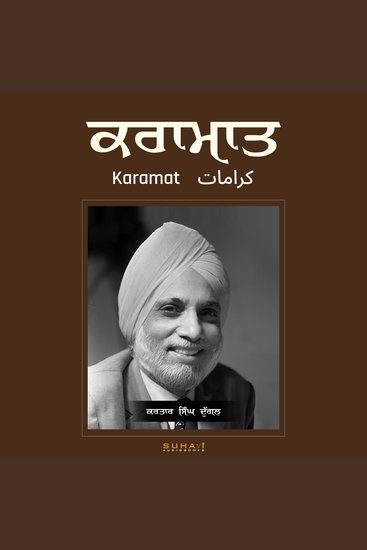
  • Karamat - cover

    Karamat

    Kartar Singh Duggal

    • 0
    • 0
    • 0
    This is the Punjabi literary work “Karamat” by the renowned writer Kartar Singh Duggal, which includes twenty-five stories, each with its own unique style. The author has beautifully presented the events happening around us. He says that he writes with his thick blood and tears. According to him, if one wishes to understand the mysteries of life, the music of a child’s laughter, or the first glimpse of beauty, one must accept pain, sleeplessness, and hardship. The words of Kartar Singh Duggal in this book are truly remarkable.
    Ver libro
  • The Viking Saga - Discovering the Mythology of the Norsemen - cover

    The Viking Saga - Discovering...

    Odessa Nightshade

    • 0
    • 0
    • 0
    The mythology of the Norsemen is a tapestry woven with gods, giants, heroes, and creatures, shaping the beliefs and culture of the Viking Age. Rooted in oral tradition, these stories were passed down through generations, evolving over time yet retaining their essence. Norse myths explain the creation of the world, the forces that govern existence, and the inevitable fate that awaits all beings, including the gods themselves. Unlike many mythologies that depict their deities as all-powerful, Norse mythology embraces the concept of struggle, destiny, and the impermanence of even the mightiest figures.  
      
    At the heart of Norse mythology is a pantheon of gods divided into two main groups: the Aesir and the Vanir. The Aesir, led by Odin, are associated with war, wisdom, and governance, while the Vanir, including Freyja and Njord, are linked to fertility and prosperity. Though originally at odds, these two factions eventually united, reflecting the Viking worldview of balance between opposing forces. Alongside these deities are powerful figures such as Loki, the trickster, and the Norns, who weave the fates of gods and men alike.  
      
    The Norse cosmos is structured around Yggdrasil, the World Tree, which connects the Nine Realms. These include Asgard, the home of the gods; Midgard, the realm of humans; and Hel, the domain of the dead. This vast and interconnected universe embodies the Viking understanding of life as an intricate web of cause and effect, where fate is both inescapable and deeply intertwined with personal action. 
    Ver libro
  • Quran - Urdu Translation - cover

    Quran - Urdu Translation

    Hazrat Muhammad PBUH

    • 0
    • 0
    • 0
    This project presents a complete Urdu translation of the Quran, uniquely based on Tafseer and grounded in Shia Islamic beliefs. The translation is meticulously crafted by Syed Abu Muhammad Naqvi, ensuring that each verse reflects the profound insights of Shia thought. This rendition is aimed at providing clarity, guidance, and a deeper understanding of the Quranic text for Urdu-speaking audiences, enriching their spiritual journey and connection to the sacred text.
    Ver libro