Join us on a literary world trip!
Add this book to bookshelf
Grey
Write a new comment Default profile 50px
Grey
Subscribe to read the full book or read the first pages for free!
All characters reduced
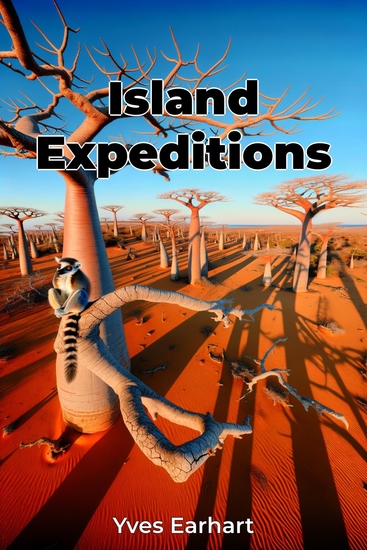
Island Expeditions - cover

Island Expeditions

Yves Earhart

Publisher: Publifye

  • 0
  • 0
  • 0

Summary

"Island Expeditions" reveals the extraordinary significance of Earth's island ecosystems, which harbor 20% of known terrestrial species on just 5% of the planet's land mass. This comprehensive exploration takes readers through three distinct geographical regions - Madagascar's diverse landscapes, the evolutionary laboratory of the Galapagos Islands, and lesser-known but equally fascinating locations like New Zealand and Hawaii.Through meticulous research and collaboration with local scientists, the book illuminates how these isolated environments serve as natural laboratories for understanding evolution, adaptation, and the broader implications of climate change. The book skillfully weaves together multiple scientific disciplines, from genetics to climatology, while maintaining accessibility through practical examples and engaging case studies.Readers discover fascinating details about Madagascar's hundred-plus lemur species, the ongoing evolution of Darwin's finches, and the unique adaptations of New Zealand's flightless birds. The text particularly excels in demonstrating how island ecosystems often act as early warning systems for global environmental changes, making them crucial indicators of broader ecological trends.What sets this work apart is its holistic approach to conservation, combining rigorous scientific analysis with real-world applications. The authors examine successful conservation initiatives, such as Madagascar's community-based forest management and the Galapagos' marine protected areas, while thoughtfully addressing the delicate balance between preservation and sustainable development. This practical framework makes the book invaluable for both conservation professionals and engaged general readers interested in understanding and protecting these unique natural laboratories of biodiversity.
Available since: 01/11/2025.
Print length: 107 pages.

Other books that might interest you

  • Walleye - A Beautiful Fish of the Dark - cover

    Walleye - A Beautiful Fish of...

    Paul J. Radomski

    • 0
    • 0
    • 0
    Among the more than 34,000 species of fish, few have the walleye's following—among anglers and diners, states conferring official status on the fish, and towns battling for recognition as the Walleye Capital of the World. And among those passionate fans, few know the walleye as well as Paul J. Radomski does—a fisheries biologist, lake ecology scientist, and old fisherman. In Walleye: A Beautiful Fish of the Dark he unspools the mysteries of this fascinating fish. 


    Radomski looks at walleye from every angle, with something to say to the curious naturalist, committed ecologist, and avid fishing enthusiast. People who view walleye as the "lion of the lakes" might be surprised to learn that rivers are their ancestral habitat. Some might wonder about the name "wall-eye," a nod to an evolutionary adaptation to dark water environments. Others might ask: what are they, where do they exist, how do they survive, and how have people come to depend on them? Radomski discusses the principles and pitfalls of managing this predator of the twilight and shares his informed perspective on when and where stocking is prudent. He also explores three of the best walleye lakes. 


    From the simple pleasures of fishing for walleye to the most pressing questions about how this species survives, this book is the best word on this beautiful fish of the dark.
    Show book
  • No Country for Eight-Spot Butterflies - A Lyric Essay - cover

    No Country for Eight-Spot...

    Julian Aguon

    • 0
    • 0
    • 0
    Part memoir, part manifesto, Chamorro climate activist Julian Aguon's No Country for Eight-Spot Butterflies is a coming-of-age story and a call for justice—for everyone, but in particular, for Indigenous peoples. 


    In bracing poetry and compelling prose, Aguon weaves together stories from his childhood in the villages of Guam with searing political commentary about matters ranging from nuclear weapons to global warming. Undertaking the work of bearing witness, wrestling with the most pressing questions of the modern day, and reckoning with the challenge of truth-telling in an era of rampant obfuscation, he culls from his own life experiences—from losing his father to pancreatic cancer to working for Mother Teresa to an edifying chance encounter with Sherman Alexie—to illuminate a collective path out of the darkness. 


    A powerful, bold, new voice writing at the intersection of Indigenous rights and environmental justice, Julian Aguon is entrenched in the struggles of the people of the Pacific to liberate themselves from colonial rule, defend their sacred sites, and obtain justice for generations of harm. In No Country for Eight-Spot Butterflies, Aguon shares his wisdom and reflections on love, grief, joy, and triumph and extends an offer to join him in a hard-earned hope for a better world.
    Show book
  • The Silent Universe - How Dark Energy Drives Galactic Evolution - cover

    The Silent Universe - How Dark...

    Dirk Fallon

    • 0
    • 0
    • 0
    Dark energy represents one of the most perplexing and enigmatic components of our universe, fundamentally altering our understanding of cosmic evolution. This mysterious force, which constitutes a major part of the cosmos, has intrigued scientists, astronomers, and physicists for decades. Its discovery, in part by observing the accelerated expansion of the universe, challenged long-held beliefs that gravity would eventually decelerate the cosmic expansion after the Big Bang. The revelation that the universe is not slowing down but actually speeding up has led to an explosion of theories and debates regarding the true nature of dark energy. 
    The initial hints of dark energy arose from studies that observed distant supernovae and measured their redshifts. When these measurements indicated that galaxies were moving away from each other at accelerating speeds, researchers were forced to rethink the previously accepted model of a decelerating universe. This unexpected acceleration suggested that some form of energy, previously unknown, was counteracting the force of gravity on a cosmic scale. Scientists have since begun to consider the possibility that this energy is uniformly spread throughout space, rather than being concentrated in specific locations, an idea that fundamentally differs from classical forms of matter and energy. 
    One of the core puzzles in understanding dark energy lies in its apparent uniformity and pervasive influence. Unlike ordinary matter, which clumps together to form stars, planets, and galaxies, dark energy seems to work in a diffuse, omnipresent manner, influencing the fabric of space itself. Its effects are subtle and counterintuitive, pushing galaxies apart rather than drawing them together.
    Show book
  • COMPTIA NETWORK+ - A Comprehensive Beginners Guide to Learn About The CompTIA Network+ Certification from A-Z - cover

    COMPTIA NETWORK+ - A...

    Walker Schmidt

    • 0
    • 0
    • 0
    If you are just getting into the world of certifications, you have made one of the best decisions of your life. Certifications open avenues for you to succeed in so many ways that you never would have imagined. By attaining a special certification, you stand a chance of getting selected for a position more than anyone else in the same category. A certified expert is more valuable to the organization. There is a lot of study material that you will get through before you get certified. You will have to sit through exams to prove you have what it takes to make it in networking. One of the best things about Network+ certification is that everything you learn will be useful in your career. This book helps you prepare for your exams, by reminding you some of the facts that you might have forgotten, or taken for granted. Once you go through this book, you have what it takes to get you through the introductory aspect of Network +. This book gives you the basics, the foundation upon which you can build on to pursue other critical certifications in networking.
    Show book
  • Global Health - Challenges Innovations and Future Perspectives - cover

    Global Health - Challenges...

    Kevin Thorley

    • 0
    • 0
    • 0
    Global health is a field that aims to improve health and achieve equity in health for people around the world. It involves understanding health issues that go beyond national boundaries and are influenced by conditions in various parts of the globe. The primary goal of global health is to reduce health disparities and enhance well-being on an international level by examining how diseases spread, what factors affect health, and the most effective methods to improve public health outcomes. 
      
    Global health is defined as the study, research, and practice that focuses on improving health and promoting health equity for all populations across the world. It takes a collaborative approach that involves multiple disciplines to address health challenges globally, striving to reduce inequalities in health outcomes. 
      
    The importance of global health lies in its role in preventing and controlling diseases that can affect populations worldwide. Health issues like infectious diseases do not recognize national borders, and global health efforts are essential in minimizing their spread and impact. The field also emphasizes reducing differences in health outcomes among populations by working to ensure that all people have access to necessary healthcare services, regardless of where they live or their economic situation.
    Show book
  • City Livability - Enhancing Quality of Life in Urban Areas - cover

    City Livability - Enhancing...

    Lyric Vale

    • 0
    • 0
    • 0
    City livability refers to the quality of life experienced by individuals living in urban areas. It encompasses a wide range of factors that contribute to the overall well-being of urban residents, from physical infrastructure to social, economic, and environmental conditions. The livability of a city is shaped by its ability to provide access to essential services, promote a sense of community, ensure safety, and foster opportunities for growth and development. It is a reflection of how well a city meets the needs of its inhabitants, both in terms of their immediate surroundings and their broader quality of life. 
    At its core, livability is about the balance between convenience, comfort, and sustainability. In urban environments, where high population densities often lead to challenges such as congestion, pollution, and inequality, creating a livable city is crucial for ensuring that residents not only survive but thrive. It is not just about basic services such as healthcare, education, and transportation but also about creating spaces where people can connect, engage with their surroundings, and find opportunities for personal and professional fulfillment. 
    The concept of city livability is also deeply intertwined with urban planning and design. How a city is structured – its streets, buildings, parks, and neighborhoods – directly impacts its livability. A well-planned city can promote walkability, offer green spaces for recreation, reduce noise and air pollution, and ensure efficient access to transportation networks. Conversely, poorly designed cities may suffer from overcrowded and polluted areas, limited green spaces, and inadequate public infrastructure.
    Show book