¡Acompáñanos a viajar por el mundo de los libros!
Añadir este libro a la estantería
Grey
Escribe un nuevo comentario Default profile 50px
Grey
Suscríbete para leer el libro completo o lee las primeras páginas gratis.
All characters reduced
Insect Life Secrets - cover

Insect Life Secrets

Yves Earhart

Editorial: Publifye

  • 0
  • 0
  • 0

Sinopsis

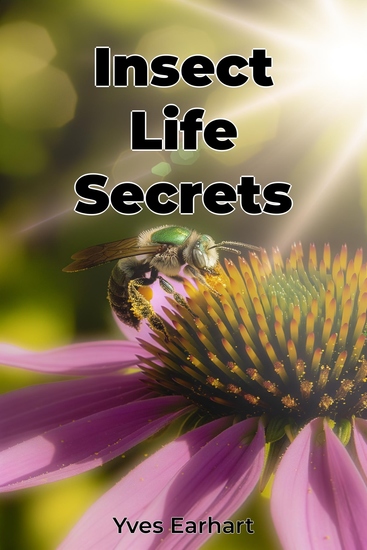
"Insect Life Secrets" offers a comprehensive exploration of insects' vital roles in maintaining Earth's ecological balance, from microscopic soil interactions to global-scale pollination networks. This accessible yet thorough examination reveals how these small creatures serve as the fundamental engineers of terrestrial ecosystems, without which most land-based life systems would fail. The book skillfully weaves together fifty years of entomological research with modern scientific discoveries to demonstrate insects' irreplaceable contributions to environmental stability.

 
The text progresses through three interconnected themes, beginning with the fascinating 400-million-year evolution of insect-plant relationships and their critical role in pollination. It then delves into insects' essential function in decomposition and nutrient cycling, revealing how these processes maintain soil health and support agricultural productivity. The final section synthesizes these concepts by examining how insects serve as keystone species in global food webs, incorporating data from six continents to provide a truly worldwide perspective.

 
Drawing from long-term field studies and cutting-edge research techniques, the book bridges the gap between complex scientific concepts and practical applications. While maintaining scientific rigor, it presents information in clear, accessible language that appeals to both specialists and general readers interested in environmental science. The work is particularly valuable for its comprehensive integration of entomology with climate science, agriculture, and conservation biology, offering practical insights for ecosystem management while highlighting critical areas for future research and conservation efforts.
Disponible desde: 10/01/2025.
Longitud de impresión: 101 páginas.


Otros libros que te pueden interesar

  • Developing to Scale - Technology and the Making of Global Health - cover

    Developing to Scale - Technology...

    Heidi Morefield

    • 0
    • 0
    • 0
    The first critical book on “appropriate technology,” Developing to Scale shows how global health came to be understood as a problem to be solved with the right technical interventions. 
      
    In 1973, economist E. F. Schumacher published Small Is Beautiful, which introduced a mainstream audience to his theory of “appropriate technology”: the belief that international development projects in the Global South were most sustainable when they were small-scale, decentralized, and balanced between the traditional and the modern. His theory gained widespread appeal, as cuts to the foreign aid budget, the national interests of nations seeking greater independence, postcolonial activism, and the rise of the United States’ tech sector drove stakeholders across public and private institutions toward cheaper tools. In the ensuing decades, US foreign assistance shifted away from massive modernization projects, such as water treatment facilities, toward point-of-use technologies like village water pumps and oral rehydration salts. This transition toward the small scale had massive implications for the practice of global health. 
      
    Developing to Scale tells the history of appropriate technology in international health and development, relating the people, organizations, and events that shaped this consequential idea. Heidi Morefield examines how certain technologies have been defined as more or less “appropriate” for the Global South based on assumptions about gender, race, culture, and environment. Her study shows appropriate technology to be malleable, as different constituencies interpreted its ideas according to their own needs. She reveals how policymakers wielded this tool to both constrain aid to a scale that did not threaten Western interests and to scale the practice of global health through the development and distribution of technical interventions.
    Ver libro
  • Rational Emotive Behavior Therapy - Thinking Rationally Living Freely - cover

    Rational Emotive Behavior...

    Vivian Westlake

    • 0
    • 0
    • 0
    Rational Emotive Behavior Therapy (REBT) is a cognitive-behavioral approach developed by Albert Ellis in the 1950s. It represents a revolutionary shift in the field of psychotherapy, aiming not just to alleviate symptoms, but to foster long-lasting change by helping individuals think and behave more rationally. The primary goal of REBT is to help people understand and identify irrational thoughts and beliefs that lead to emotional distress, then replace those beliefs with more rational, functional alternatives. 
    At its core, REBT rests on the idea that it is not the events themselves that disturb us, but our beliefs about those events. This concept is captured in the ABC model, a foundational element of REBT. According to the model, A stands for the activating event, or the situation that triggers a response. B represents the beliefs we hold about the activating event, which can be either rational or irrational. Finally, C stands for the emotional or behavioral consequences of those beliefs. By recognizing the link between beliefs and emotional outcomes, individuals can learn to challenge and change irrational thoughts that lead to unwanted feelings and behaviors. 
    REBT operates on the premise that people often hold onto irrational beliefs that are unrealistic, extreme, and unhelpful. These beliefs can be categorized into three core demands: the demand for approval from others, the demand for fairness or justice, and the demand for achievement and success. These irrational demands fuel negative emotions like anxiety, frustration, and depression, leading individuals to feel powerless or inadequate.
    Ver libro
  • Fishpond - The Best Tips to Take Care of Fish for Beginners - cover

    Fishpond - The Best Tips to Take...

    Tim Fenders

    • 0
    • 0
    • 0
    Imagine stepping into your backyard and being greeted by a tranquil oasis filled with shimmering water, vibrant aquatic life, and the soothing sounds of nature. This is the world of fishponds, a captivating and rewarding endeavor that brings the beauty of aquatic ecosystems right to your doorstep. 
    For centuries, humans have been drawn to water, finding solace and fascination in its depths. Fishponds offer a unique opportunity to create a harmonious balance between nature and design, transforming an ordinary outdoor space into a vibrant aquatic paradise. Whether you're a seasoned aquarist or a beginner looking to embark on a new hobby, this book is your guide to the fascinating realm of fishpond ownership and the art of caring for fish. 
    In the chapters that follow, we will explore every aspect of fishpond creation and maintenance, from selecting the perfect location and designing a stunning aquatic landscape to nurturing a thriving community of fish and plants. You'll learn about the delicate balance of water quality, the secrets of a healthy and vibrant ecosystem, and the joys and challenges of fishkeeping. 
    Throughout this journey, you'll gain the knowledge and skills needed to maintain a pristine environment for your fish while fostering a deeper connection with nature. Fishponds are not merely decorative water features; they are living ecosystems that invite you to become a steward of the aquatic world. 
    As you turn the pages of this book, we invite you to dream, plan, and embark on a rewarding adventure. Whether your goal is to create a peaceful retreat, a haven for wildlife, or a stunning centerpiece for your property, your fishpond journey begins here. Welcome to the enchanting world of fishponds—let's dive in together.
    Ver libro
  • Birding Under the Influence - Cycling Across America in Search of Birds and Recovery - cover

    Birding Under the Influence -...

    Dorian Anderson

    • 0
    • 0
    • 0
    At a personal and professional crossroads, a man resets his life and finds sobriety, love, and 618 bird species, cycling his way to a very Big Year. In Birding Under the Influence, Dorian Anderson, a neuroscience researcher on a pressure-filled life trajectory, walks away from the world of elite institutions, research labs, and academic publishing. In doing so, he falls in love and discovers he has freed himself to embrace his lifelong passion for birding. A North American Big Year—a continent-spanning adventure in which a birder attempts to see as many species as possible in twelve months—is a massive undertaking under any circumstances. But doing it on a bike while maintaining sobriety? That’s next level. As Dorian pedals across the country, describing the birds he sees, he confronts the challenges of long-distance cycling: treacherous weather, punctured tires, speeding cars, and injury. He encounters eccentric characters, blistering blacktop, dreary hotel rooms, snarling dogs, and an endless sea of smoking tailpipes. He also confronts his past struggles with alcohol, drugs, and risky behaviors that began in high school and followed him into adulthood. Birding Under the Influence is a candid, honest look at Dorian’s double life of academic accomplishment and addiction. While his journey to recovery is simultaneously poignant and inspiring, it is ultimately his love of birds and nature that provides the scaffolding to build a new and radically different life.
    Ver libro
  • If Science is to Save Us - cover

    If Science is to Save Us

    Martin Rees

    • 0
    • 0
    • 0
    There has never been a time when 'following the science' has been more important for humanity. At no other point in history have we had such advanced knowledge and technology at our fingertips, nor had such astonishing capacity to determine the future of our planet. 


    But the decisions we must make on how science is applied belong outside the lab and should be the outcome of wide public debate. For that to happen, science needs to become part of our common culture. Science is not just for scientists: if it were, it could never save us from the multiple crises we face. For science can save us, if its innovations mesh carefully into society and its applications are channeled for the common good. 


    As Martin Rees argues in this expert and personal analysis of the scientific endeavor on which we all depend, we need to think globally, we need to think rationally and we need to think long-term, empowered by twenty-first-century technology but guided by values that science alone cannot provide.
    Ver libro
  • Welcome to AI - A Human Guide to Artificial Intelligence - cover

    Welcome to AI - A Human Guide to...

    David L. Shrier

    • 0
    • 0
    • 0
    A fascinating guide to the rapidly advancing world of artificial intelligence and how this powerful technology will impact our lives, our careers, and our world. 


    Artificial intelligence is driving workforce disruption on a scale not seen since the Industrial Revolution. 


    In schools and universities AI technology has forced a reevaluation of the way students are taught and assessed. Meanwhile, ChatGPT has become a cultural phenomenon, reaching a hundred million users and attracting a reputed $1 trillion investor interest in its parent company, OpenAI. 


    The race to dominate the generative AI market is accelerating at breakneck speed, inspiring breathless headlines and immense public interest. 


    Welcome to AI provides a rare view into a frontier area of computer science that will change everything about how you live and work. Listen to this book and better understand how to succeed in the AI-enabled future.
    Ver libro