
¡Acompáñanos a viajar por el mundo de los libros!
Añadir este libro a la estantería
Grey
Escribe un nuevo comentario Default profile 50px
Grey
Suscríbete para leer el libro completo o lee las primeras páginas gratis.
All characters reduced
Extinction Race - cover

Extinction Race

Yves Earhart

Editorial: Publifye

  • 0
  • 0
  • 0

Sinopsis

'Extinction Race' presents an urgent examination of the global biodiversity crisis, revealing how species are vanishing at rates 100 to 1,000 times faster than natural background levels. Drawing from three decades of scientific research, the book masterfully weaves together evidence from multiple disciplines to document the accelerating decline of life across terrestrial, marine, and aerial ecosystems.

 
Through comprehensive case studies, it specifically highlights the alarming deterioration of three critical groups: megafauna, insect populations, and marine ecosystems, demonstrating how their decline creates devastating ripple effects throughout the natural world. The book progresses methodically through three main sections, beginning with historical context and current crisis metrics, moving to detailed examinations of endangered species across various habitats, and concluding with practical conservation strategies.

 
What sets this work apart is its holistic approach, connecting conservation biology with economics, public policy, and social justice while incorporating both modern scientific methods and traditional ecological knowledge. The author effectively bridges complex scientific concepts with accessible explanations, making it valuable for both conservation professionals and concerned citizens.

 
Using a combination of satellite tracking data, population surveys, and genetic studies, the book presents compelling evidence of how habitat destruction, pollution, invasive species, and climate change work together to threaten global biodiversity. It offers detailed frameworks for conservation initiatives while acknowledging current debates about different preservation approaches, including de-extinction technology and the balance between economic development and species protection.

 
Throughout, the focus remains on practical, actionable solutions that can be implemented at various levels, from local communities to international organizations.
Disponible desde: 05/01/2025.
Longitud de impresión: 111 páginas.

Otros libros que te pueden interesar

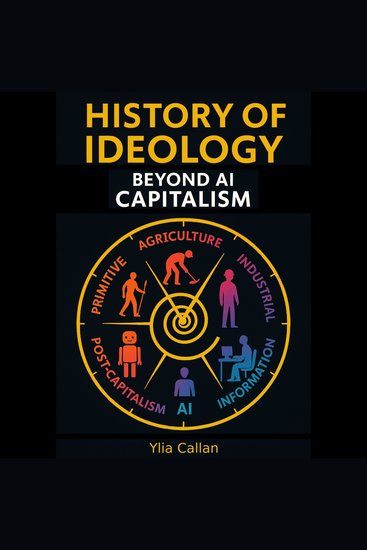
  • History of Ideology - Beyond AI Capitalism - cover

    History of Ideology - Beyond AI...

    Ylia Callan

    • 0
    • 0
    • 0
    This audiobook is narrated by an AI Voice.  The History of Ideology: Beyond AI Capitalism, takes listeners on a sweeping journey through humanity’s economic evolution - from primitive tribes and feudal empires to industrial capitalism and the rise of global markets. As AI and automation erase millions of jobs, the foundations of our economic system begin to crumble. 
     
    But this is not a story of collapse - it is a story of possibility. We explore universal basic income, platform cooperatives, data trusts and regenerative economies as the pillars of a new system designed for human flourishing and planetary health. 
     
    This audiobook is part history, part manifesto and part roadmap for the future. It will challenge your assumptions, inspire your imagination and help you see why the end of capitalism can be the beginning of something better.
    Ver libro
  • Race for Nuclear Weapons during World War II The: The History and Legacy of Both Sides’ Efforts to Build an Atomic Bomb - cover

    Race for Nuclear Weapons during...

    Editors Charles River

    • 0
    • 0
    • 0
    Before the Second World War, military conflicts were fought under orthodox conditions, usually termed “conventional warfare,” but several innovations had significantly changed combat, leading inextricably to the race for a nuclear weapon in the 1930s and 1940s. Conflicts had been fought by armies on horseback with guns of varying sophistication since the 16th century, but mechanized warfare and machine guns changed this calculus and set the stage for future combat by the end of World War I. Other sinister changes entered the fray during this conflict, such as chemical weapons like chlorine and mustard gas. The total warfare brought about by World War I and ensuing wars like the Spanish Civil War made the quest for the most powerful weapons somewhat necessary. 
    The Manhattan Project would ultimately yield the “Little Boy” and “Fat Man” bombs that released more than 100 Terajoules of energy at Hiroshima and Nagasaki, but as it turned out, the Axis were not far behind with their own nuclear weapons program. When the Nazis’ quest for a nuclear weapon began in earnest in 1939, no one really had a handle on how important nuclear weapons would prove to war and geopolitics. The attacks on Hiroshima and Nagasaki in August 1945, along with the Cold War-era tests and their accompanying mushroom clouds, would demonstrate the true power and terror of nuclear weapons, but in the late 1930s these bombs were only vaguely being thought through, particularly after the successful first experiment to split the atom by a German scientist. The nuclear age itself was in its infancy, barely 35 years old, but within a few short years the advent of nuclear war loomed over the world and the prospect of the enemy winning the nuclear race kept Allied leaders awake at night.
    Ver libro
  • The Wonders of Radium - cover

    The Wonders of Radium

    Maynard Shipley

    • 0
    • 0
    • 0
    The Wonders of Radium by Maynard Shipley is a captivating scientific exploration of one of the most fascinating discoveries of the early 20th century. Written in a time of scientific revolution, this work explains the origin, nature, and wide-ranging applications of radium, a radioactive element famously discovered by Marie and Pierre Curie. Shipley skillfully translates complex scientific principles into accessible language, detailing radium's powerful effects—from revolutionizing medical treatments, such as early cancer therapies, to its curious industrial and agricultural uses. 
    With a mix of scientific rigor and wonder, Shipley delves into the processes of radioactive decay, the extraction of radium from ores, and the element’s role in estimating the age of the Earth. Readers will find insights into the cultural and scientific impact of radium, a substance once seen as miraculous and later viewed with more caution. This is a snapshot of a pivotal moment in scientific history, capturing humanity’s fascination with atomic energy before its darker implications were fully realized.
    Ver libro
  • Science and Hypothesis - cover

    Science and Hypothesis

    Henri Poincaré

    • 0
    • 0
    • 0
    Jules Henri Poincaré (1854 – 1912) was one of France's greatest mathematicians and theoretical physicists, and a philosopher of science.As a mathematician and physicist, he made many original fundamental contributions to pure and applied mathematics, mathematical physics and celestial mechanics. He was responsible for formulating the Poincaré conjecture, one of the most famous problems in mathematics. In his research on the three-body problem, Poincaré became the first person to discover a chaotic deterministic system which laid the foundations of modern chaos theory. He is considered to be one of the founders of the field of topology. Poincaré introduced the modern principle of relativity and was the first to present the Lorentz transformations in their modern symmetrical form. He discovered the remaining relativistic velocity transformations and recorded them in a letter to Lorentz in 1905. Thus he obtained perfect invariance of all of Maxwell's equations, an important step in the formulation of the theory of special relativity. (Summary from Wikipedia)
    Ver libro
  • Saving Ourselves - From Climate Shocks to Climate Action - cover

    Saving Ourselves - From Climate...

    Dana R. Fisher

    • 0
    • 0
    • 0
    We've known for decades that climate change is an existential crisis. For just as long, we've seen the complete failure of our institutions to rise to the challenge. Fossil fuel interests maintain a stranglehold on political and economic power. Even though we have seen growing concern from everyday people, civil society has succeeded only in pressuring decision makers to adopt watered-down policies. Is there any hope of achieving the systemic change we need? 


    Dana R. Fisher argues that there is a realistic path forward for climate action—but only through mass mobilization that responds to the growing severity and frequency of disastrous events. She assesses the current state of affairs and shows why public policy and private-sector efforts have been ineffective. Spurred by this lack of progress, climate activism has become increasingly confrontational. Fisher examines the radical flank of the climate movement: its emergence and growth, its use of direct action, and how it might evolve as the climate crisis worsens. She considers when and how activism is most successful, identifying the importance of creating community, capitalizing on shocking moments, and cultivating resilience. Clear-eyed yet optimistic, Saving Ourselves offers timely insights on how social movements can take power back and open windows of opportunity for transformative climate action.
    Ver libro
  • Band That Stood Strong The: Untold Stories of the AIDS Crisis - "Dive into the untold stories of the AIDS crisis—experience The Band That Stood Strong like never before!" - cover

    Band That Stood Strong The:...

    Cyrus Vesperton

    • 0
    • 0
    • 0
    The Band That Stood Strong: Untold Stories of the AIDS Crisis   
    ⭐⭐ Simplified Guide & Explanations Included ⭐⭐   
    Are you ready to expand your understanding and deepen your empathy by exploring the untold stories of the AIDS crisis?   
    Searching for a thorough guide that addresses essential elements related to the powerful narratives surrounding this pivotal time?   
    Your quest ends here!   
    This guide acts as your essential companion for enhancing your comprehension, applying relevant insights, and engaging in reflective exercises. With this resource, you are prepared for a meaningful journey.   
    Updated to reflect current perspectives on the impact of the AIDS crisis.   
    Key features of this insightful guide include:   
    - In-depth exploration of the untold stories of the AIDS crisis   
    - Detailed accounts of the struggles and resilience of individuals and communities   
    - Effective strategies for understanding and connecting with these narratives   
    Our guide stands out through its comprehensive coverage, vital for fostering empathy and understanding. The stories are not simply recounted; they are explored with depth and sensitivity.   
    Crafted with a clear structure and straightforward language, our guide ensures smooth transitions between topics. Say goodbye to convoluted jargon and embrace content that is clear, precise, and emotionally resonant.   
    So, why wait? Click the BUY NOW button, secure your guide, and embark on a transformative journey through the untold stories of the AIDS crisis!
    Ver libro