¡Acompáñanos a viajar por el mundo de los libros!
Añadir este libro a la estantería
Grey
Escribe un nuevo comentario Default profile 50px
Grey
Suscríbete para leer el libro completo o lee las primeras páginas gratis.
All characters reduced
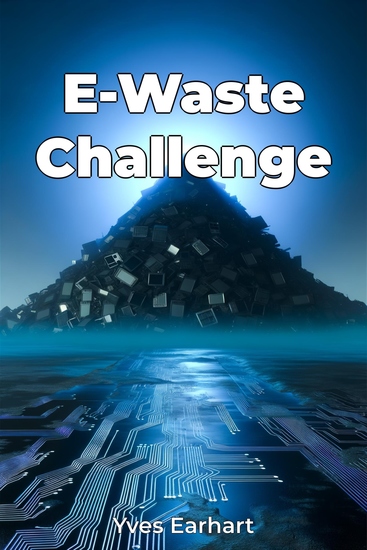
E-Waste Challenge - cover

E-Waste Challenge

Yves Earhart

Traductor A AI

Editorial: Publifye

  • 0
  • 0
  • 0

Sinopsis

'E-Waste Challenge' tackles one of the most pressing environmental issues of our time: the staggering accumulation of electronic waste, which amounts to 50 million metric tons annually—equivalent to discarding 1000 laptops every second. This comprehensive exploration delves into the complex interplay between consumer electronics consumption, recycling infrastructure, and emerging sustainable technologies, offering both a warning and a roadmap for change.

 
The book methodically progresses through three main sections, beginning with an eye-opening examination of e-waste's scale and environmental impact. Through detailed case studies spanning five continents, it contrasts successful e-waste management systems in countries like Japan and Sweden with struggling programs in developing nations. The narrative traces the evolution of electronic consumption from the 1950s to today, highlighting how we transitioned from durable, repairable devices to disposable ones.

 
In its final section, the book presents cutting-edge solutions to the e-waste crisis, including biodegradable electronics and innovative circular economy business models. What sets this work apart is its balanced approach to technical detail and accessibility, making it valuable for both industry professionals and environmentally conscious consumers. The integration of environmental science, materials engineering, and economic perspectives provides readers with actionable insights for responsible electronics consumption while offering evidence-based recommendations for industry transformation.
Disponible desde: 30/01/2025.
Longitud de impresión: 122 páginas.
Otros libros que te pueden interesar

  • The Shocking Truth about Public Transportation - cover

    The Shocking Truth about Public...

    Zoey Fraisers

    • 0
    • 0
    • 0
    Public transportation is often presented as the backbone of modern cities, a vital system that connects people to jobs, schools, and essential services. Advocates promote it as an affordable, eco-friendly, and efficient alternative to private vehicles, reducing congestion and improving urban mobility. Governments and transit agencies highlight its benefits, claiming it serves the public good while advancing sustainability goals. However, beyond the polished image of well-maintained buses, sleek trains, and promises of convenience, there lies a far more complicated and often troubling reality.  
      
    The public is frequently told that mass transit is the key to reducing traffic and lowering pollution, yet many systems fail to deliver on these promises. Trains break down, buses run late, and commuters find themselves packed into overcrowded vehicles, often feeling unsafe. Meanwhile, taxpayers pour billions into these systems, only to see fare increases, service cuts, and poorly maintained infrastructure. The question arises: If public transportation is supposed to be a solution, why does it so often feel like a problem?  
      
    Another significant issue is safety. Crime rates on buses, subways, and train platforms have become a growing concern, with riders facing theft, assault, and harassment. Many transit systems lack sufficient security measures, leaving passengers vulnerable. The psychological stress of commuting through unsafe environments can be overwhelming, particularly for women, the elderly, and other vulnerable populations. Despite these risks, officials frequently downplay crime statistics, insisting that public transit remains a safe option. 
    Ver libro
  • Rooted Faith - Practices for Living Well on a Fragile Planet - cover

    Rooted Faith - Practices for...

    Sarah Renee Werner

    • 0
    • 0
    • 0
    Embrace the call to live differently on this fragile planet.   As temperatures rise, natural disasters wreak devastation, and precious species die off one by one, we know we must change how we live in the world. But how? What would it look like if we took seriously the biblical charge to live more peacefully and gently on our fragile planet, if we understood ourselves as neighbors in a community of creation? Rooted Faith explores the future of the church called to live differently—one of reinhabiting our particular landscapes and confronting the assumptions of consumer culture head-on through our lives and actions.   Drawing on Scripture, Christian history, and practical theology, author Sarah Renee Werner invites readers into a new way of seeing ourselves in relationship with the rest of creation. She offers tangible practices for opening up our hearts to both the beauty and tragedy around us and guides us toward meaningful action to restore creation. There has never been a more crucial moment to reclaim this overlooked aspect of our faith as we seek to live differently—live well—on this fragile planet.  
    Ver libro
  • Salmonella - A Comprehensive Guide to the Microbial Menace - cover

    Salmonella - A Comprehensive...

    Lilly Richardsen

    • 0
    • 0
    • 0
    Salmonella is a genus of bacteria that plays a major role in human and animal health, causing a wide range of infections with varying degrees of severity. It is responsible for one of the most common foodborne illnesses worldwide, with millions of people affected each year. While many may associate Salmonella solely with food poisoning, it is much more complex, comprising over 2,500 serotypes, each with its own specific characteristics and virulence factors. 
    The discovery of Salmonella dates back to the late 19th century, when Theobald Smith, working under the guidance of American bacteriologist Daniel Elmer Salmon, first identified the bacterium. Since then, much has been learned about its biology, transmission, and impact on public health. Originally, the genus was named after Salmon, though today it is classified under the family Enterobacteriaceae, sharing common traits with other enteric bacteria. Despite the significant advances in understanding Salmonella, new challenges continue to emerge, particularly in the form of antibiotic resistance and emerging serotypes with more aggressive characteristics. 
    Salmonella infections are typically categorized into two main types: gastrointestinal infections and systemic infections. The most common manifestation is gastroenteritis, which presents with symptoms such as diarrhea, fever, nausea, and abdominal cramps. These symptoms usually develop within 6 to 72 hours after exposure to the bacteria. Though often self-limiting, severe cases can lead to dehydration and, in rare instances, death. On the other hand, systemic infections like typhoid fever can cause more severe illness, potentially leading to complications such as intestinal perforation, septic shock, or organ failure. Typhoid fever remains a major health issue in many developing countries, while gastrointestinal Salmonella infections are more frequently encountered in industrialized nations.
    Ver libro
  • Herbal Remedies Volume 1 - cover

    Herbal Remedies Volume 1

    William Fernie

    • 0
    • 0
    • 0
    "Herbal Remedies" by William Fernie is a comprehensive guide to the healing power of plants, offering timeless wisdom on natural medicine. Fernie explores the therapeutic properties of various herbs, providing remedies for common ailments like colds, digestive issues, and skin conditions. The book combines traditional knowledge with practical applications, emphasizing the importance of sustainable and holistic health practices. Fernie’s detailed descriptions and accessible instructions make herbal medicine approachable for readers of all backgrounds. A celebration of nature’s pharmacy, this work inspires a deeper connection to natural healing and self-care through the art of herbalism.
    Ver libro
  • The Fifth History of Man - cover

    The Fifth History of Man

    MD John Bershof

    • 0
    • 0
    • 0
    In the spirit of medieval writer Chaucer, all human activity lies within the artist’s scope, the History of Man Series uses medicine as a jumping off point to explore precisely that, all history, all science, all human activity since the beginning of time. The jumping off style of writing takes the reader, the listener into worlds unknown, always returning to base, only to jump off again. History of Man are stories and tales of nearly everything. 
    The Fifth History of Man has a few parting shots at viruses but mostly continues with the world of parasites, from tick disease that tick us off, Old Lyme, Connecticut and Lyme disease, toxoplasmosis, Crazy Cat Lady and her clowder of cats, then on into a discussion of the avatar of parasites: malaria. Our travels will venture down into the valley: Valley Girls, Valspeak, Valley Fever, fungus and fungal infections. We’ll jump into the biology of evolution, Darwin, Huxley and the great debates, the geology of earthquakes, volcanos, the Ring of Fire, and Johnny Cash, and then through the homos: Homo habilis, Homo erectus, and Homo sapiens, and once the dust cleared how the opposable thumbs, walking erect, and bigger brains left one man standing, one woman, too. No discussion of human history can leave out the G.O.A.T. of French history, heck, of European history; the man, the legend, Napoleon Bonaparte, loved and admired by everyone, even his enemies. Our path will take us into war & military, World War I versus the 1918 Swine Flu, some Russian history and how Stalin got Lenin wrong.
    Ver libro
  • The Superluminal Universe - Redefining Consciousness Time and Space - cover

    The Superluminal Universe -...

    Brigitte Dutheil, Régis Dutheil

    • 0
    • 0
    • 0
    The Superluminal Universe reveals, for the first time in English, the incredible insights of French quantum physicist Professor Régis Dutheil. Thanks to the development of particle accelerators, physicists are now able to propel particles (tachyons) at a speed close to that of light (300,000 km per second). At these extreme speeds, the laws that govern our universe no longer apply. Professor Dutheil's work has shown that the theory of relativity is not incompatible with that of tachyons, provided that we allow for the possibility of a double reality: that alongside our sub-luminous universe, which follows the law of time, is a superluminal universe. This second reality is another universe, complementary to and symmetrical with ours, governed by superluminal space-time in which light moves 300,000 km/s to infinity. 


    In the superluminal universe, everything is instantaneous. It is possible to conceive of a superluminal being capable of moving from one end of space to the other. This parallel universe consists only of information and consciousness: all information (past, present, future) and the consciousness of all humanity. Professor Dutheil's thesis joins the intuitions of ancient philosophers with current quantum physics to blow our current notions of time, of past and present, of the nature of consciousness, of birth and death right out of the water.
    Ver libro