
¡Acompáñanos a viajar por el mundo de los libros!
Añadir este libro a la estantería
Grey
Escribe un nuevo comentario Default profile 50px
Grey
Suscríbete para leer el libro completo o lee las primeras páginas gratis.
All characters reduced
Beaches World Wide - cover

Beaches World Wide

Yves Earhart

Traductor A AI

Editorial: Publifye

  • 0
  • 0
  • 0

Sinopsis

"Beaches World Wide" takes readers on a captivating journey through the planet's most iconic coastal destinations, exploring their formation, cultural significance, and environmental challenges. This comprehensive book examines how famous beaches are shaped by geological processes, human activity, and cultural importance, presenting them as dynamic ecosystems rather than mere tourist spots.

 
The book is structured in three parts, beginning with an introduction to beach fame and coastal geomorphology. It then delves into case studies of renowned beaches across continents, highlighting their unique features and historical importance. The final section addresses the future of these beloved shorelines in the face of climate change and increased human activity.

 
Using time-lapse photography and satellite imagery, the authors vividly illustrate the changes these beaches have undergone over time, offering readers a striking perspective on coastal dynamics. Balancing academic rigor with accessibility, "Beaches World Wide" appeals to environmentally conscious travelers, geography enthusiasts, and policymakers alike.

 
By interweaving geology, anthropology, and environmental science, the book provides valuable insights into the complex factors shaping our planet's most celebrated coastlines, encouraging readers to become responsible coastal visitors and advocates for beach conservation.
Disponible desde: 15/10/2024.
Longitud de impresión: 137 páginas.
Otros libros que te pueden interesar

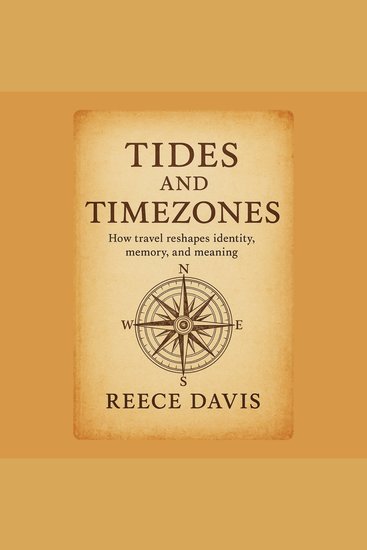
  • Tides and Timezones - cover

    Tides and Timezones

    Reece Davis

    • 0
    • 0
    • 0
    Between the pull of the tides and the drift of the clock lies the rhythm of a traveler’s life. 
    In Tides and Timezones, acclaimed travel writer Reece Davis explores how constant movement changes not only where we are — but who we become. From sleepless nights beneath foreign skies to quiet dawns spent in transit, Davis reflects on how time stretches and bends across continents, and how memory anchors us when everything else is in motion. 
    Through poignant stories, vivid landscapes, and moments of stillness amid the rush, Davis examines what it means to carry fragments of the world within us — and how, over time, travel becomes less about escape and more about return. 
    Elegant, meditative, and profoundly human, Tides and Timezones is a love letter to the fleeting, timeless art of wandering.
    Ver libro
  • Sea Stories - Galveston and Beyond - cover

    Sea Stories - Galveston and Beyond

    Alvin L. Sallee, Michael J....

    • 0
    • 0
    • 0
    What happens when you take a professor and sprinkle on some old salt seafarer? It’s a recipe for an engrossing narrative of the sea and those who have made it their lives work. Welcome aboard as we hit the decks, load the cargo, sail out and bring back sea stories full of adventure and glory.
    Ver libro
  • Taste in Music - Eating on Tour with Indie Musicians - cover

    Taste in Music - Eating on Tour...

    Luke Pyenson, Alex Bleeker

    • 0
    • 0
    • 0
    Through original essays and engaging conversations with dozens of indie musicians representing several subgenres, scenes, and eras, food takes center stage in stories about being on tour and eating on tour and how this basic human necessity can create a sense of community and interconnectedness in one of the most mobile industries in the world. Based broadly on the subject of eating on tour, these entries each spin off into their own focused and exciting behind-the-scenes story, but all confirm what Pyenson and Bleeker suspected all along—food looms large in the lives of touring musicians, and it can be used as a gateway into understanding what going on tour is really like. 


    Stories that deal with the best parts of touring: meaningful cultural exchange, hospitality-induced euphoria, and the opportunity to build relationships around the world. And the worst: loneliness, exhaustion, estrangement from family and friends, struggles with disordered eating, and unsteady access to medical care. 


    So the question isn't, "How was tour?" It's, "What do you eat on tour?" Like the best songs or meals, these conversations and essays evoke something central about the human experience. They show us all the ways that music and food bring us together, break us down, lift us up, and add color to our lives.
    Ver libro
  • Anchors Away - Your Ultimate Guide to First-Time Cruising - cover

    Anchors Away - Your Ultimate...

    William Frye Sr.

    • 0
    • 0
    • 0
    Embark on a thrilling voyage with "Anchors Away: Your Ultimate Guide to First-Time Cruising." This comprehensive handbook is your compass to navigating the exhilarating world of cruising. Discover essential tips for selecting the perfect cruise, from choosing itineraries to securing the best deals. Learn how to maximize your onboard experience with insights into ship amenities, accommodations, and budgeting strategies. Dive into the excitement of shore excursions while respecting local cultures, and embrace the onboard community for memorable experiences. Set sail with confidence and make your dream cruise a reality with "Anchors Away."
    Ver libro
  • Spanish for travelers - easy spanish - cover

    Spanish for travelers - easy...

    Daniel Mollet

    • 0
    • 0
    • 0
    The goal of this book is to provide essential Spanish Travel Phrases every traveler needs to know, and some basic Spanish grammar rules. It is useful to learn Spanish phrases which can be useful in different situations as you travel. 
    The travel bug, once caught, is hard to get out of our system. But deep down we know that we don't understand the locals well - or maybe not at all. Could it be important to be able to converse with those in authority? English, at best, is a second language in those parts of the world, spoken by a few. Group travel is fine, but to rely on the group leader to always be at hand to explain restricts one's freedom.  It feels great to be independent! 
    Learning Spanish can help you communicate with locals. It is especially important to be able to speak Spanish if you plan a trip to a Spanish speaking country. You will find that natives will respect you more if you at least appear to be trying to learn and speak their language. Even though most Spanish speaking people can speak English (even a little), you may come across several who have no English skills at all. This is a key reason for learning how to speak Spanish. It will go a long way toward making your trip more enjoyable. 
    Spanish is native to Spain of course; but the Spanish explorers travelled around. So, you can be sure that South America, Central America, Mexico, the Caribbean and even the Philippines are all quite proficient in this lovely language. Spanish is an easy language to learn, thanks to its consistency of vowel sounds and relatively simple syntax. There are no tonal elements as exist in the Asian languages - another big plus for Spanish learners.
    Ver libro
  • Terra Incognita - Probing the Secrets of the Earth's Most Bewildering Isle - cover

    Terra Incognita - Probing the...

    John Harpoon

    • 0
    • 0
    • 0
    To document the unknown is to navigate a delicate and often treacherous path. It is an undertaking that demands curiosity and courage, tempered by discipline and respect for the subject at hand. When the unknown takes the form of a remote, enigmatic island, the challenges multiply, and the journey becomes as much about understanding ourselves as it is about uncovering the mysteries of the place. 
    One of the primary obstacles is the inherent unpredictability of the venture. An island untouched by mainstream exploration holds its secrets tightly. Its terrain might defy navigation, its climate could shift without warning, and its ecosystems may present risks to even the most prepared. In such circumstances, even the best-laid plans can unravel, requiring constant adaptation. To face these uncertainties is to embrace the idea that success is not guaranteed, and setbacks are part of the process. 
    Another challenge lies in balancing observation with interpretation. A place this unique invites wonder and speculation, but separating fact from fiction is essential. Legends, often steeped in cultural heritage, must be approached with sensitivity, while scientific observations require rigorous validation. There is always the temptation to romanticize the unknown, but doing so risks misrepresenting the truth. The challenge, then, is to honor both the scientific integrity of the exploration and the intangible allure that makes the island so captivating.
    Ver libro