Junte-se a nós em uma viagem ao mundo dos livros!
Adicionar este livro à prateleira
Grey
Deixe um novo comentário Default profile 50px
Grey
Assine para ler o livro completo ou leia as primeiras páginas de graça!
All characters reduced
In Their Surroundings - Localizing Modern Jewish Literatures in Eastern Europe - cover
LER

In Their Surroundings - Localizing Modern Jewish Literatures in Eastern Europe

Yfaat Weiss, Natasha Gordinsky, Efrat Gal-Ed, Sabine Koller

Editora: Vandenhoeck & Ruprecht

  • 0
  • 0
  • 0

Sinopse

From the second half of the nineteenth century through to World War II, Eastern Europe, especially the territories that formerly made up the Pale of Settlement in the Tsarist Empire, witnessed a Jewish cultural flowering that went hand-in-hand with a multifaceted literary productivity in the Hebrew and Yiddish languages. Accompanied and sometimes directly affected by the dramatic political ruptures of the era, many authors experimented with various modernist poetics in the context of a culturally and literarily closely interwoven milieu. This beautifully illustrated catalogue presents for the first time some of the key figures of the era, including in each case a portrait of the author and a close reading of selected texts, including Yosef Ḥayim Brenner, Leah Goldberg, Moyshe Kulbak, and Deborah Vogel. Of particular interest here is the productive entanglement of cultures and literatures, of cultural contact and transfer, and the significance of space and place for the development of modern Jewish literatures.
Disponível desde: 12/12/2022.
Comprimento de impressão: 278 páginas.
Outros livros que poderiam interessá-lo

  • Socrates - Socrates Philosophy and the Examined Life - cover

    Socrates - Socrates Philosophy...

    Hector Davidson

    • 0
    • 0
    • 0
    Socrates stands as one of the most influential figures in the history of philosophy, a thinker whose ideas and methods continue to shape intellectual inquiry. Born in Athens around 469 BCE, he never wrote a single philosophical text, yet his impact endures through the works of his students, particularly Plato. His approach to philosophy was rooted in dialogue, questioning, and an unwavering commitment to seeking truth. Unlike the Sophists of his time, who often prioritized rhetorical skill and persuasion, Socrates believed that wisdom was not about appearing knowledgeable but about recognizing one’s own ignorance. His method of relentless questioning, now known as the Socratic Method, remains a cornerstone of critical thinking and philosophical discourse. 
    Socrates lived during a period of great political and social upheaval in Athens. The city had emerged from the Peloponnesian War weakened and uncertain about its future. In this context, Socrates became both an admired and controversial figure. His insistence on questioning authority and challenging conventional beliefs made him a target for those who saw his influence as destabilizing. He did not align himself with any particular political faction but instead sought to examine the moral and ethical foundations of society. His discussions often exposed the contradictions in the reasoning of politicians, poets, and fellow citizens, leading many to view him as a disruptive force. 
    His trial in 399 BCE remains one of the most significant moments in philosophical history. Accused of corrupting the youth and impiety, Socrates defended himself in a manner that was both defiant and deeply philosophical. In The Apology, Plato’s account of the trial, Socrates argues that he was fulfilling a divine mission by encouraging people to think critically and examine their lives.
    Ver livro
  • The 6 Types of Working Genius - A Better Way to Understand Your Gifts Your Frustrations and Your Team - cover

    The 6 Types of Working Genius -...

    Patrick M. Lencioni

    • 0
    • 0
    • 0
    New York Times best-selling author Patrick Lencioni unveils a truly groundbreaking new model that will change the way we think about work and teams forever. 
     
    The 6 Types of Working Genius is the fastest way to help people identify the type of work that brings them joy and energy—and avoid work that leads to frustration and burnout. 
     
    Beyond the personal discovery and instant relief that the Working Genius provides, the model also gives teams a remarkably simple and practical framework for tapping into one another’s natural gifts, which increases productivity and reduces unnecessary judgment. 
     
    In classic Lencioni fashion, Pat brings his model to life in a page-turning fable that is as relatable as it is compelling. He tells the story of Bull Brooks, an entrepreneur, husband, and father, who sets out to solve his own frustration at  
    work and stumbles into a new way of thinking that changes the way he sees his work, his team, and even his marriage. 
     
    What sets this book—and the model behind it—apart from other tools and assessments is the speed at which it can be understood and applied, and the relevance it has to every kind of work in life, from running a company to launching a product to managing a family.
    Ver livro
  • Portraits as Animal - Poems - cover

    Portraits as Animal - Poems

    Victoriano Cárdenas

    • 0
    • 0
    • 0
    Portraits as Animal is a gallery of self-becoming in a "sunbaked house as tiny as a heart." With a toothy lyricism at turns sly and forthright, Cárdenas's hunger to belong carries us from a stove "bleeding a hundred kinds of caldo" to his "determined mitochondrial ancestors''-a journey framed by generational struggles with addiction, a queerphobic church, and the always-transforming land. 
    In conversation with Taos's rich artistic tradition and the brutal, binding legacy of colonization, Cárdenas writes through his transition, acknowledging that "to become a man means a lifetime of needles like the man who raised me." Here is pain and violence, but here, too, is the assurance that we are "built for this metamorphosis" and can follow our past incarnations "over scorched earth neon with new grass" to a future of our own making.
    Ver livro
  • The Iranian Hostage Crisis - A Nation Held Captive - cover

    The Iranian Hostage Crisis - A...

    Nova Ashford

    • 0
    • 0
    • 0
    The Iran Hostage Crisis did not emerge in isolation but was the culmination of a series of events that built tension between the United States and Iran over the course of several years. At the heart of this turmoil was the downfall of the Pahlavi monarchy and the rise of the Islamic Republic, a shift that drastically altered Iran's relationship with the West. The turning point came in 1979 when the Iranian Revolution ousted the U.S.-backed Shah, Mohammad Reza Pahlavi, and brought Ayatollah Khomeini to power. While the revolution was a victory for many Iranians seeking an end to decades of autocratic rule and foreign influence, it created an atmosphere of political uncertainty, particularly regarding U.S.-Iranian relations. 
    The United States had long supported the Shah, who was seen as a crucial ally in the Middle East during the Cold War. In return, the Shah implemented policies that favored American economic and military interests, while also suppressing dissent within Iran. However, his reign became increasingly unpopular among Iranians, particularly the religious clerics and the working class, who viewed his modernization policies as an imposition of Western culture and values. By 1978, protests and demonstrations had erupted across Iran, eventually leading to the Shah’s exile in January 1979. 
    In the wake of the Shah’s departure, Iran underwent a dramatic transformation. The revolutionary movement, initially diverse in its goals, quickly coalesced under Khomeini’s leadership. Khomeini’s vision of an Islamic Republic, where political power was rooted in Shi’a religious authority, resonated with a wide segment of the population. His rhetoric condemned not only the Shah’s regime but also U.S. imperialism, which was seen as a driving force behind Iran’s oppressive system. Khomeini’s calls for a return to Islamic principles and the removal of foreign influence became central tenets of the revolution.
    Ver livro
  • A Rare Recording of JB Rhine - cover

    A Rare Recording of JB Rhine

    J. B. Rhine

    • 0
    • 0
    • 0
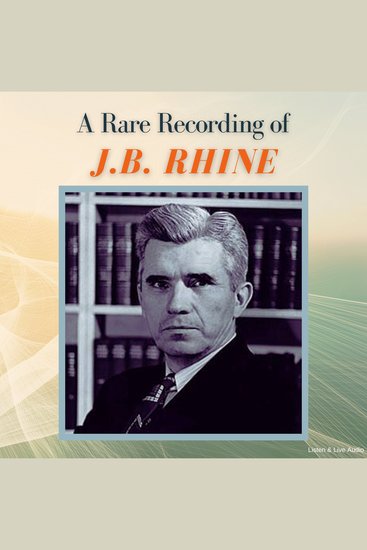
    J.B. Rhine (1895 - 1980), widely considered to be the "Father of Modern Parapsychology," was the world’s leading investigator of psychic phenomena, ESP and the paranormal. He founded the parapsychology research lab at Duke University and the Journal of Parapsychology. Dr. Rhine, who coined the term "extrasensory perception" (ESP) to describe the apparent ability of some people to acquire information without the use of the known five senses), wrote several books on ESP and the paranormal. Rhine investigated ghosts, telepathy, poltergeists, and other unseen parapsychology phenomena from 1927 to 1965 at his Duke laboratory, and for several years after that at a private laboratory. The following was recorded from a Rhine lecture on psychokinesis and his ESP experiments.
    Ver livro
  • Guadalcanal's Longest Fight - The Pivotal Battles of the Matanikau Front - cover

    Guadalcanal's Longest Fight -...

    Dave R. Holland, USMCR (Ret)...

    • 0
    • 0
    • 0
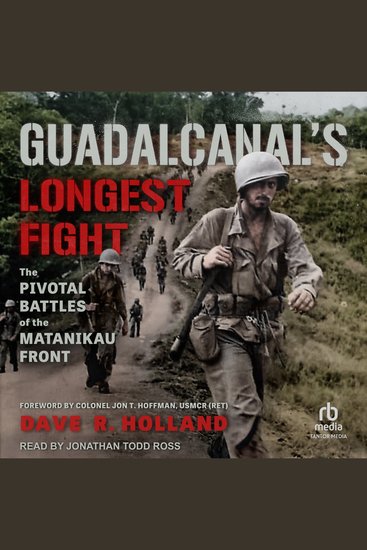
    The Matanikau battles proved to be the critical turning points in the land campaign for Guadalcanal—the campaign's longest and bloodiest ground fight. A five-month conflict raged along the river and its basin. The real importance of this area has long remained unrecognized, yet the American and Japanese forces that fought over it knew that it was the key to the ultimate prize of Henderson Airfield. In this mile-long bloody tug-of-war from the river across to the hills and ravines were fought seven major battles and countless smaller skirmishes.While countless books have been published on the Guadalcanal Campaign, none have concentrated on the pivotal battles of the Matanikau basin. Extensively researched, this first in-depth study of these important battles, objectively showing all sides, fills in this crucial missing piece of the history of the Guadalcanal campaign.The well-known Guadalcanal battlefield guide Dave Holland spent three years walking the battlefields, researching, and documenting what he found. His unparalleled knowledge of the ground enables him to take the listener along with the men on the ground. Using his investigative skills and military background, he provides a fresh, detailed, and often completely new view of the land campaign.
    Ver livro