Junte-se a nós em uma viagem ao mundo dos livros!
Adicionar este livro à prateleira
Grey
Deixe um novo comentário Default profile 50px
Grey
Assine para ler o livro completo ou leia as primeiras páginas de graça!
All characters reduced
Diplomacy Blitz - Take Charge - cover
LER

Diplomacy Blitz - Take Charge

Y- Y-Photography, Snapshot Systems

Editora: Snapshot Systems

  • 0
  • 0
  • 0

Sinopse

Volatile international relations are anything but random. Diplomacy Blitz provides a simplified approach that clarifies power dynamics and the most probable alignment of interests related to geopolitical conflicts.
Disponível desde: 03/01/2024.
Comprimento de impressão: 75 páginas.

Outros livros que poderiam interessá-lo

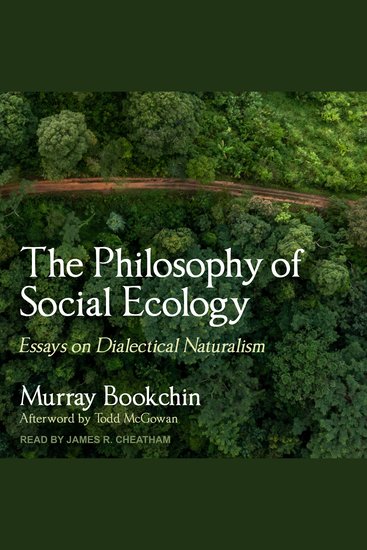
  • The Philosophy of Social Ecology - Essays on Dialectical Naturalism - cover

    The Philosophy of Social Ecology...

    Murray Bookchin, Todd McGowan

    • 0
    • 0
    • 0
    What is nature? What is humanity's place in nature? And what is the relationship of society to the natural world? In an era of ecological breakdown, answering these questions has become of momentous importance for our everyday lives and for the future that we and other life-forms face. In the essays of The Philosophy of Social Ecology, Murray Bookchin confronts these questions head on: invoking the ideas of mutualism, self-organization, and unity in diversity, in the service of ever expanding freedom. 


    Refreshingly polemical and deeply philosophical, these essays take issue with technocratic and mechanistic ways of understanding and relating to, and within, nature. More importantly, they develop a solid, historically and politically based ethical foundation for social ecology, the field that Bookchin himself created and that offers us hope in the midst of our climate catastrophe.
    Ver livro
  • 7 Areas Without Laws - Exploring the World's Last Anarchic Zones - cover

    7 Areas Without Laws - Exploring...

    John Harpoon

    • 0
    • 0
    • 0
    Laws are the invisible threads that hold societies together, shaping behavior, enforcing order, and establishing the boundaries of right and wrong. Yet, scattered across the world, there are rare places where laws hold little to no authority—zones where governments have little presence, where no single entity enforces regulations, and where the concept of governance is fluid or entirely absent. These places, whether by accident of history, geopolitical disputes, or deliberate rejection of authority, exist on the fringes of civilization.  
      
    This book explores seven of these anarchic zones, each with its own unique circumstances and challenges. From the open ocean, where maritime law is a complex tangle of loopholes and jurisdictions, to the frozen expanse of Antarctica, where no country claims true ownership, these areas defy traditional governance. Some, like Bir Tawil—a small strip of land between Egypt and Sudan—are unclaimed due to border disputes, while others, like Slab City in California or Freetown Christiania in Denmark, are self-declared autonomous communities that reject the rules of mainstream society.  
      
    The existence of these lawless zones raises important questions: Can true freedom exist without laws? Is lawlessness always synonymous with chaos, or can people thrive outside the framework of government? In some of these areas, the absence of enforcement has led to disorder, crime, and exploitation. Pirates take advantage of international waters to operate freely, and smugglers use ungoverned territories to traffic goods and people. In other places, however, the lack of laws has fostered alternative communities built on mutual cooperation, artistic expression, and self-sufficiency. 
    Ver livro

  • John Stuart Mill - A Very Short Introduction - cover

    John Stuart Mill - A Very Short...

    Gregory Claeys

    • 0
    • 0
    • 0
    John Stuart Mill (1806-73) is widely regarded as the leading liberal philosopher, economist, and political theorist of nineteenth century Britain. In his lifetime he was best known for his System of Logic (1843) and the Principles of Political Economy (1848). Today Mill is chiefly identified with On Liberty (1859), perhaps the definitive text of modern liberal statement of its subject, and probably the single most important work of modern political thought. Mill was also the first major male feminist thinker of the period (author of The Subjection of Women, 1869), and the first, as an MP, to introduce a bill for female enfranchisement before Parliament. 


    This Very Short Introduction offers a brief survey of the life and key ideas of this most influential Victorian British writer. Moving chronologically, Gregory Claeys outlines the philosophical background out of which Mill developed, chiefly through the ideas of Jeremy Bentham and James Mill. He demonstrates how Mill's personal life, especially his 'mental crisis' of 1827, and his relationship with Harriet Taylor, were integral to his intellectual development. Throughout Claeys considers Mill's key works set within the context of his lesser writings and correspondence, and discusses the more controversial aspects of his thought concerning religion, secularism, and birth control.
    Ver livro
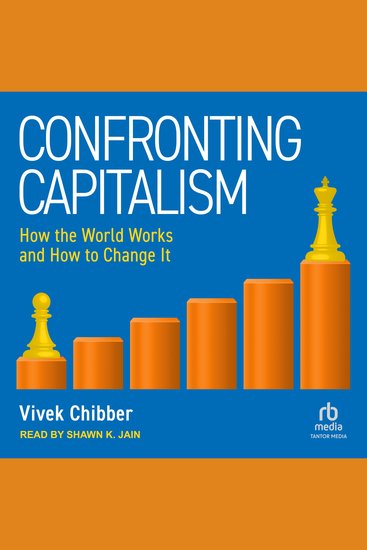
  • Confronting Capitalism - How the World Works and How to Change It - cover

    Confronting Capitalism - How the...

    Vivek Chibber

    • 0
    • 0
    • 0
    Why is our society so unequal? Why, despite their small numbers, do the rich dominate policy and politics even in democratic countries? Why is it so difficult for working people to organize around common interests? How do we begin to build a more equal and democratic society? 


    Vivek Chibber provides a clear and accessible map of how capitalism works, how it limits the power of working and oppressed people, and how to overcome those limits. The capitalist economy generates incredible wealth but also injustice. Those who own the factories, hotels, and farms always have an advantage over the people who rely on that ownership class for their livelihoods. This inequality in power and income is reflected in the operation of the state, where capitalists are able to exert their will even under relatively democratic conditions. The most important reason is that states depend on the employment and profits from capitalist enterprise for both finances and legitimacy. Every meaningful victory for working people has been won through collective struggle but collective action is very difficult to coordinate. In the final section of the book, Chibber walks the listener through some of the historical attempts to build socialism and presents a vision of how we might, perhaps against the odds, build a socialist future.
    Ver livro
  • Why Johnny Still Can't Read or Write or Understand Math - And What We Can Do About It - cover

    Why Johnny Still Can't Read or...

    Andrew Bernstein

    • 0
    • 0
    • 0
    The current school system churns out millions of illiterates and mental zombies—but here's how we're going to fix it, starting today. 


    Coming out of the COVID-19 pandemic, parents across the nation grapple with a new and horrifying understanding of just how bad our educational system has become. It all adds up to a system that seems hopelessly, terribly, and irrevocably broken. But as an educator and author, Andrew Bernstein reminds us that American education in the nineteenth through early-twentieth century was superb. This nation once knew how to turn out the brightest, most resourceful and independent-thinking people the world had ever seen. We can do it again.
    Ver livro
  • The Kingdom of God Is Within You - cover

    The Kingdom of God Is Within You

    Leo Tolstoy

    • 0
    • 0
    • 0
    "There is one thing, and only one thing, in which it is granted to you to be free in life… that is to recognise and profess the truth."
    
    The culmination of a lifetime of philosophical thought and consideration, The Kingdom of God is Within You (1893) is a powerful treatise on faith, morality and the futility of violence. It was banned in the author's native Russia because of its advocacy of pacifism, its questioning of the established socio-political order and its criticism of the Russian Orthodox Church.
    
    Tolstoy redefines Christianity as a personal, moral revolution rather than a mystical or institutional faith and advocates for a life of moral integrity and personal connection to God, envisioning a society transformed not by force, but by individuals acting according to their consciences. His radical rejection of organised religion and state violence has inspired generations of reformers, from Mahatma Gandhi to Martin Luther King Jr.
    Leo Tolstoy (1828–1910) was a Russian novelist, philosopher, and social reformer, widely regarded as one of the greatest writers of all time. He is best known for his epic novels War and Peace and Anna Karenina, both celebrated for their intricate character development and profound exploration of moral dilemmas and human nature. In his later years, Tolstoy experienced a spiritual awakening which led him to reject materialism and embrace a life of simplicity, seeking to align his life with his beliefs about non-violence and compassion. Tolstoy's legacy endures not only through his literary masterpieces but also through his profound impact on literature and philosophy.
    Ver livro