¡Acompáñanos a viajar por el mundo de los libros!
Añadir este libro a la estantería
Grey
Escribe un nuevo comentario Default profile 50px
Grey
Suscríbete para leer el libro completo o lee las primeras páginas gratis.
All characters reduced
Diplomacy Blitz - Take Charge - cover

Diplomacy Blitz - Take Charge

Y- Y-Photography, Snapshot Systems

Editorial: Snapshot Systems

  • 0
  • 0
  • 0

Sinopsis

Volatile international relations are anything but random. Diplomacy Blitz provides a simplified approach that clarifies power dynamics and the most probable alignment of interests related to geopolitical conflicts.
Disponible desde: 03/01/2024.
Longitud de impresión: 75 páginas.

Otros libros que te pueden interesar

  • The Philosophy of Social Ecology - Essays on Dialectical Naturalism - cover

    The Philosophy of Social Ecology...

    Murray Bookchin, Todd McGowan

    • 0
    • 0
    • 0
    What is nature? What is humanity's place in nature? And what is the relationship of society to the natural world? In an era of ecological breakdown, answering these questions has become of momentous importance for our everyday lives and for the future that we and other life-forms face. In the essays of The Philosophy of Social Ecology, Murray Bookchin confronts these questions head on: invoking the ideas of mutualism, self-organization, and unity in diversity, in the service of ever expanding freedom. 


    Refreshingly polemical and deeply philosophical, these essays take issue with technocratic and mechanistic ways of understanding and relating to, and within, nature. More importantly, they develop a solid, historically and politically based ethical foundation for social ecology, the field that Bookchin himself created and that offers us hope in the midst of our climate catastrophe.
    Ver libro
  • John Stuart Mill - A Very Short Introduction - cover

    John Stuart Mill - A Very Short...

    Gregory Claeys

    • 0
    • 0
    • 0
    John Stuart Mill (1806-73) is widely regarded as the leading liberal philosopher, economist, and political theorist of nineteenth century Britain. In his lifetime he was best known for his System of Logic (1843) and the Principles of Political Economy (1848). Today Mill is chiefly identified with On Liberty (1859), perhaps the definitive text of modern liberal statement of its subject, and probably the single most important work of modern political thought. Mill was also the first major male feminist thinker of the period (author of The Subjection of Women, 1869), and the first, as an MP, to introduce a bill for female enfranchisement before Parliament. 


    This Very Short Introduction offers a brief survey of the life and key ideas of this most influential Victorian British writer. Moving chronologically, Gregory Claeys outlines the philosophical background out of which Mill developed, chiefly through the ideas of Jeremy Bentham and James Mill. He demonstrates how Mill's personal life, especially his 'mental crisis' of 1827, and his relationship with Harriet Taylor, were integral to his intellectual development. Throughout Claeys considers Mill's key works set within the context of his lesser writings and correspondence, and discusses the more controversial aspects of his thought concerning religion, secularism, and birth control.
    Ver libro
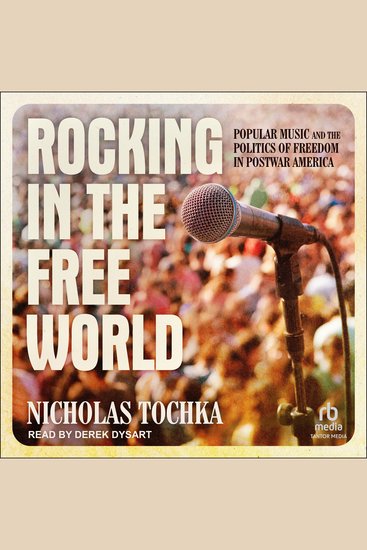
  • Rocking in the Free World - Popular Music and the Politics of Freedom in Postwar America - cover

    Rocking in the Free World -...

    Nicholas Tochka

    • 0
    • 0
    • 0
    Progressive and libertarian, anti-Communist and revolutionary, Democratic and Republican, quintessentially American but simultaneously universal. By the late 1980s, rock music had acquired a dizzying array of political labels. These claims about its political significance shared one common thread: that the music could set you free. 


    Rocking in the Free World explains how Americans came to believe they had learned the truth about rock 'n' roll, a truth shaped by the Cold War anxieties of the fifties, the countercultural revolutions (and counter-revolutions) of the sixties and seventies, and the end-of-history triumphalism of the eighties. How did rock 'n' roll become enmeshed with so many different competing ideas about freedom? And what does that story reveal about the promise-and the limits-of rock music as a political force in postwar America?
    Ver libro
  • The Shocking Truth about International Relations - cover

    The Shocking Truth about...

    Zoey Fraisers

    • 0
    • 0
    • 0
    International relations is a complex and ever-evolving field that shapes the global political landscape. The relationships between countries, organizations, and individuals influence everything from trade and diplomacy to security and human rights. Understanding the history, theories, and modern-day dynamics of international relations is essential for anyone seeking to grasp the intricacies of global affairs. The study of international relations has evolved from a niche academic discipline into a vital framework for analyzing global conflicts, cooperation, and power struggles. 
      
    The modern world has been profoundly shaped by the forces of globalization, which have made international relations more interconnected than ever before. Advances in communication, transportation, and technology have blurred the lines between domestic and international issues. Countries can no longer afford to operate in isolation; they must cooperate on matters of shared concern, such as climate change, terrorism, economic crises, and public health. However, the globalized world also comes with challenges. Increasingly, nations must navigate a complex web of relationships and competing interests, where power dynamics and the quest for dominance can create conflict. 
      
    Globalization has had a profound impact on international relations, but it has also revealed the limits of traditional diplomacy. In the past, diplomacy was primarily conducted between states, often in secret negotiations behind closed doors. Today, international diplomacy involves a wider range of actors, from multinational corporations and non-governmental organizations to grassroots movements and individual leaders. This shift has led to both opportunities and challenges for international cooperation, as diverse interests often clash in the pursuit of a global agenda.
    Ver libro

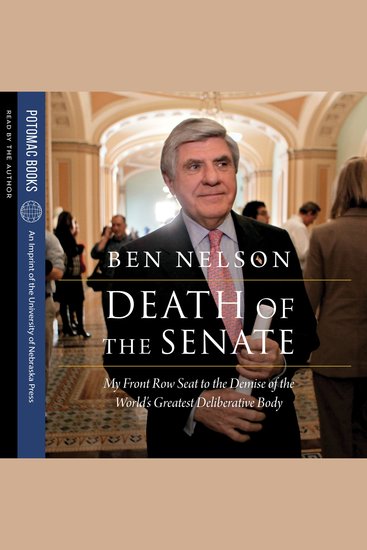
  • Death of the Senate - My Front Row Seat to the Demise of the World's Greatest Deliberative Body - cover

    Death of the Senate - My Front...

    Ben Nelson

    • 0
    • 0
    • 0
    Something is rotten in the U.S. Senate, and the disease has been spreading for some time. But Ben Nelson, former U.S. senator from Nebraska, is not going to let the institution destroy itself without a fight. Death of the Senate is a clear-eyed look inside the Senate chamber and a brutally honest account of the current political reality. 
    In his two terms as a Democratic senator from the red state of Nebraska, Nelson positioned himself as a moderate broker between his more liberal and conservative colleagues and became a frontline player in the most consequential fights of the Bush and Obama years. His trusted centrist position gave him a unique perch from which to participate in some of the last great rounds of bipartisan cooperation, such as the “Gang of 14” that considered nominees for the federal bench—and passed over a young lawyer named Brett Kavanaugh for being too partisan. 
    Nelson learned early on that the key to any negotiation at any level is genuine trust. With humor, insight, and firsthand details, Nelson makes the case that the “heart of the deal” is critical and describes how he focused on this during his time in the Senate. As seen through the eyes of a centrist senator from the Great Plains, Nelson shows how and why the spirit of bipartisanship declined and offers solutions that can restore the Senate to one of the world’s most important legislative bodies.
    Ver libro
  • The City of The Sun - cover

    The City of The Sun

    Tommaso Campanella

    • 0
    • 0
    • 0
    The City of the Sun is a philosophical work by the Italian Dominican philosopher Tommaso Campanella. It is an important early utopian work. The work was written in Italian in 1602, shortly after Campanella's imprisonment for heresy and sedition. A Latin version was written in 1613–1614 and published in Frankfurt in 1623. 
    The book is presented as a dialogue between "a Grandmaster of the Knights Hospitaller and a Genoese Sea-Captain". Inspired by Plato's Republic and the description of Atlantis in Timaeus, it describes a theocratic society where goods, women and children are held in common. It also resembles the City of Adocentyn in the Picatrix, an Arabic grimoire of astrological magic. In the final part of the work, Campanella prophesies—in the veiled language of astrology—that the Spanish kings, in alliance with the Pope, are destined to be the instruments of a Divine Plan: the final victory of the True Faith and its diffusion in the whole world. While one could argue that Campanella was simply thinking of the conquest of the New World, it seems that this prophecy should be interpreted in the light of a work written shortly before The City of the Sun, The Monarchy in Spain, in which Campanella exposes his vision of a unified, peaceful world governed by a theocratic monarchy.
    Ver libro