Join us on a literary world trip!
Add this book to bookshelf
Grey
Write a new comment Default profile 50px
Grey
Subscribe to read the full book or read the first pages for free!
All characters reduced
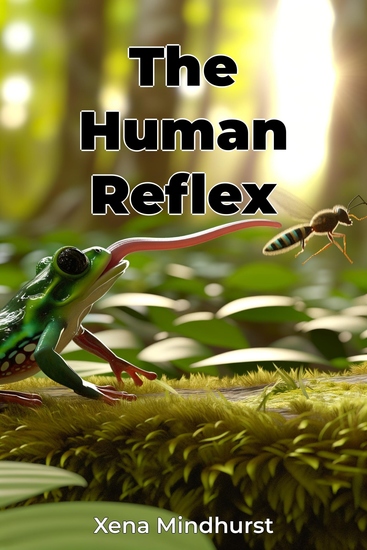
The Human Reflex - cover

The Human Reflex

Xena Mindhurst

Translator A AI

Publisher: Publifye

  • 0
  • 0
  • 0

Summary

"The Human Reflex" explores the vital role of involuntary reflexes in human survival and their connection to the nervous system. It reveals how these automatic behaviors shape our interactions with the environment and contribute to our overall well-being. Did you know reflexes enable us to react quickly to danger, maintaining bodily equilibrium? Understanding reflexes provides insight into neurological health, developmental processes, and our embodied existence. The book traces reflex research from early anatomical studies to modern neuroscience, explaining the roles of sensory neurons, motor neurons, and interneurons in reflex arcs. It presents a comprehensive understanding of reflexes, starting with basic types and neural circuitry, then examining development from infancy to adulthood, and finally investigating clinical significance, such as how abnormal reflexes can signal health issues. The book's accessible approach to complex scientific concepts, illustrative diagrams, and real-world examples make it valuable for students of psychology, biology, healthcare professionals, athletes, and anyone interested in the human body.
Available since: 02/12/2025.
Print length: 80 pages.


Other books that might interest you

  • The Two-Headed Whale - Life Loss and the Tangled Legacy of Whaling in the Antarctic - cover

    The Two-Headed Whale - Life Loss...

    Sandy Winterbottom

    • 0
    • 0
    • 0
    An elegant blend of "polemic, industrial history, nautical writing, elegy, and ecology" (The Scotsman), The Two-Headed Whale charts the tragic history of the post-war whaling industry alongside the author's thrilling memoir of sailing the Antarctic. 


    In 2016, Sandy Winterbottom embarked on an epic six-week tall-ship voyage from Uruguay to Antarctica. At the mid-way stop in South Georgia, her pristine image of the Antarctic was shattered when she discovered the dark legacy of twentieth century industrial-scale whaling. Enraged by what she found, she was quick to blame the men who undertook this whole scale slaughter, but then she stumbled upon the grave of an eighteen-year-old whaler from Edinburgh who she could not allow to bear the brunt of blame. There are two sides to every story. 


    The Two-Headed Whale vividly brings to life the spectacular scenery and wildlife of the vast Southern Oceans, set alongside the true-life story of Anthony Ford, the boy in the grave, as he sailed the same seas and toiled in an industry where profits outranked human life. Drawing together threads of nature and travel writing with an unflinching narrative of life aboard a whaling factory ship and the legacy it left behind, The Two-Headed Whale leaves us questioning our troubled relationship with the extraordinary abundance of this planet.
    Show book
  • Brief Answers to the Big Questions: Book Summary & Analysis - cover

    Brief Answers to the Big...

    Briefly Summaries

    • 0
    • 0
    • 0
    This is a concise summary and analysis of Brief Answers to the Big Questions, by Stephen Hawking.
     
    It is not the original book and is not affiliated with or endorsed by Stephen Hawking.
     
    Ideal those seeking a quick and insightful overview.
    
     
    Brief Answers to the Big Questions tackles some of humanity's most profound questions, from the existence of God to the potential for time travel and the future of artificial intelligence. Written in clear and accessible language, it explores the mysteries of the universe, the nature of reality, and humanity’s place in it, offering insights into the most pressing scientific and philosophical questions of our time.
    Show book
  • CHAT GPT: The Dark Side of (AI) Artificial Intelligence - Abuse of Chat GPT or Artificial Intelligence: Weapons of Mass Destruction Privacy Compromised - cover

    CHAT GPT: The Dark Side of (AI)...

    Ivan Venyamin

    • 0
    • 0
    • 0
    "Chat GPT: The Dark Side of Artificial Intelligence" is a compelling and informative book that explores the negative impacts of AI on our society. Through expert insights, case studies, and critical analysis, the book provides a comprehensive examination of the ethical considerations and challenges associated with AI development. It delves into issues such as privacy, bias, environmental impact, healthcare, education, politics, and the arts. The book offers recommendations for mitigating the negative impacts of AI and creating a more equitable and just society. This book is a must-read for anyone interested in understanding the complexities of AI and its impact on our world.
    Show book
  • Nineteen Reservoirs - On Their Creation and the Promise of Water for New York City - cover

    Nineteen Reservoirs - On Their...

    Luc Sante

    • 0
    • 0
    • 0
    Without the nineteen upstate reservoirs that supply its water, New York City as we know it would not exist today. 


    From 1907 to 1967, a network of reservoirs and aqueducts was built across more than one million acres in upstate New York, including Greene, Delaware, Sullivan, and Ulster Counties. This feat of engineering served to meet New York City's ever-increasing need for water, sustaining its inhabitants and cementing it as a center of industry. West of the Hudson, it meant that twenty-six villages, with their farms, forest lands, orchards, and quarries, were bought for a fraction of their value, demolished, and submerged, profoundly altering ecosystems in ways we will never fully appreciate. 


    This paradox of victory and loss is at the heart of Nineteen Reservoirs, Lucy Sante's meticulous account of how New York City secured its seemingly limitless fresh water supply, and why it cannot be taken for granted. In inimitable form, Sante plumbs the historical record to surface forgotten archives and images, bringing lost places back to life on the page. Her immaculately calibrated sensitivity honors both perspectives on New York City's reservoir system and helps us understand the full import of its creation.
    Show book
  • Bad Nature - How Rat Control Shapes Human and Nonhuman Worlds - cover

    Bad Nature - How Rat Control...

    Andrew McCumber

    • 0
    • 0
    • 0
    Offers insights into the social and cultural implications of humans’ relationships with rats and the natural world. Apart from the occasional pet owner who has rats, most people regard rats as disease-carrying nocturnal pests, scurrying around dumpsters and dragging slices of pizza through New York City subways. Since rats are seemingly omnipresent in human life, why do we harbor such negative feelings about them, and why are they among the creatures most frequently targeted for systematic extermination?In Bad Nature, sociologist Andrew McCumber draws out the cultural underpinnings of rat extermination across three countries and two continents. Drawing from ethnographic, interview, and textual data from the frigid prairie of Alberta, Canada; the heart of downtown Los Angeles, California; and the iconic Galápagos Islands of Ecuador, McCumber studies how humans have sought to suppress and exterminate rat populations in a variety of environmental, social, and political situations. He shows how, in these disparate locations, rat control is a social practice that draws and clarifies the spatial and symbolic boundaries between “good” and “bad” forms of nature. Rats are near the bottom of a symbolic hierarchy of species that places human life at the top, companion animals and majestic wildlife just below them, and the “invasive species” that call for systematic extermination at the very bottom. This hierarchy of living things that places rats at the bottom, McCumber argues, mirrors human systems of social inequalities and power dynamics.  Both original and engaging, Bad Nature urges readers to consider, when charting a just and sustainable future, where will the rats be placed in the worlds we envision?
    Show book
  • Summary: Robert F Kennedy Jr: The Real Anthony Fauci - cover

    Summary: Robert F Kennedy Jr:...

    Scott Campbell

    • 0
    • 0
    • 0
    This is a summary book, not the original. The content and opinions in this book are the sole responsibility of author and publisher Scott Campbell.  
    The following description is based on Robert F. Kennedy's best seller, and not the summary audiobook, which is currently, as of December 2021, #1 on AMAZON, and a NEW YORK TIMES, WALL STREET JOURNAL, USA TODAY and PUBLISHERS WEEKLY NATIONAL BESTSELLER 
    Pharma-funded mainstream media has convinced millions of Americans that Dr. Anthony Fauci is a hero. He is anything but. 
    As director of the National Institute of Allergy and Infectious Diseases (NIAID), Dr. Anthony Fauci dispenses $6.1 billion in annual taxpayer-provided funding for scientific research, allowing him to dictate the subject, content, and outcome of scientific health research across the globe. Fauci uses the financial clout at his disposal to wield extraordinary influence over hospitals, universities, journals, and thousands of influential doctors and scientists—whose careers and institutions he has the power to ruin, advance, or reward 
    During more than a year of painstaking and meticulous research, Robert F. Kennedy Jr. unearthed a shocking story that obliterates media spin on Dr. Fauci . . . and that will alarm every American—Democrat or Republican—who cares about democracy, our Constitution, and the future of our children’s health. 
    The Real Anthony Fauci reveals how “America’s Doctor” launched his career during the early AIDS crisis by partnering with pharmaceutical companies to sabotage safe and effective off-patent therapeutic treatments for AIDS. Fauci orchestrated fraudulent studies, and then pressured US Food and Drug Administration (FDA) regulators into approving a deadly chemotherapy treatment he had good reason to know was worthless against AIDS
    Show book