¡Acompáñanos a viajar por el mundo de los libros!
Añadir este libro a la estantería
Grey
Escribe un nuevo comentario Default profile 50px
Grey
Suscríbete para leer el libro completo o lee las primeras páginas gratis.
All characters reduced
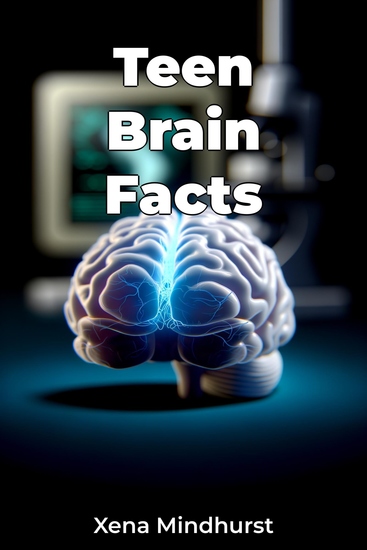
Teen Brain Facts - cover

Teen Brain Facts

Xena Mindhurst

Traductor A AI

Editorial: Publifye

  • 0
  • 0
  • 0

Sinopsis

"Teen Brain Facts" offers a fascinating exploration of adolescent neuroscience, unraveling the complex biological processes that drive teenage behavior and development. The book focuses on three critical components: the emotion-processing limbic system, the still-maturing prefrontal cortex responsible for decision-making, and the surge of hormones that influence teenage actions.

 
Through a blend of cutting-edge neuroimaging studies and longitudinal research, readers discover why teenagers often experience intense emotions and engage in risk-taking behaviors despite knowing better. The book progresses logically from basic brain architecture to more complex topics, including how sleep patterns affect teenage cognition and the profound impact of peer relationships on brain development.

 
Particularly intriguing is the revelation that the teenage brain undergoes significant structural changes between ages 12 and 25, with the prefrontal cortex - the brain's "control center" - developing later than emotional processing areas. This developmental mismatch helps explain many characteristic teenage behaviors that often puzzle adults.

 
Written in accessible language while maintaining scientific rigor, the book bridges neurobiology with practical applications for parents, educators, and healthcare professionals. It addresses contemporary concerns such as digital technology's influence on brain development and the importance of sleep in adolescent mental health. By incorporating real-world examples and case studies, the book provides evidence-based strategies for supporting healthy brain development while acknowledging the uniqueness of each teenager's developmental journey.
Disponible desde: 31/01/2025.
Longitud de impresión: 118 páginas.


Otros libros que te pueden interesar

  • The Science of Computing - Algorithms and Data Structures - cover

    The Science of Computing -...

    Craig Dames

    • 0
    • 0
    • 0
    Computing has become an integral part of modern society, shaping various industries, scientific research, and everyday life. At its core, computing involves the use of computers and algorithms to process data, solve problems, and automate tasks. This chapter provides an overview of computing and the fundamental principles of computational thinking, which form the foundation for problem-solving in the digital age. 
    Computing encompasses both hardware and software components. Hardware refers to the physical devices, such as processors, memory units, and input/output devices, that perform computational tasks. Software, on the other hand, consists of programs and algorithms that instruct hardware on how to process information. The evolution of computing has led to significant advancements, from early mechanical calculators to modern high-performance computing systems capable of handling vast amounts of data. 
    Computational thinking is a problem-solving approach that involves breaking down complex problems into manageable parts, recognizing patterns, and developing step-by-step solutions. It consists of several key principles, including decomposition, abstraction, pattern recognition, and algorithm design. Decomposition involves dividing a problem into smaller, more manageable sub-problems. Abstraction focuses on identifying relevant details while ignoring unnecessary complexity. Pattern recognition allows problem solvers to identify similarities between different problems, enabling efficient solutions. Algorithm design involves creating a set of well-defined steps to achieve a specific outcome.
    Ver libro
  • Back to the Moon - The Next Giant Leap for Humankind - cover

    Back to the Moon - The Next...

    Joseph Silk

    • 0
    • 0
    • 0
    Just over half a century since Neil Armstrong first stepped foot on the lunar surface, a new space race to the Moon is well underway and rapidly gaining momentum. Laying out a vision for the next fifty years, Back to the Moon is astrophysicist Joseph Silk's persuasive and impassioned case for putting scientific discovery at the forefront of lunar exploration. 


    The Moon offers opportunities beyond our wildest imaginings, and plans to return are rapidly gaining momentum around the world. NASA aims to build a habitable orbiting space station to coordinate lunar development and exploration, while European and Chinese space agencies are planning lunar villages and the mining of precious resources dwindling here on Earth. Powerful international and commercial interests are driving the race to revisit the Moon, but lunar infrastructures could also open breathtaking vistas onto the cosmos. Silk describes how the colonization of the Moon could usher in a thrilling new age of scientific exploration, and lays out what the next fifty years of lunar science might look like. With lunar telescopes of unprecedented size situated in permanently dark polar craters and on the far side of the Moon, we could finally be poised to answer some of the most profound questions confronting humankind, including whether we are alone in the Universe and what our cosmic origins are.
    Ver libro
  • Urban Economics - Understanding City Growth and Economic Development - cover

    Urban Economics - Understanding...

    Lyric Vale

    • 0
    • 0
    • 0
    Urban economics is the study of how economic forces shape the development, growth, and functioning of cities. In today’s rapidly urbanizing world, understanding the dynamics of urban areas is crucial for policymakers, businesses, and residents alike. Cities are the engines of economic activity, often driving national economies through industrialization, technological advancement, and labor market opportunities. The field of urban economics provides a framework for analyzing the complex interactions between land use, housing markets, transportation, and labor, all of which influence the growth and prosperity of cities. 
    One of the core ideas of urban economics is the concept of agglomeration, which refers to the concentration of people and businesses in a specific area to take advantage of economies of scale, reduced transportation costs, and access to a skilled workforce. This concentration leads to the formation of cities as hubs of economic activity, where services, manufacturing, and innovation thrive. However, agglomeration also brings challenges, such as congestion, pollution, and rising living costs. Urban economists seek to understand these trade-offs and develop policies that can foster economic growth while addressing the negative externalities associated with urbanization. 
    Another fundamental aspect of urban economics is the relationship between urban form and economic performance. Cities are not static entities; they evolve over time as they expand, change in function, and adapt to shifting economic realities. The spatial structure of a city—how land is used, where different activities are located, and the connectivity between various areas—can significantly impact its economic performance. Urban economics explores how factors like zoning laws, infrastructure, and transportation systems influence a city’s efficiency, livability, and overall success.
    Ver libro
  • Chasing the Intact Mind - How the Severely Autistic and Intellectually Disabled Were Excluded from the Debates That Affect Them Most - cover

    Chasing the Intact Mind - How...

    Amy S.F. Lutz

    • 0
    • 0
    • 0
    The concept of the intact mind, first described in a 2006 memoir, refers to the idea that inside every autistic child is an intelligent, typical child waiting to be liberated by the right diet, the right treatment intervention, the right combination of supports and accommodations. The sentiment itself is not new. Though the idea gives hope to parents devastated by a child's diagnosis, Amy Lutz argues that it has also contributed to widespread dismantling of services badly needed by severely disabled children and their families. 


    In Chasing the Intact Mind, Lutz traces the history of the intact mind concept, explaining how it influences current policy and practice affecting those with autism. Lutz provides a historical analysis of the intact mind narrative and describes how the concept—originally unique to autism—has come to inform current debates at the heart of intellectual and developmental disability practice and policy in the United States. Lutz argues that focusing on the intact mind and marginalizing those with severe disability reproduces historic patterns of discrimination that yoked human worth to intelligence, and that it is only by making space for the impaired mind that we will be able to resolve these ongoing clashes—as well as even larger questions of personhood, dependency, and care.
    Ver libro
  • Summary of Think Again - The Power of Knowing What You Don't Know by Adam Grant: Key Takeaways Summary & Analysis - cover

    Summary of Think Again - The...

    Brooks Bryant

    • 0
    • 0
    • 0
    DISCLAIMER: This is NOT the Official Book. This is a Summary! And it does NOT accompany the official book. 
    In this comprehensive summary, we provide an accessible understanding of Grant's groundbreaking research and fascinating stories. Learn how to cultivate intellectual flexibility, foster engaging dialogues, and promote an environment of perpetual learning, whether it's in your schools, workplaces, or communities. This summarized version of "Think Again" presents real-world examples ranging from international debate champions to musicians, from vaccine whisperers to the author himself – all of whom illustrate the beauty of letting go of outdated beliefs and embracing the joy of being wrong. 
    Our condensed rendition of "Think Again" invites you to reconsider long-held views that no longer serve you well and to celebrate mental flexibility over rigid consistency. It emphasizes that true wisdom lies not just in what we know, but also in acknowledging what we don't. Delve into this thought-provoking summary and let it inspire a new way of thinking and learning.
    Ver libro
  • Designing for Democracy - How to Build Community in Digital Environments - cover

    Designing for Democracy - How to...

    Jennifer Forestal

    • 0
    • 0
    • 0
    How should we "fix" digital technologies to support democracy instead of undermining it? In Designing for Democracy, Jennifer Forestal argues that accurately evaluating the democratic potential of digital spaces means studying how the built environment—a primary component of our "modern public square"—structures our activity, shapes our attitudes, and supports the kinds of relationships and behaviors democracy requires. 


    While many scholars and practitioners are attentive to the role of design in shaping behavior, they have yet to fully engage with the question of what structures are required to support democratic communities—and how to build them. Forestal closes this gap by providing a new theory of democratic space. Drawing from a wide range of disciplines, she argues that "democratic spaces" must be designed with three environmental characteristics—boundaries, durability, and flexibility—that, taken together, afford users the ability to engage in fundamental civic practices. 


    Through extended analyses of Facebook, Twitter, and Reddit, Forestal shows precisely how well these digital platforms meet the criteria for democratic spaces, or whether they do so at all. The result is a nuanced analysis of the democratic communities that form—or fail to emerge—in these spaces, as well as more concrete suggestions for how to improve them.
    Ver libro