Junte-se a nós em uma viagem ao mundo dos livros!
Adicionar este livro à prateleira
Grey
Deixe um novo comentário Default profile 50px
Grey
Assine para ler o livro completo ou leia as primeiras páginas de graça!
All characters reduced
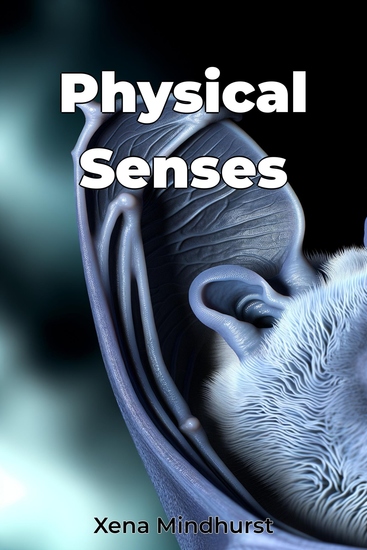
Physical Senses - cover
LER

Physical Senses

Xena Mindhurst

Tradutor A AI

Editora: Publifye

  • 0
  • 0
  • 0

Sinopse

"Physical Senses: A Comparative Study of Sensory Perception in Humans and Animals" offers a fascinating exploration of how different species experience and interact with their environment through various sensory systems. This comprehensive work examines the evolutionary journey that has shaped diverse sensory capabilities across species, from simple touch receptors to sophisticated neural networks, revealing how different organisms have developed specialized adaptations for survival in their unique ecological niches.

 
The book masterfully progresses from foundational concepts of sensory mechanics to complex comparative analyses, examining each major sense—touch, taste, smell, hearing, and vision—through the lens of both human and animal capabilities. Drawing on cutting-edge neuroimaging studies and behavioral experiments, it illuminates remarkable adaptations like echolocation in bats and electroreception in sharks, while explaining how basic sensory mechanisms are shared across species yet modified by evolutionary pressures.

 
Through a systematic, evidence-based approach, the text bridges multiple disciplines, connecting sensory biology with evolutionary theory and cognitive psychology. What sets this work apart is its comprehensive examination of both vertebrate and invertebrate species, coupled with its accessibility to readers with basic scientific knowledge. The inclusion of recent technological advances in sensory research and neural monitoring makes this an invaluable resource for understanding how different organisms perceive and process information from their environment, with practical applications ranging from medical treatment of sensory disorders to bio-inspired technological innovations.
Disponível desde: 05/01/2025.
Comprimento de impressão: 100 páginas.


Outros livros que poderiam interessá-lo

  • In Church as It Is In Heaven - Cultivating a Multiethnic Kingdom Culture - cover

    In Church as It Is In Heaven -...

    Timothy Paul Jones, Jamaal E....

    • 0
    • 0
    • 0
    Heaven is multiethnic. Are you ready for that? 


    The Bible tells us that the congregation gathered around God's heavenly throne will be "a vast multitude from every nation, tribe, people, and language," all singing the praises of the Lamb. God's intention has always been to delight for all eternity in a redeemed community of ethnic diversity. 


    But this diverse community shouldn't have to wait until eternity to begin! It can be a reality in our own local churches here and now. Patterned after a worship service, In Church as It Is in Heaven gives biblical warrant for such a community and shows how multiethnic churches provide a unique apologetic for the gospel. Along the way, the authors tell the story of their own church—a majority-white congregation which is being transformed into a family that reflects the diversity of heaven. 


    The multiethnic kingdom is not just a nice idea, or an abstract theory. It's a reality—one we can enter into today.
    Ver livro
  • Clash at Sunday Creek: Rum Romanism & Rebellion in Corning and Rendville - cover

    Clash at Sunday Creek: Rum...

    Jobie Joseph Siemer

    • 0
    • 0
    • 0
    The Tombstone of Early Ohio   Southeast Ohio's Little Cities of Black Diamonds was a rugged region in the 1800s. Nowhere was this truer than in Corning and Rendville, mining towns reminiscent of the Wild West era. Gun duels, scandals, lynchings, and murders plagued these places, as intrepid European immigrants and tenacious Black miners relied on raw grit to survive rowdy saloons and perilous coal mines. These impoverished workers also took bold stands against affluent mine operators, leading to intense clashes with the Ohio National Guard./ Author and former Green Beret Jobie Siemer reveals stories of formidable union conflicts and the unyielding resilience of miners whose faith was a beacon in a chaotic struggle to restore order to Sunday Creek./
    Ver livro
  • Breathmaker: The History and Legacy of the Seminole’s Creator God - cover

    Breathmaker: The History and...

    Editors Charles River

    • 0
    • 0
    • 0
    The Seminole tribe is one of the best known Native American tribes, and one of the most feared among 19th century Americans and Spaniards. In fact, the origin of the term Seminole comes from a Spanish description of them as “wild”, which belies the fact that the Seminole had friendly relations with the British and Spanish during the colonial era.  
    	To appreciate Seminole Native American mythology, their history and origins must be understood. Their forebears, the Muscogee, first migrated into what is now the Southeastern United States from various points in the north and west, which they accomplished by overpowering the indigenous inhabitants. The region was already occupied by several groups, including the Yuchi and Hitchiti, tribes that were likely descendants of the Moundbuilders. These tribes were subdued and then integrated into the Muscogee system. Thus, the traditions, beliefs, rituals, and mythologies of these various groups became the communal belief system of the Muscogee collective.  	 
    	According to the Muscogee, humans emerged “somewhere in the west,” a location described as the “foundation of all things” or the “backbone” of the Earth. Most scholars associate this location with the Rocky Mountains, and they credit the Four Corners area of the United States as being the location for the creation myths of Native American groups like the Pueblo. Though still not commonly understood, Breathmaker became the creator god of the Seminole peoples (the name is also written as Breath Maker and Maker of Breath), and he became the center of a cycle of creation stories. 
    Ver livro
  • Attention Implies That There is No Centre - Brockwood Park and Gstaad 1975 - Dialogue 5 - cover

    Attention Implies That There is...

    Jiddu Krishnamurti

    • 0
    • 0
    • 0
    Attention implies that there is no centre - 22 June 1975 
    • Consciousness, because it is in constant movement, has never found an energy 
    which is not contradictory, which is not produced by desire and thought. 
    • Can thought ever see its own movement and the futility of its own movement? • Attention implies that there is no centre. 
    • Is there a perception, a seeing outside the space which is part of consciousness? • Therearetwohumanbeings,onegetsconditionedandtheotherdoesn’t.Why? 
    How has it happened the other doesn’t get conditioned? 
    • How does this perception which is beyond attention, beyond awareness, 
    beyond concentration come about? 
    • Thought is rather superficial, it’s merely a very small part of the operation of the 
    brain. 
    • Can consciousness be completely empty of its content? • Order and disorder
    Ver livro
  • The Environmental Unconscious - Ecological Poetics from Spenser to Milton - cover

    The Environmental Unconscious -...

    Steven Swarbrick

    • 0
    • 0
    • 0
    Why has psychoanalysis long been kept at the margins of environmental criticism despite the theories of eco-Marxism, queer ecology, and eco-deconstruction available today? What is unique, possibly even traumatic, about eco-psychoanalysis? The Environmental Unconscious addresses these questions as it provides an innovative and theoretical account of environmental loss focused on the counterintuitive forms of enjoyment that early modern poetry and psychoanalysis jointly theorize. 


    Steven Swarbrick urges literary critics and environmental scholars to rethink notions of entanglement, animacy, and consciousness raising. Through close readings of Edmund Spenser, Walter Ralegh, Andrew Marvell, and John Milton, he reveals a world of matter that is not merely hyperconnected, as in the new materialism, but porous and off-kilter. And yet the loss these poets reveal is central to the enjoyment their works offer—and that nature offers. 


    The Environmental Unconscious offers a provocative challenge to ecocriticism that a new theory of disconnection is desperately needed. Tracing the propulsive force of the environmental unconscious from the early modern period to Freudian and post-Freudian theories of desire, Swarbrick not only puts nature on the couch in this book but also renews the psychoanalytic toolkit in light of environmental collapse.
    Ver livro
  • Thirty Problems Concerning Creation - De Creatione Problemata - cover

    Thirty Problems Concerning...

    Menasseh Ben Israel, Seymour...

    • 0
    • 0
    • 0
    At his own expense, he self-published Thirty Problems Concerning Creation (De Creatione Problemata 30) from his home. This work aimed to restore the classical doctrine of creation and to address intricate philosophical and theological questions related to the creation of the world and faith. The present edition is the first translation of the Latin edition that was published in 1635, nearly 400 years ago. The thirty problems explore various questions, including the existence of a beginning of the world, the nature of the raw material, the origin of Moses' knowledge of creation, the universality of this knowledge, the duration of the world's creation, the existence of other worlds before ours, the direct emanation from God, the number of elements necessary for creation, the creation of souls and bodies, the creation of Paradise and Hell, the existence of Purgatory, the creation of demons and angels, the roundness of the sky, the final cause of the world's creation, and the alterability of the world if it is eternal. These problems invite deep reflections on the nature of existence and faith.
    Ver livro