¡Acompáñanos a viajar por el mundo de los libros!
Añadir este libro a la estantería
Grey
Escribe un nuevo comentario Default profile 50px
Grey
Suscríbete para leer el libro completo o lee las primeras páginas gratis.
All characters reduced
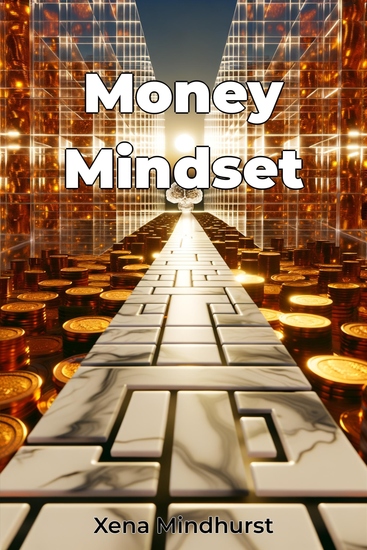
Money Mindset - cover

Money Mindset

Xena Mindhurst

Editorial: Publifye

  • 0
  • 0
  • 0

Sinopsis

'Money Mindset' presents a fascinating exploration of how our psychological patterns and emotional responses fundamentally shape our financial decisions. Drawing from four decades of behavioral economics research, including work by Nobel laureates Kahneman and Thaler, the book challenges traditional assumptions about rational economic behavior by revealing the powerful role of cognitive biases and emotional triggers in our money-related choices.

 
The book's three-part structure systematically unravels the complex relationship between mind and money. Beginning with the neurological foundations of decision-making, it examines concepts like loss aversion and temporal discounting, supported by recent neuroimaging data. The narrative then delves into how emotional states influence financial choices, using engaging case studies and research findings to illustrate these connections. Finally, it provides practical frameworks for readers to identify and reshape their own financial behavior patterns.

 
What sets this work apart is its accessible blend of scientific research and practical application, offering readers both theoretical understanding and actionable strategies. The book incorporates insights from psychology, neuroscience, and behavioral economics to help readers understand their financial behaviors while providing tools for improvement. Through assessment frameworks and emotional awareness exercises, it empowers readers to recognize their psychological money patterns and develop more conscious financial decision-making practices.
Disponible desde: 05/01/2025.
Longitud de impresión: 123 páginas.

Otros libros que te pueden interesar

  • Address to Free Colored Americans An - cover

    Address to Free Colored...

    An ti-Slavery Convention of...

    • 0
    • 0
    • 0
    The first Anti-Slavery Convention of American Women met in New York City in May, 1837. Members at the Convention came from all walks of life and included such prominent women as Mary Parker, Lucretia Mott, the Grimke sisters, and Lydia Maria Child. One outcome of this important event was a statement of the organization’s role in the abolitionist movement as expressed in AN ADDRESS TO FREE COLORED AMERICANS, which begins: “The sympathy we feel for our oppressed fellow-citizens who are enslaved in these United States, has called us together, to devise by mutual conference the best means for bringing our guilty country to a sense of her transgressions; and to implore the God of the oppressed to guide and bless our labors on behalf of our "countrymen in chains." This significant event was a precursor to the growing women’s rights movement of the time and to greater female involvement in other political reform movements. (Summary by lubee930)
    Ver libro
  • Fort Ticonderoga The Last Campaigns - The War in the North 1777–1783 - cover

    Fort Ticonderoga The Last...

    Mark Edward Lender

    • 0
    • 0
    • 0
    During the War for Independence, Fort Ticonderoga's guns, sited critically between Lakes Champlain and George, dominated north-south communications in upstate New York that were vital to both the British and American war efforts. The loss of Ticonderoga stunned patriot morale and ignited one of the greatest political firestorms of the war. But the fortunes of war turned. Two months later, the rebels mounted a sensational—if little known—counter-attack on Ticonderoga that had major implications for Burgoyne's eventual defeat at Saratoga in October. Yet Saratoga brought no peace, and Ticonderoga would be central to additional military and political maneuverings—many of them known only to specialist historians—that would keep the region on edge until the end of the war in 1783. 


    Based on new archival research, Fort Ticonderoga, The Last Campaigns: The War in the North, 1777-1783 by distinguished historian Mark Edward Lender highlights the strategic importance of the fort as British, American, and regional forces fought for control of the northern front at a critical point in the war. The book tells the Ticonderoga story in all of its complexity and drama, correcting misconceptions embedded in many previous accounts, and sheds vital new light on this key chapter in America's struggle for independence.
    Ver libro
  • Jimi Hendrix: A short biography - 5 Minutes: Short on time - long on info! - cover

    Jimi Hendrix: A short biography...

    5 Minutes, 5 Minute Biographies,...

    • 0
    • 0
    • 0
    Jimi Hendrix, guitar legend: Life and works in a short biography! Everything you need to know, brief and concise. Infotainment, education and entertainment at its best!
    Ver libro
  • Alaskan History: A Captivating Guide to Alaska's Past and the Story of Its Native Peoples - cover

    Alaskan History: A Captivating...

    Captivating History

    • 0
    • 0
    • 0
    Explore Alaska’s Bold Past, from Pioneers and Gold Rushes to the Lives of Alaska’s Native Peoples 
    Two manuscripts in one book:History of Alaska: A Captivating Guide to Historical Events and Facts You Should Know About Alaskan HistoryAlaska Natives: A Captivating Guide to the History of the Indigenous Peoples of Alaska 
    In the first part, History of Alaska, you’ll learn about:The First Alaskans: Who first lived in Alaska, and how did they shape the land?Explorers and Adventures: Why did explorers risk their lives in Alaska’s freezing wilderness, and what did they find?The Gold Rush: How did the hunt for gold change Alaska’s towns and economy forever?War and Defense: Why was Alaska key in World War II and the Cold War?The Alaska Pipeline: What challenges came with building one of the biggest oil pipelines, and how did it change the state?Alaska Today: How is Alaska leading in protecting nature and Native rights? 
    In the second part, Alaska Natives, you’ll discover:Origins of Alaska Natives: Learn where they came from and their early connections with Europe.Survival in Harsh Conditions: Discover how Alaska Natives thrived in tough lands.Traditions and Land: See how Alaska’s landscapes shaped Native cultures.The Russian Era: Explore how Native tribes resisted and survived Russian rule.Alaska Natives under U.S. Rule: Find out what changed when the U.S. took control. 
    Scroll up and click “Add to Cart” to learn more about Alaska’s history!
    Ver libro
  • Enquiry Concerning Human Understanding An - cover

    Enquiry Concerning Human...

    David Hume

    • 0
    • 0
    • 0
    The Enquiry Concerning Human Understanding is a shortened and simplified version of Hume's masterpiece A Treatise of Human Nature.  It sought to reach a wider audience, and to dispel some of the virulent criticism addressed toward the former book.  In it, Hume explains his theory of epistemology, and argues against other current theories, including those of John Locke, George Berkeley, and Nicolas Malebranche.  (Summary by Kirsten Ferreri)
    Ver libro
  • When Harry Met Pablo - Truman Picasso and the Cold War Politics of Modern Art - cover

    When Harry Met Pablo - Truman...

    Matthew Algeo

    • 0
    • 0
    • 0
    Harry Truman and Pablo Picasso were contemporaries and were both shaped by and shapers of the great events of the twentieth century—the man who painted Guernica and the man who authorized the use of atomic bombs against civilians. But in most ways, they couldn’t have been more different. Picasso was a communist, and probably the only thing Truman hated more than communists was modern art. Picasso was an indifferent father, a womanizer, and a millionaire. Truman was utterly devoted to his family and, despite his fame, far from a rich man. How did they come to be shaking hands in front of Picasso’s studio in the south of France? Truman’s meeting with Picasso was quietly arranged by Alfred H. Barr Jr., the founding director of New York’s Museum of Modern Art and an early champion of Picasso. Barr knew that if he could convince these two ideological antipodes, the straight-talking politician from Missouri and the Cubist painter from Málaga, to simply shake hands, it would send a powerful message, not just to reactionary Republicans pushing McCarthyism at home but to the whole world: modern art was not evil. A rigorous history with a heartwarming center, When Harry Met Pablo intertwines the biographies of Truman and Picasso, the history of modern art, and twentieth-century American politics, but at its core, it is the touching story of two old men who meet for the first time and realize they have more in common—and are more alike—than they ever imagined.
    Ver libro