
Junte-se a nós em uma viagem ao mundo dos livros!
Adicionar este livro à prateleira
Grey
Deixe um novo comentário Default profile 50px
Grey
Assine para ler o livro completo ou leia as primeiras páginas de graça!
All characters reduced
Human Brain Capacity - cover
LER

Human Brain Capacity

Xena Mindhurst

Tradutor A AI

Editora: Publifye

  • 0
  • 0
  • 0

Sinopse

'Human Brain Capacity' offers a fascinating exploration of our mind's remarkable ability to store, process, and retrieve information through its network of 100 billion neurons. This comprehensive work bridges the gap between complex neuroscience and practical understanding, examining how our brain's storage capabilities far surpass current artificial systems through its dynamic and selective approach to memory formation.The book strategically progresses through three main sections, beginning with the fundamental neuroscience of memory formation, moving through various memory systems, and concluding with practical applications for cognitive enhancement. It uniquely combines traditional neuroscientific research with contemporary findings, using clear analogies and real-world examples to illuminate complex concepts like synaptic plasticity and neural pruning. Readers discover how different memory systems—working, long-term, and procedural—work together to create our complete cognitive experience.What sets this book apart is its interdisciplinary approach, connecting neuroscience with computer science and education while remaining accessible to general readers. The text expertly balances theoretical understanding with practical application, offering evidence-based techniques for memory improvement while exploring the fascinating distinction between biological and digital storage systems. Through detailed examination of synaptic connections and neural networks, readers gain insight into how memories are physically stored and how the brain continuously reorganizes itself to maintain optimal cognitive function.
Disponível desde: 31/01/2025.
Comprimento de impressão: 125 páginas.

Outros livros que poderiam interessá-lo

  • Death in the Highlands - The Siege of Special Forces Camp Plei Me - cover

    Death in the Highlands - The...

    J. Keith Saliba

    • 0
    • 0
    • 0
    In fall 1965, North Vietnam's high command smelled blood in the water. The South Vietnamese republic was on the verge of collapse, and Hanoi resolved to crush it once and for all. The communists set their sights on South Vietnam's strategically vital West-Central Highlands. Their first target was the American Special Forces camp at Plei Me, remote and isolated along the Cambodian border. 


    As darkness fell on 19 October, 1965, two North Vietnamese Army regiments crept into their final strike positions. The plan was as simple as it was audacious: one regiment would bring the frontier fortress under siege while the other would lie in wait to destroy the inevitable rescue force. Initially, all that stood athwart Hanoi's grand scheme was a handful of American Green Berets, a few hundred Montagnard allies—and burgeoning US airpower. 


    But as the overland relief force bogged down, 5th Group ordered in the legendary "Chargin" Charlie Beckwith and his elite Project Delta to help hold the line. Soon, the newly formed 1st Cavalry Division, under its commander Maj. Gen. Harry Kinnard, would join the fray, setting the stage for its bloody Ia Drang Valley fights a few weeks later. Before it was over, the siege of Plei Me would push its defenders to the brink and usher in the first major clashes between the US and North Vietnamese armies.
    Ver livro
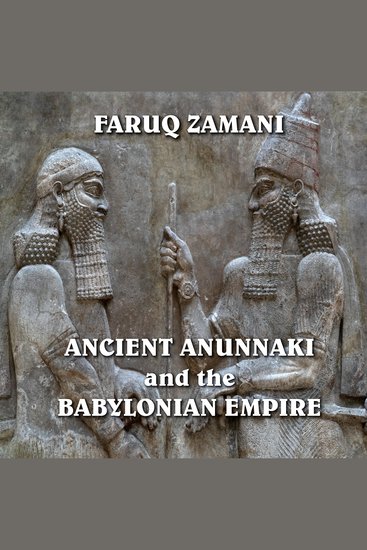
  • Ancient Anunnaki and the Babylonian Empire - How the Sumerians Descended to the Reign of Nebuchadnezzar - cover

    Ancient Anunnaki and the...

    Faruq Zamani

    • 1
    • 0
    • 0
    The earliest history of Babylon is little known. Among the many cities flourishing in southern Iraq, the town first appears in texts in the third millennium BC. Until the last century of the third millennium, few references existed to Babylon; however, offerings made to the temple of Enlil in Nippur during this period (when Babylon was part of an empire ruled by Ur) suggest a city already of some size and wealth. From relative obscurity in the middle of the 18th century BC, Babylon emerged as the political center of southern Mesopotamia. It held this position almost continuously for the next 1,400 years. 
    Near Baghdad, around 85 kilometers south of the Euphrates, is the site of Babylon. The area is located north of the great alluvial plain of southern Iraq, a landscape of silts deposited by the Tigris and Euphrates into a vast rift created by tectonic movement as the Arabian plate slips beneath the neighboring Eurasian plate. In addition to defining modern-day Iraq's northern and eastern boundaries, the Taurus and Zagros mountain ranges were created by the same collision. As a result, Mesopotamia encompasses several environmental zones, but Babylon itself is found in the flat alluvial plain in southern Iraq. 
    Ver livro
  • Becoming machines 400 Years of Combat Between Man and Machine - cover

    Becoming machines 400 Years of...

    Denis Collin

    • 0
    • 0
    • 0
    For four centuries, the modern world has been dominated by machinery. It was born with capitalist production. It quickly became symbiotic with capitalist development, which found its driving force in mechanics. Calculation, predictability, the power of abstraction - the categories of modern science were well suited to this new mode of production, which was about to invade the planet. However, all trends that lead to the elimination of life in favor of the mechanical lead to a general commodification of human life and a loss of our being-in-the-world. Turning nature into a mere raw material, replacing vital processes with mechanical procedures - all this leads to treating human beings as things, turning them into predictable beings. We therefore need to think in terms of resistance to this movement. The involution of the great Enlightenment movement towards the formation of a techno-scientific steel cage poses the task of rediscovering a sense of nature and life, of rethinking rootedness beyond what Simone Weil had outlined, of remaking nature as a sphere of resonance.
    Ver livro
  • All God’s Children and Blue Suede Shoes - Christians and Popular Culture - cover

    All God’s Children and Blue...

    Kenneth A. Myers

    • 0
    • 0
    • 0
    Where did popular culture come from? Why is it the way it is? How does it influence Americans in general and Christians in particular? Ken Myers offers fascinating answers. He sees pop culture as a culture of diversion, preventing people from asking questions about their origin and destiny and about the meaning of life. Two aspects stand out: a quest for novelty and a desire for instant gratification. In addition, this culture offers something very appealing: the illusion that we set our own standards, are the master of our fate, deserve a break, and are worth it.
    Ver livro
  • Beyond Good and Evil - cover

    Beyond Good and Evil

    Friedrich Nietzsche

    • 0
    • 0
    • 0
    What if everything you believe about morality, truth, and human nature is only the beginning?
    In Beyond Good and Evil, Friedrich Nietzsche shatters conventional thinking with a fearless examination of values, culture, religion, and the psychology behind human motivation. With razor-sharp insight and brilliant provocation, he challenges readers to question inherited beliefs and to seek a deeper, more powerful understanding of themselves and the world.
    
    Praised as "one of the most influential works in modern philosophy," this classic continues to inspire—challenging minds, sparking debate, and encouraging bold, independent thought. Nietzsche's voice remains as urgent, electric, and transformative today as when it was first written.
    
    If you crave ideas that push boundaries, ignite curiosity, and reawaken intellectual courage, this masterpiece is essential reading.
    
    Open the book—and step into a world where thinking for yourself becomes the ultimate revolution.
    Ver livro
  • Dutch East India Trading Company - Its Trade Exploration and Colonization in the 17th and 18th Century - cover

    Dutch East India Trading Company...

    Kelly Mass

    • 0
    • 0
    • 0
    Did you know that the Dutch were some of the first who came up with stocks? They were also known for their gigantic fleet, their ships, their colonies, and so much more. The 17th century was a golden age, a golden century for the Dutch, who discovered how to go to the new world in Asia, America, and other continents to transport spices, minerals, and other materials.The Dutch East India Company, officially the United East India Company (Dutch: Vereenigde Oost Indische Compagnie; VOC), was a megacorporation created in the early 17th century by a government-directed merger of many competing Dutch trade services.You might think that Amazon or Google is big, but the VOC is still thought to be the world's biggest corporation in documented history. It was established on March 20th, 1602, as a chartered business to trade with Mughal India in the early contemporary period, from which it imported 50% of fabrics and 80% of silks, mostly from the Bengal Subah area. In addition, when the Dutch federal government rewarded it a 21-year monopoly on the Dutch spice trade, the business traded with Indianized Southeast Asian nations.Find out more about this by going through this book.
    Ver livro