Junte-se a nós em uma viagem ao mundo dos livros!
Adicionar este livro à prateleira
Grey
Deixe um novo comentário Default profile 50px
Grey
Assine para ler o livro completo ou leia as primeiras páginas de graça!
All characters reduced
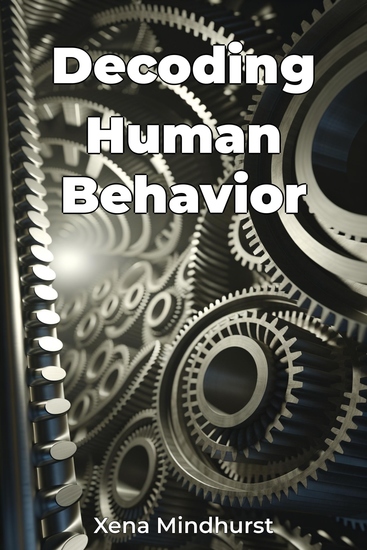
Decoding Human Behavior - cover
LER

Decoding Human Behavior

Xena Mindhurst

Tradutor A AI

Editora: Publifye

  • 0
  • 0
  • 0

Sinopse

"Decoding Human Behavior" explores the psychology behind our actions, focusing on how understanding emotions, habits, and cognitive biases can vastly improve our relationships and communication. It posits that grasping these underlying psychological principles is key to fostering healthier interactions and more effective communication in all aspects of life, from personal relationships to professional settings. Did you know understanding the physiological responses to emotions can help you manage reactions in stressful situations? Or that small changes in your environment can significantly impact habit formation? The book progresses logically, starting with the fundamentals of emotion, then delving into habit formation and cognitive biases. It uniquely synthesizes diverse psychological findings to provide a unified framework. By decoding these elements, you gain tools to develop empathy, improve listening skills, and cultivate more meaningful connections, ultimately promoting personal growth and stronger family relationships.
Disponível desde: 13/02/2025.
Comprimento de impressão: 103 páginas.

Outros livros que poderiam interessá-lo

  • Learn Hungarian While Sleeping - Learn While Sleeping - cover

    Learn Hungarian While Sleeping -...

    Innovative Language Learning, ...

    • 0
    • 0
    • 0
    Can you learn while sleeping? Studies* say that… yes you can.


    Listening to a language while asleep can help supercharge your vocabulary.


    Learn Easily with the Power of Pleasant Repetition


    With the Learn Hungarian While Sleeping Audiobook, you’ll absorb over 430 Hungarian words and phrases effortlessly.


    You can use this Beginner-Level Audiobook to
     
    • Relax while listening to Hungarian phrases and translations
     
    • Relieve stress. Just listen in — No confusing grammar rules
     
    • Wind down before bed to help you fall asleep
     
    • And of course — learn words passively — in your sleep.


    How does it work? Just press play... and listen to the gentle voice of a native teacher.


    Our teacher repeats each word and phrase multiple times... so you’ll retain them better… whether you’re awake or in bed. For best results, listen while awake first. Then, listen while falling asleep.


    What Will You Learn? You’ll Master 430+ Beginner Words & Phrases Including
     
    • Basic Greetings
     
    • Numbers in Hungarian
     
    • Common Questions and Answers
     
    • Words for Introducing Yourself
     
    • Basic Verbs & Adjectives
     
    • And much more


    The Learn Hungarian While Sleeping Audiobook includes
     
    • 13 Beginner-Level Audio Lessons
     
    • 6+ Hours of Lessons in Total
     
    • Accompanying PDF eBook with all of the words, phrases and translations


    * Züst, Mark Alain et al. “Implicit Vocabulary Learning during Sleep is Bound to Slow-Wave Peaks.” Current Biology. October 21, 2019.


    Download the PDF and read along
    Ver livro
  • Kia Hiwa Rā! - Māori Journalism in Aotearoa New Zealand - cover

    Kia Hiwa Rā! - Māori Journalism...

    Dr Atakohu Middleton

    • 0
    • 0
    • 0
    Māori journalism in Aotearoa New Zealand has become a vibrant industry, reporting through
    print, radio, television and the internet. This book looks at the history of Māori journalism and the
    elements that make it what it is today. The \author examines the way that news values common in English-speaking countries are reinterpreted for a Māori worldview and analyses news stories to
    show how Māori perspectives are expressed. She also identifies how elements of whaikōrero have
    been refashioned for news and the ways tapu and noa are managed by news teams. A host of well-known reporters share their perspectives on their work. They describe how they got into reporting, and we learn what happens as they gather information and produce their stories. In particular, we see how these journalists balance the demands of journalism and tikanga.
    Ver livro
  • Expect Dreams and Visions from God - cover

    Expect Dreams and Visions from God

    Pastor Philip

    • 0
    • 0
    • 0
    Dreams and visions are instruments through which God wants to develop your sensitivity to communicate with Him so that you can be a messenger, a disciple and an instrument to carry out His plan, His purpose and His will for humanity. The song "Bless Me Oh Lord" sung by Chey, at the end of the sermon, gives the listener an opportunity to reflect on the sermon.
    Ver livro
  • Neurology - Understanding Brain and Nerve Disorders - cover

    Neurology - Understanding Brain...

    Ava Westwood

    • 0
    • 0
    • 0
    The human brain is often described as the most intricate and remarkable organ in the known universe. It serves as the control center for every thought, emotion, movement, and sensation we experience, seamlessly integrating billions of neural connections to create the essence of who we are. Despite centuries of scientific inquiry, the brain remains a profound mystery—an organ that not only governs our basic survival but also fuels creativity, innovation, and the very consciousness that allows us to ponder its complexity. 
    What makes the brain so fascinating is its duality: it is both fragile and resilient, capable of extraordinary feats yet vulnerable to a wide range of disorders. Its 86 billion neurons form networks that enable everything from the rhythmic beating of the heart to the abstract contemplation of art, philosophy, and science. This complexity has driven countless researchers to explore its depths, seeking to understand how such a compact structure can hold the vastness of human thought, memory, and emotion. 
    Throughout history, our understanding of the brain has evolved dramatically. Early civilizations believed that the heart was the seat of intelligence, while the brain was considered secondary. It wasn’t until the work of ancient scholars like Hippocrates and later neurologists such as Thomas Willis and Santiago Ramón y Cajal that the brain was recognized as the epicenter of human experience. Today, advanced imaging technologies allow us to observe the brain in action, mapping areas responsible for speech, movement, and even complex emotions. Yet, for all our progress, we have only begun to scratch the surface of its potential.
    Ver livro
  • Soap Magic Part 4 - Old Bullies New Lovers - cover

    Soap Magic Part 4 - Old Bullies...

    Kathrin Pissinger

    • 0
    • 0
    • 0
    Magic. Mayhem. Soap. 
    Fine, then. Let's put this soap to good use. And what better use than to re-visit my old schoolmates and see what they've been up to. And maybe some will be up for some soapy, soapy lesbian love. I'll provide the toys, of course. Not gonna show up empty handed, right?  
    And so in the fourth part of Soap Magic, this trip down memory lane is paved with sweet, sticky lesbian juices, less sweet, but still sticky anal probing and quite possibly more than two lesbians at one time, if I was counting correctly. Which I may not have. Look, things got heated, is all I'm sayin'.
    Ver livro
  • Liberty and Crisis: The History of the American Revolution during 1776 - cover

    Liberty and Crisis: The History...

    Editors Charles River

    • 0
    • 0
    • 0
    Although the Declaration of Independence is now considered one of the most important political documents in history, the men that drafted it did not initially favor such a move at the start of the American Revolution. Despite its assumption of governing duties, the Second Continental Congress never intended, at least initially, to become the governing body of a new nation. Instead, it merely hoped to transform the relationship between Britain and her colonies to allow for greater self-government on their side of the Atlantic. Separation between the two was rarely favored, and this initial sentiment coalesced into the Olive Branch Petition, which sought a reasonable motion of reconciliation between George III and the colonies. It was drafted by one of Virginia’s delegates, Thomas Jefferson.  
    	By April of 1776, talk had heated up concerning independence, and a consensus was quickly growing in Congress. However, one problem was in the way: did the Congress have the authority to declare independence for its 13 member colonies? The process was riddled with confusion across the colonies. independence. And of course, simply declaring independence did not mean the British were going to grant it, and during that time, things were looking quite dire for the cause. After the siege of Boston forced the British to evacuate that city in March 1776, Continental Army commander George Washington suspected that the British would move by sea to New York City, the next logical target in an attempt to end a colonial insurrection. He thus rushed his army south to defend the city. 
    In the summer of 1776, the British conducted the largest amphibious expedition in North America’s history at the time, landing over 20,000 troops on Long Island. They easily captured Staten Island, which Washington was incapable of defending without a proper navy. Washington’s army attempted to fight, but Washington was badly outmaneuvered, and his army was nearly cut off from escape. 
    Ver livro