Rejoignez-nous pour un voyage dans le monde des livres!
Ajouter ce livre à l'électronique
Grey
Ecrivez un nouveau commentaire Default profile 50px
Grey
Abonnez-vous pour lire le livre complet ou lisez les premières pages gratuitement!
All characters reduced
About Things Of Life - cover

About Things Of Life

Xena Mindhurst

Maison d'édition: Publifye

  • 0
  • 0
  • 0

Synopsis

"About Things Of Life" presents a fascinating exploration of how our perception of life's varying scales - from tiny daily moments to major milestones - influences our psychological well-being and personal growth. Drawing from cognitive psychology and neuroscience research, the book challenges conventional self-help wisdom by demonstrating that fulfillment comes not from the magnitude of our experiences, but from our ability to appreciate and integrate experiences of all scales into our personal narrative.

 
The book's three-part structure takes readers on a journey through the science of scale perception, beginning with the neuroscience of how we process different experiences. It then delves into the profound impact of small daily habits and routines, before culminating in practical frameworks for combining both minor and major life elements into a coherent growth strategy.

 
Through the innovative "Scale-Integration Framework," readers learn techniques for developing micro-moment awareness while maintaining perspective on larger life goals. Using accessible language and real-world examples, the book bridges insights from positive psychology, behavioral economics, and neuroscience to offer a fresh perspective on personal development.

 
Whether it's finding meaning in a morning coffee ritual or contextualizing career achievements, readers gain practical tools for appreciating life's full spectrum of experiences. This approach particularly resonates with those feeling overwhelmed by life's complexities or searching for deeper meaning in their daily routines, offering a research-backed pathway to enhanced psychological well-being.
Disponible depuis: 22/11/2024.
Longueur d'impression: 104 pages.

D'autres livres qui pourraient vous intéresser

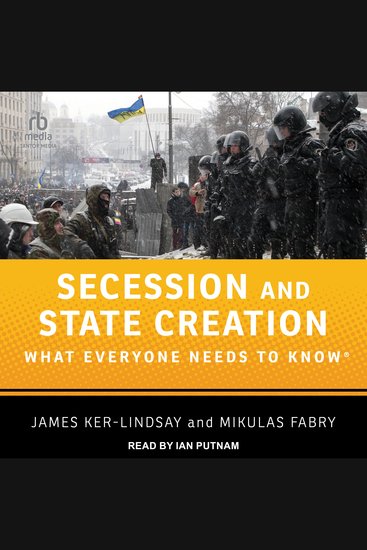
  • Secession and State Creation - What Everyone Needs to Know - cover

    Secession and State Creation -...

    Mikulas Fabry, James Ker-Lindsay

    • 0
    • 0
    • 0
    What makes a state? This question has attracted more and more attention in recent years with Catalan's illegal vote for independence from Spain and Palestine's ongoing search for international recognition. And while Scotland chose to remain with the United Kingdom, discussions of independence have only continued as the ramifications of the Brexit vote begin to set in. Kosovo, South Sudan, and the situation in Ukraine—each in its way reveals the perils of creating a nation separate from neighbors who have dominated it. 


    As James Ker-Lindsay and Mikulas Fabry show in this new addition to the What Everyone Needs to Know® series, the road to statehood never did run smooth. Declaring independence is only the first step; gaining both local and global acceptance is necessary before a state can become truly independent. The prospect of losing territory is usually not welcomed by the parent state. Beyond this immediate conflict, the international community often refuses to accept new states without proof of defined territory, a settled population, and effective government, which frequently translates to a democratic one with demonstrated respect for human rights. Covering the legal, political, and practical issues of secession and state creation, Ker-Lindsay and Fabry provide a sure-footed guide to a complex topic.
    Voir livre
  • Literature is the best thing that ever happened to mankind - cover

    Literature is the best thing...

    D.S. Pais

    • 0
    • 0
    • 0
    About the Book 
    The poem depicts the relationship between literature and life. 
    It is an expression of how literature has an impact on our society and the way we relate to life. 
    With literature, everything seems possible and it is the best gift that mankind has ever received.
    Voir livre
  • Formation of the United Nations The: The History of the Negotiations that Brought About the World’s Biggest International Organization - cover

    Formation of the United Nations...

    Charles River Editors

    • 0
    • 0
    • 0
    On November 29, 1943, as the Allies’ primary leaders met in Tehran, Roosevelt described to Stalin his idea for the organization that would become the United Nations. The American president suggested that the active arm of the organization be “the Four Policemen”: the U.S., USSR, UK, and China. Stalin agreed with much of the framework in principle, but asserted that China likely would not possess the strength after the war to assist. He also noted that the “Policemen” must hold a series of strong points, putting Germany and Japan at too much of a disadvantage to attempt military adventurism again. Roosevelt, eager to please his “friend,” agreed with everything Stalin said.  
    	That exchange might be considered the origin of the United Nations, one of the most famous bodies in the world, but the concept was already in existence in the form of its predecessor, the League of Nations. At the end of World War I, President Woodrow Wilson's pleas at the Paris Peace Conference relied on his Fourteen Points, which included the establishment of a League of Nations, but while his points were mostly popular amongst Americans and Europeans alike, leaders at the conference largely discarded them and favored different approaches. British leaders saw their singular aim as the maintenance of British colonial possessions. France, meanwhile, only wanted to ensure that Germany was weakened and unable to wage war again, and it too had colonial interests abroad that it hoped to maintain. Britain and France thus saw eye-to-eye, with both wanting a weaker Germany and both wanting to maintain their colonies. Wilson, however, wanted both countries to rid themselves of their colonies, and he wanted Germany to maintain its self-determination and right to self-defense. Wilson totally opposed the “war guilt” clause, which blamed the war on Germany.
    Voir livre
  • Radionics and Life Force Technologies - Hieronymus Radionics Kirlian Tesla and Orgone Devices - cover

    Radionics and Life Force...

    Martin K. Ettington

    • 0
    • 0
    • 0
    Radionics is the term for machines which manipulate life forces. This is often for healing or increasing psychic perceptions. 
    The Author is an engineer and has many decades of experience with the paranormal and well as time learning and experimenting with radionics devices from the 1970s. 
    While radionics devices are often considered pseudoscience, those opinions don’t take into account the sensitivities of individuals who have incredible paranormal and healing abilities. 
    In my first year of engineering school at Rensselaer Polytechnic Institute in Troy, New York I met a man who became my mentor in the Paranormal and other things too. This was in 1973. 
    I learned to meditate and how to open my crown chakra to take in vital forces which allowed me to do many things including healing others. 
    In addition I also met another middle aged guy at a Psychic Fair in Saratoga Springs, New York. He was a researcher in the arcane field of Kirlian Photography. 
    In this book the history of radionics is discussed, some of the major influencers on that history, how these devices are used for healing, and even some plans for building radionics devices.  
    My hope is that this book will give you a good grounding in radionics to learn to use it productively for your own efforts.
    Voir livre
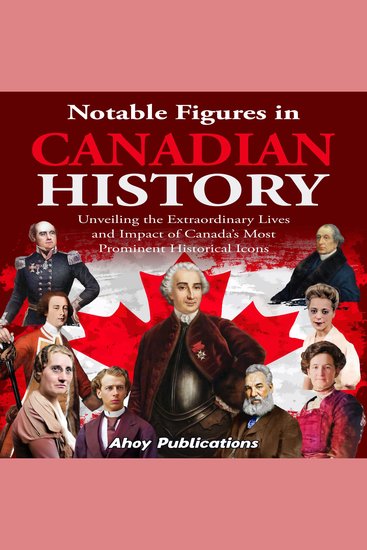
  • Notable Figures in Canadian History: Unveiling the Extraordinary Lives and Impact of Canada’s Most Prominent Historical Icons - cover

    Notable Figures in Canadian...

    Ahoy Publications

    • 0
    • 0
    • 0
    Follow in the footsteps of Canadian historical icons and discover their inspiring stories that changed the world! 
    Fascinating excerpts from their work are included. 
    Inside, you will find a biography section for each figure, the challenges they faced, and stories of how they overcame them. 
    You will discover significant events that shaped them and the political and social background at the time. 
    Here’s what you can find inside:Founding Father – Canada’s founding father and how he united the country.Famous Expeditions – Stories of Canadian explorers and their famous expeditions.Strong Canadian Women – Strong women who fought for social justice and equality.Canadian Nature Warriors – Environmental advocates and their conservation efforts.Canadian Military Leaders – Military leaders who played big roles during the First World War.Canada’s Victory – Notable figures who fought for Canada and led to its victory.Canadian Inventors – Famous inventors and their contributions to the world.Canadian Culture – Literary figures and their impact on Canadian culture and literature.Politics in Canada – Political figures who ushered Canada into the 20th century.Hockey – Hockey legends and how they influenced the game. 
    This audiobook introduces you to Canadian history through the lives of its most influential figures. It will take you on a journey back in time to witness all the events that impacted the country. 
    What are you waiting for? Scroll to the top of the page and click the “BUY NOW” button to grab your copy right away!
    Voir livre
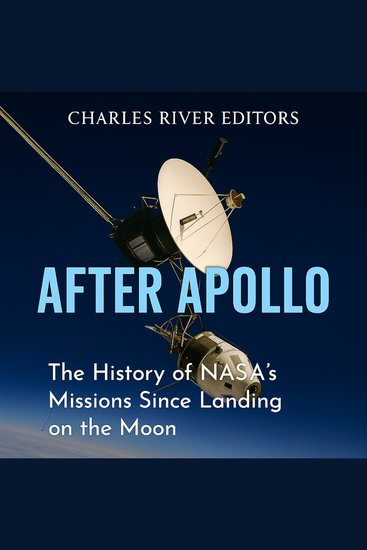
  • After Apollo: The History of NASA’s Missions Since Landing on the Moon - cover

    After Apollo: The History of...

    Charles River Editors

    • 0
    • 0
    • 0
    Today the Space Race is widely viewed poignantly and fondly as a race to the Moon that culminated with Apollo 11 “winning” the Race for the United States. In fact, it encompassed a much broader range of competition between the Soviet Union and the United States that affected everything from military technology to successfully launching satellites that could land on Mars or orbit other planets in the Solar System. Moreover, the notion that America “won” the Space Race at the end of the 1960s overlooks just how competitive the Space Race actually was in launching people into orbit, as well as the major contributions the Space Race influenced in leading to today’s International Space Station and continued space exploration.  
    Space exploration was always an expensive business, and throughout NASA’s history, the agency has had to justify to Congress its need for every dollar it intended to spend. This problem has helped NASA to be more careful and more creative with the money they did receive, and scientists had to justify the equipment they wanted to include on each space probe. They had to justify the size and the power demand, too. If they wanted too much, the entire mission might be scrubbed, and all their work would have been for naught. This made planning and designs leaner and more efficient, as scientists and engineers were more careful with their recommendations. 
    Although Apollo 11’s successful mission to the Moon is seen as the culmination of the Space Race, and the Apollo program remains NASA’s most famous, one of the space agency’s most successful endeavors came a few years later. In fact, the Pioneer program was the most diversified sequence of any of NASA’s programs, and though they’re now remembered for being among the first probes in history to reach the Outer Solar System, the elaborate planning changed goals several times over several years before resulting in historic successes. 
    Voir livre