Junte-se a nós em uma viagem ao mundo dos livros!
Adicionar este livro à prateleira
Grey
Deixe um novo comentário Default profile 50px
Grey
Assine para ler o livro completo ou leia as primeiras páginas de graça!
All characters reduced
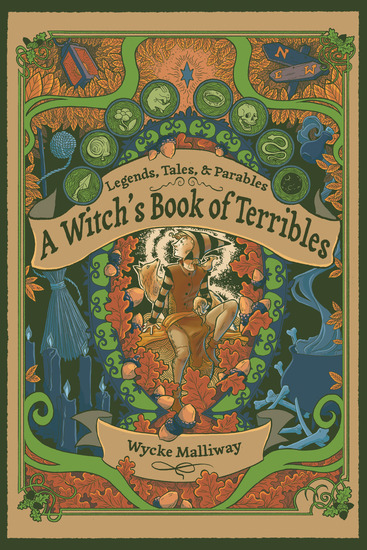
A Witch's Book of Terribles - Legends Tales & Parables - cover
LER

A Witch's Book of Terribles - Legends Tales & Parables

Wycke Malliway

Editora: Crossed Crow Books

  • 0
  • 0
  • 0

Sinopse

This enchanting book teaches practical witchcraft through wonderfully whimsical stories suitable for all ages.   For all witches, or for the witches in all of us, the tales in this collection will serve you well. Each enchanting story contained within A Witch’s Book of Terribles offers a lesson rooted in the art of witchcraft that a walker of any path will be sure to learn from. While witches have long been the impetus of fairy tales, it is now their turn to sit at the heart of the matter. Whether it is a fable of the timid Aunt Brynelda or a legend of the primal Nonna Noxa, there is much to be garnered from each witch’s tale, both great and terrible . . .  A Witch’s Book of Terribles is a collection of story-based lessons on witchcraft told through fairy tales, poems, and anecdotes to give witches advice and warnings about the magical path.
Disponível desde: 18/03/2025.
Comprimento de impressão: 212 páginas.


Outros livros que poderiam interessá-lo

  • The Dung Beetles of Liberia - cover

    The Dung Beetles of Liberia

    Daniel V. Meier Jr.

    • 0
    • 0
    • 0
    Liberia’s oligarchy: The beginning of the end.2019 Grand Prize Winner - Red City ReviewBased on the remarkable true account of a young American who landed in Liberia in 1961.The story weaves drama, dark comedy, and romance throughout a rich tapestry of narration - The San Francisco Book ReviewKEN VERRIER IS NOT HAPPY, NOR AT PEACE. He is experiencing the turbulence of Ishmael and the guilt of his brother's death. His sudden decision to drop out of college and deal with his demons shocks his family, his friends, and especially his girlfriend, soon to have been his fiancee. His destination: Liberia - The richest country in Africa both in monetary wealth and in natural resources.NOTHING COULD HAVE PREPARED HIM FOR THE EXPERIENCES HE WAS ABOUT TO LIVE THROUGH. Ken quickly realizes that he has arrived in a place where he understands very little of what is considered normal, where the dignity of life has little meaning, and where he can trust no one.Flying into the interior bush as a transport pilot, Ken learns quickly. He witnesses, first-hand, the disparate lives of the Liberian "Country People? and the "Congo People" also known as Americo-Liberians. These descendants of President Monroe's American Colonization Policy that sent freed slaves back to Africa in the 1800's have set up a strict hierarchical society not unlike the antebellum South.Author Dan Meier describes Ken's many escapades, spanning from horrifying to whimsical, with engaging and fast-moving narrative that ultimately describes a society upon which the wealthy are feeding and in which the poor are being buried.It's a novel that will stay with you long after the last word has been read.
    Ver livro
  • Love Death + Explosives - Thomas Pynchon's Polipsychology - cover

    Love Death + Explosives - Thomas...

    Michael Finney

    • 0
    • 0
    • 0
    Love Death + Explosives: Thomas Pynchon’s Polipsychology is an essay that addresses the postmodern angle in the reclusive titular author’s writing, challenging readers to decontextualize the interpretive lens for the literal.
    Ver livro
  • Toni Morrison's Spiritual Vision - Faith Folktales and Feminism in Her Life and Literature - cover

    Toni Morrison's Spiritual Vision...

    Nadra Nittle

    • 0
    • 0
    • 0
    When Toni Morrison died in August 2019, she was widely remembered for her contributions to literature as an African American woman, an identity she wore proudly. Morrison was clear that she wrote from a Black, female perspective and for others who shared her identity. But just as much as she was an African American writer, Toni Morrison was a woman of faith. 


    Morrison filled her novels with biblical allusions, magic, folktales, and liberated women, largely because Christianity, African American folk magic, and powerful women defined her own life. Her relatives, particularly her mother, were good storytellers, and her family's oral tradition included ghost stories and African American folktales. But her family was also Christian. As a child, Morrison converted to Catholicism and chose a baptismal name that truly became her own—Anthony, from St. Anthony of Padua—going from Chloe to Toni. Morrison embraced both Catholicism and the occult as a child and, later, as a writer. She was deeply religious, and her spirituality included the Bible, the paranormal, and the folktales she heard as a child. 


    Toni Morrison's Spiritual Vision unpacks this oft-ignored, but essential, element of Toni Morrison's work—her religion—and in so doing, gives listeners a deeper, richer understanding of her life and her writing.
    Ver livro
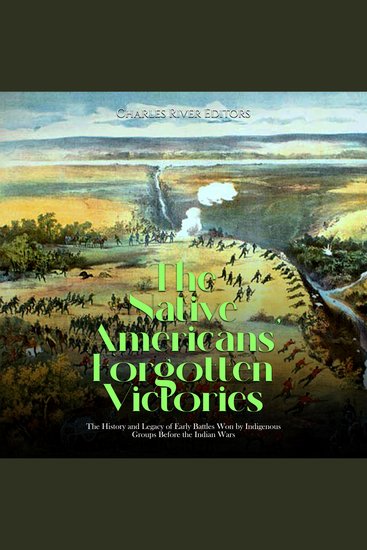
  • Native Americans’ Forgotten Victories The: The History and Legacy of Early Battles Won by Indigenous Groups Before the Indian Wars - cover

    Native Americans’ Forgotten...

    Editors Charles River

    • 0
    • 0
    • 0
    Most Americans have heard of the Little Bighorn, the 1876 battle in which a band of Lakota Sioux and their allies wiped out most of the 7th U.S. Cavalry under the command of George Armstrong Custer. The movie images are of fierce warriors in long eagle feather headdresses flowing behind them as they gallop across the plains on nimble Indian ponies. In fact, many Americans know the names of the commanders who beat Custer, most notably Sitting Bull and Crazy Horse, and there are famous photographs of the stolid looking, copper-skinned Sitting Bull participating in Buffalo Bill’s “Wild West Show.” 
    	Children in schools also learn that there were more battles in the coming years as American settlers pushed west, and names like Geronimo are instantly famous after the U.S. Army’s tough fight with the Apache. A few may even have learned of the formidable Comanches in the Texas Panhandle, and maybe even events like the Fetterman Massacre or the fights at Adobe Wells. 
    	Today, far fewer people are familiar with the conflicts that took place east of the Mississippi before the Indian Wars of the late 19th century, fought in the forests and woodlands rather than on the prairies. The names of a few of the tribes involved are well known - the Cherokee, Iroquois and Seminole and Choctaw – while other formidable groups like the Yamasee, Miamis, Delaware, Powhatan, and Shawnee are less known. As whites pushed west from the East Coast, there were fights against the Abenaki, and during the French & Indian War, two regiments of Redcoats and colonial militia were decimated near what is now Pittsburgh. An alliance under Chief Pontiac threw the British and Americans out of the Great Lakes country for a time in the mid-18th century and had much to do with the fracture between colonies and the mother country. And tribal leaders like Blue Jacket and Little Turtle waged bitter wars in the Old Northwest, including inflicting the worst defeat ever of the U.S. Army.
    Ver livro
  • Second Book of Thessalonians The - The World English Bible Book 53 (Unabridged) - cover

    Second Book of Thessalonians The...

    Various Authors

    • 0
    • 0
    • 0
    The Second Book of Thessalonians is a book from the New Testament of the Christian Bible. It is traditionally attributed to Paul the Apostle, with Timothy as a co-author. Modern biblical scholarship is divided on whether the epistle was written by Paul; some scholars believe Paul wrote this epistle, but others reject its authenticity based on what they see as differences in style and theology between this and the First Epistle to the Thessalonians.
    Ver livro
  • Showa Era - Empire War and the Post-War Transformation of Japan - cover

    Showa Era - Empire War and the...

    Rolf Hedger

    • 0
    • 0
    • 0
    The Showa Era began on December 25, 1926, with the ascension of Emperor Hirohito following the death of his father, Emperor Taisho. This period marked a critical turning point in Japan’s history, as the nation transitioned from the political turbulence of the Taisho democracy to a time of increasing militarism and nationalist sentiment. Although the early years of the Showa Era were characterized by economic struggles and political instability, they also set the stage for Japan’s dramatic expansion and eventual involvement in global conflict. 
    Emperor Hirohito’s rise to the throne was met with both hope and uncertainty. Many saw him as a symbol of continuity and strength, while others were concerned about the growing influence of the military in governmental affairs. Unlike his father, whose reign was defined by a parliamentary democracy, Hirohito’s early years as emperor witnessed the gradual erosion of democratic institutions. The shift toward a more authoritarian government was driven by widespread dissatisfaction with the parliamentary system and the belief that Japan needed strong leadership to navigate domestic and international challenges. 
    One of the most pressing issues Japan faced at the beginning of the Showa Era was economic instability. The global economy had already begun to weaken, and in 1929, the Wall Street Crash sent shockwaves through Japan’s financial system. The economic downturn led to mass unemployment, factory closures, and widespread poverty, exacerbating social tensions. Farmers, who made up a significant portion of Japan’s population, suffered greatly as the price of rice plummeted, leading to rural hardships that fueled growing resentment toward the government. In response, nationalist and ultraconservative factions gained popularity, advocating for territorial expansion as a means to secure resources and economic stability.
    Ver livro