Join us on a literary world trip!
Add this book to bookshelf
Grey
Write a new comment Default profile 50px
Grey
Subscribe to read the full book or read the first pages for free!
All characters reduced
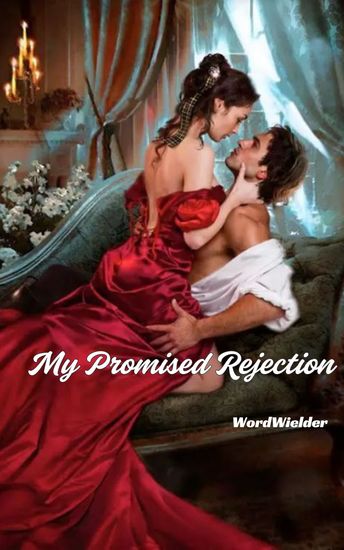
My Promised Rejection - cover

My Promised Rejection

WordWielder

Publisher: Publishdrive

  • 0
  • 0
  • 0

Summary

Olivia never expected her life to be destroyed by the one person that she has always trusted. When her mother rips their family apart, she refuses to accept her new life. Even when a judge gives her no choice but to live with her mother and her new husband, she refuses to accept the situation. New secrets will come to light that will even further have Olivia questioning her future. She makes the decision that she will never let history repeat itself. Will her convictions keep her from ever finding her own happiness or will she learn that love finds a way.
Available since: 08/12/2025.
Print length: 900 pages.

Other books that might interest you

  • Désirée’s Baby - cover

    Désirée’s Baby

    Kate Chopin

    • 0
    • 0
    • 0
    A graceful Southern plantation bathed in soft sunlight. In the foreground, a young woman in 19th-century dress holds a baby close to her chest, her expression both tender and troubled. Behind her, an imposing mansion looms, framed by Spanish moss and towering oaks. 
    Désirée’s Baby by Kate Chopin is a powerful and poignant short story that explores themes of identity, race, motherhood, and societal expectation in the Antebellum American South. First published in 1893, this literary classic weaves emotional depth and social commentary into a gripping tale of love, prejudice, and tragic irony. 
    Set on a Louisiana plantation, the story follows Désirée, a young woman of unknown heritage, who is adopted by a wealthy family and later marries the aristocratic Armand Aubigny. But when their newborn baby’s skin tone raises questions about its ancestry, Armand’s affections vanish, and Désirée’s world begins to unravel—leading to a heart-wrenching and unforgettable conclusion. 
    This full audiobook brings Chopin’s eloquent and emotionally charged prose to life with a tender, thoughtful narration. A must-listen for fans of American literature, Southern Gothic, and short fiction that challenges norms with quiet power.
    Show book
  • Keep out - cover

    Keep out

    Fredric Brown

    • 0
    • 0
    • 0
    What happens when humanity finally reaches the stars—only to be told to leave? In Fredric Brown's thought-provoking sci-fi short story "Keep Out", Earth's first interstellar explorers make contact with an advanced alien race. But instead of a warm welcome, they receive a chilling warning: humanity is not ready. With his trademark wit and sharp storytelling, Brown delivers a powerful tale about human nature, technological progress, and the barriers we may never cross. A gripping and clever story, "Keep Out" remains a classic exploration of our place in the universe.
    Show book
  • The Primrose Path - cover

    The Primrose Path

    D H Lawrence

    • 0
    • 0
    • 0
    ‘The Primrose Path’ looks at what can be the ephemeral nature of man and woman love and the horror and certainty of death which seems to hang over all the characters in this haunting short story.
    Show book
  • A Lesson on a Tortoise - From their pens to your ears genius in every story - cover

    A Lesson on a Tortoise - From...

    D H Lawrence

    • 0
    • 0
    • 0
    David Herbert Lawrence was born on the 11th September 1885 in Eastwood, Nottinghamshire, a coal mining town where the reality of a harsh life was only useful as experiences for future literary works. 
    He was educated at Beauvale Board School and became the first local boy to receive a scholarship to attend Nottingham High School. After 3 years he became a junior clerk in Haywood’s surgical appliances factory. He was also attempting a literary career which, in the short term, led to a teacher training position in Eastwood and later a teaching qualification from University College, Nottingham.  
    Lawrence’s first efforts were poems, short stories and a draft of ‘The White Peacock’. Moving to London and a teaching position in Croydon his writing attracted the attention of Ford Madox Ford, editor of The English Review, and he commissioned him to write ‘Odour of Chrysanthemums’.  
    Wanting to write full-time he now began work on what would become ‘Sons and Lovers.   
    In 1912 he met the older and married mother-of-three Frieda Weekley. They eloped to Germany and here Lawrence could see for himself the growing tensions with France.  So keen was his interest that he was arrested and accused of being a British spy.  
    In early 1914 Frieda obtained her divorce and they returned to Britain to be married just days before the outbreak of war. Owing to her German parentage, and his own public dislike of militarism and violence, the couple were treated with contempt and suspicion throughout the war years.  
    Despite this he continued to write but his reputation in England was so tarnished and, mirrored by his own disdain for the country, he and Frieda left England in November 1919, first for Europe and then America via Ceylon and Australia. 
    They bought a ranch in Taos, New Mexico and visited Mexico several times. The third visit in March 1925 caused a near fatal attack of malaria. To convalesce they moved to Florence. Here he continued work on ‘Lady Chatterley’s Lover’ which for many years would cause controversy. A renewed interest in oil painting resulted in an exhibition in 1929 which was raided by the police and several works were confiscated.  
    D H Lawrence died of complications arising from a bout of tuberculosis on the 2nd of March 1930 in Vence, France.  He was 44.
    Show book
  • Contrairy Mary - From their pens to your ears genius in every story - cover

    Contrairy Mary - From their pens...

    Edwin Pugh

    • 0
    • 0
    • 0
    The bookshelves of British literature are incredible collections that have gathered together centuries of very talented authors.  From these Isles their fame spread and whilst among their number many are now forgotten or neglected their talents endure.  Among them is Edwin Pugh.
    Show book
  • Cain - From their pens to your ears genius in every story - cover

    Cain - From their pens to your...

    Alexander Kuprin

    • 0
    • 0
    • 0
    Alexander Kuprin was born in Narovchat, Penza in Russia on 7th September 1870. 
    At 3 his Father died and he and mother moved to Moscow. By 10 he was enrolled at the Second Moscow Military High School and there his interest in literature began. The Alexander Military Academy followed and two years later he was a sub-lieutenant and posted to an Infantry Regiment for a further four years. 
    Despite his duties he was a now a keen writer and published his first short story at this time. His military duties also garnered him experiences for his breakthrough work ‘The Duel’.  Leaving the military he left for Kiev to work for local newspapers.  He continued to publish both stories and novels and by 1901 he was in St Petersburg becoming part of a group that included Chekhov, Ivan Bunin, Maxim Gorky and Leonid Andreyev.  
    In the years that followed further controversial works and acclaim followed.  His comments on the regime meant he was also put under secret police surveillance.   
    As World War I erupted, Kuprin opened a military hospital but was then given command of an infantry company in Finland. He was soon discharged on grounds of ill health.  
    The October Revolution saw him praise Lenin, but he warned that the Bolsheviks threatened Russian culture and might cause further widespread suffering to the peasants.  As Civil War raged he took his family to Helsinki and then on to Paris. 
    Exile saw his talents decline further and his succumbing to alcoholism. He became lonely and withdrawn. The family's poverty increased his malaise.   
    In May 1937, the Kuprin’s returned to Moscow.  He now saw his work published but wrote almost nothing new.  In 1938 his health rapidly deteriorated.  Already suffering from a kidney problems and sclerosis, he had now developed cancer of the oesophagus.  
    Alexander Kuprin died on 25th August 1938.
    Show book