¡Acompáñanos a viajar por el mundo de los libros!
Añadir este libro a la estantería
Grey
Escribe un nuevo comentario Default profile 50px
Grey
Suscríbete para leer el libro completo o lee las primeras páginas gratis.
All characters reduced
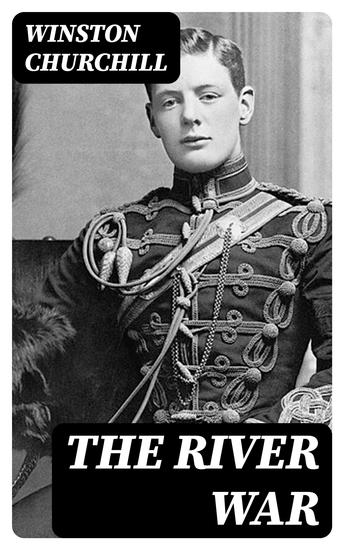
The River War - cover

The River War

Winston Churchill

Editorial: DigiCat

  • 0
  • 0
  • 0

Sinopsis

In "The River War," Winston Churchill offers a compelling account of the Second Sudanese War, blending personal narrative with historical analysis to illustrate the complexities of colonial conflict. Published in 1899, Churchill's literary style is characterized by vivid descriptions, sharp wit, and incisive commentary, revealing not only the realities of warfare but also the intricate social and political contexts of the time. Through detailed observation and engaging prose, he captures both the valor and the tragedy of the British campaign in Sudan, shedding light on the ethical dilemmas faced by imperial powers. Winston Churchill, a seasoned soldier and journalist prior to becoming a prominent political figure, was deeply influenced by his experiences in the military and his interactions with diverse cultures during his early career. Having served in the campaign as a cavalry officer, he provides a first-hand perspective that is both insightful and reflective, blending his personal journey with the broader implications of imperialism and its consequential impacts. For readers interested in military history, colonial studies, or Churchill's multifaceted legacy, "The River War" serves as a crucial resource. It invites readers to ponder the volatile interplay between power and morality and remains an essential work for anyone wishing to grasp the complexities of British imperialism in the late 19th century.
Disponible desde: 13/11/2022.
Longitud de impresión: 307 páginas.

Otros libros que te pueden interesar

  • Deep Sleep Hypnosis - Powerful Guided Meditation to Fall Asleep Instantly and Sleep Better with Spiritual Healing Guided Dreaming and Mind Body Spirit Cleansing Sleep Smarter and Wake Up Energized - cover

    Deep Sleep Hypnosis - Powerful...

    Chakra Meditation Academy

    • 0
    • 0
    • 0
    Fall Asleep Instantly and Sleep Well with Hypnosis and Meditation 
    A lack of quality sleep can hinder your alertness and quality of life while awake, as anyone with sleeping issues already knows. Suffering through sleepless nights does not have to be your reality. Instead you can fall asleep fast and get quality sleep tonight and every night.  
    Hypnosis has been used for centuries to cure many ailments, including the inability to get better sleep. You can help yourself improve the quality of your life with hypnotherapy. 
    This self-hypnosis book you will be able toFall asleep faster (and fall asleep instantly)Get better sleep for hours and hoursSleep anywhere you wantUse hypnosis therapy as a sleep medicationIncrease inner peacePractice mindfulness 
    Sleep deprivation can be so frustrating and debilitating, and they feel passionate about helping everyone out there get the proper rest and sleep that they deserve! So get ready to relax and enjoy a deeply soothing and restful sleep. 
    This book can help to reduce tension related emotional and bodily discomfort, calm the mind and body, regain focus and therefore help you to concentrate more effectively by becoming more mindful, improve energy levels and mood, increase serotonin and reduce anxiety.
    Ver libro
  • Being Here Now With Maharaji - Neem Karoli Baba - cover

    Being Here Now With Maharaji -...

    Radha Krsna Das

    • 0
    • 0
    • 0
    * "Whoever works for God, his work will be done by itself." 
    * "Keep God in your heart like you keep money in the bank." 
     
    Neem Karoli Baba known to his followers as Maharaj-ji - was a great Hindu guru, mystic, and devotee of Lord Hanuman. He is very well known outside India for being the spiritual master of a number of prominent Americans who traveled to India in the 1960s and 70s, including spiritual teachers Ram Dass, Bhagavan Das, and musicians Krishna Das and Jai Uttal. His ashrams are in India, and in Taos, New Mexico. Maharaji was a lifelong adept of bhakti-yoga and encouraged service to others (seva) as the highest form of unconditional devotion to God. 
     
    There can be no biography of him. Facts are few, stories many. He seems to have been known by different names in many parts of India, appearing and disappearing through the years. His non-Indian devotees of recent years knew him as Neem Karoli Baba, but mostly as “Maharajji” – a nickname so commonplace in India that one can often hear a tea vendor addressed thus. Just as he said, he was "nobody". He gave no discourses; the briefest, simplest stories were his teachings. Usually, he sat or lay on a wooden bench wrapped in a plaid blanket while a few devotees sat around him. Visitors came and went; they were given food, a few words, a nod, a pat on the head or back, and they were sent away. There was gossip and laughter for he loved to joke. Orders for running the ashram were given, usually in a piercing yell across the compound. Sometimes he sat in silence, absorbed in another world to which we could not follow, but bliss and peace poured down on us. Who he was was no more than the experience of him. Here are his sublime life and teachings.
    Ver libro
  • The Need for an Evolutionary Movement in Politics - cover

    The Need for an Evolutionary...

    Stephen Dinan

    • 0
    • 0
    • 0
    Stephen Dinan encourages us to ground ourselves in the deeper values that unite us such as liberty, equality, and justice for all - which are bedrock principles of the United States. He says we must take on the spirit of nonviolent evolutionaries as we hold a vision of possibility rather than one of opposition.
    Ver libro
  • National Treasure: Nicolas Cage - cover

    National Treasure: Nicolas Cage

    Lindsay Gibb

    • 0
    • 0
    • 0
    A celebration of Nicolas Cage ― the man and the meme Nicolas Cage: leading man or character actor? Action hero or goofball comedian? Internet joke or one of the greatest actors of his generation? Beyond the gif bait and easy punchline, Nicolas Cage continually frustrates easy categorization or understanding. In National Treasure, pop culture writer Lindsay Gibb studies Nicolas Cage’s acting style and makes sense of the trajectory of his eclectic career. In the process, Gibb debunks the common claim that Cage makes bad choices. While his selection of roles is seemingly inscrutable, Cage challenges critics and audiences alike by refusing to be predictable or to conform to the Hollywood approach to acting. Much like one of his mentors, David Lynch, Cage aims for art in movie-making. Is there a method to his madness? Is he in on the joke? In this clear-eyed and well-argued volume of the Pop Classics series, Gibb answers both questions with a resounding hell yes.
    Ver libro
  • Social Experiments in the 20th Century: The History of the World’s Most Famous and Infamous Psychological Experiments - cover

    Social Experiments in the 20th...

    Editors Charles River

    • 0
    • 0
    • 0
    The human psyche is one of the most complex, unpredictable, enigmatic, and therefore riveting phenomena in existence, one that psychologists have been working on deciphering since the dawn of modern science. To better understand the multifaceted intricacies of human behavior, and to unlock the secrets of the conscious mind and the subconscious, ambitious professionals in the field have conducted numerous groundbreaking – and at times, problematic – psychological experiments. The practice originated with German philosopher Wilhelm Wundt, one of the fathers of modern psychology and the creator of the world's first experimental psychology laboratory at the University of Leipzig. He sought to measure the average speed of thought processes by assigning a range of reaction time tasks to his subjects.  
    	As the nascent, yet fast-developing scientific discipline took hold around the globe, psychological experiments simultaneously diversified. As revolutionary and eye-opening as many of these experiments were, they often danced on the fine line between ethical and unethical. There was, for instance, the now-infamous Little Albert Experiment, conducted at Johns Hopkins University in 1920, in which a nine-month-old infant was deliberately manipulated into developing an irrational fear for the purpose of studying classical conditioning, and the correlation between adult fears and childhood traumas. The Monster Study, carried out at the University of Iowa in 1939, attempted to convert orphans into stutterers, half of whom were subjected to positive reinforcements and the others to negative ones. Then, there was arguably the most notorious psychological experiment in history: the 1971 Stanford Prison Experiment, in which participants were randomly assigned the character of either prisoner or prison guard. That role-playing study quickly spiraled out of control.
    Ver libro
  • Famous Men of Modern Times - cover

    Famous Men of Modern Times

    John Henry Haaren, A. B. Poland

    • 0
    • 0
    • 0
    “Famous Men of the Middle Ages” features attractive biographical sketches of thirty-five of the most prominent characters in the history of the Middle Ages, from the barbarian invasions to the invention of the printing press. Each story in this book by John Haaren is told in a clear, simple manner, and is well calculated to awaken and stimulate the youthful imagination. Notable characters featured in “Famous Men of the Middle Ages” include Attila the Hun, Charlemagne, William the Conqueror, Frederick Barbarossa, Marco Polo, and William Tell. This book also includes a chapter about one woman: Joan of Arc. This book provides a great introduction to the Middle Ages, not only for children, but for adults who missed out on studying some of the more fascinating figures during this time period. John Haaren, who also wrote Famous Men of Greece, Famous Men of Rome, and Famous Men of the Middle Ages, was an American educator and historian. Haaren's father was German and his mother Irish. He studied under Professor N. M. Butler at Columbia University, 1889-91, before becoming a teacher in New York. In 1907 he became Associate Superintendent of Schools in New York, increasing the number and efficiency of kindergartens and starting classes to teach English to foreigners. He was president of the department of pedagogy in the Brooklyn Institute. Haaren High School which was located in Manhattan named in his honor. The Charles B. J. Snyder-designed school, which was initially De Witt Clinton High School, is now Haaren Hall on the campus of the John Jay College of Criminal Justice.
    Ver libro