Junte-se a nós em uma viagem ao mundo dos livros!
Adicionar este livro à prateleira
Grey
Deixe um novo comentário Default profile 50px
Grey
Assine para ler o livro completo ou leia as primeiras páginas de graça!
All characters reduced
Leave Taking - cover
LER

Leave Taking

Winsome Pinnock

Editora: Nick Hern Books

  • 0
  • 1
  • 0

Sinopse

'What doctor know about our illness? Just give you pills to sick you stomach and a doctor certificate. What they know about a black woman soul?'
In North London, Del and Viv are soul-sick. Del doesn't want to be at home; staying out late – 3 p.m.-the-next-day late – is more her thing. Viv scours her schoolbooks trying to find a trace of herself between their lines.
When Enid takes her daughters to the local obeah woman for some traditional Caribbean soul-healing, secrets are spilled. There's no turning back for Del, Viv and Enid as they negotiate the frictions between their countries and cultures.
Two generations. Three incredible women. Winsome Pinnock's play Leave Taking is an epic story of what we leave behind in order to find home. It premiered in 1987, and was revived at the Bush Theatre, London, in 2018, in a production directed by the Bush's Artistic Director, Madani Younis.
Winsome Pinnock has written numerous plays, including Talking in Tongues, for which she won the George Devine and Pearson Best New Play Awards.
'The godmother of Black British playwrights' Guardian
Disponível desde: 30/05/2018.
Comprimento de impressão: 96 páginas.

Outros livros que poderiam interessá-lo

  • Homer's The Iliad and The Odyssey - cover

    Homer's The Iliad and The Odyssey

    Homer Homer

    • 0
    • 0
    • 0
    "Ah how shameless – the way these mortals blame the gods. From us alone they say come all their miseries yes but they themselves with their own reckless ways compound their pains beyond their proper share.” – The OdysseyExperience the stunning Greek poetry of Homer in this collection of his two major works: The Iliad and The Odyssey. These epic poems are beloved for their presentation of Greek history and belief systems, their strong theming and lessons on Greek virtues, and their continued influence on the literary canon.The Iliad –In the final days of the long-fought Trojan War, the Greek gods begin to interfere with the events of the war. When plagues strike the Achaean army, the fierce leader Achilles uses his connections with the gods to further interfere, which begins a series of events that leads to death and destruction on both sides of the war. This dramatic poem is a commentary on human folly and hubris, while also an in-depth explanation of the warfare styles of the time and a representation of the Greek views on the interference of gods in major historical events.The Odyssey –Following the events of The Iliad, Odysseus begins a journey to return to his home of Ithaca after being away for a decade due to angering Poseidon, the god of the sea. After sneaking away from Poseidon, he embarks on a years-long voyage home during which he is captured and circumvented by earthly and godly foes alike. His journey home is slow and full of turmoil and adventure. Themes in this poem include hospitality, predetermined fate and omens, journeying home, and wandering as a test of faith and resilience.
    Ver livro
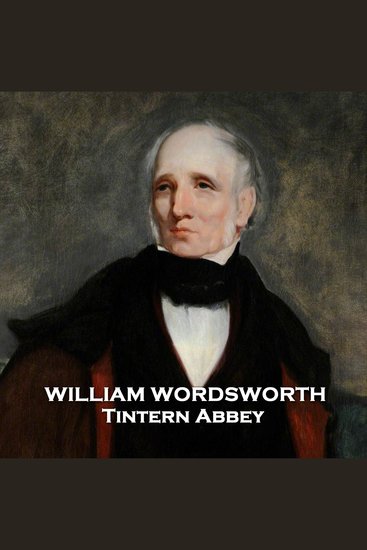
  • Tintern Abbey - Glorious poem evoking the beauty of a church monument - cover

    Tintern Abbey - Glorious poem...

    William Wordsworth

    • 0
    • 0
    • 0
    William Wordsworth was born on 7 April, 1770 in Cockermouth, in Cumbria, northwest England.  
    Wordsworth spent his early years in his beloved Lake District often with his sister, Dorothy. The English lakes could terrify as well as nurture, and as Wordsworth would write “I grew up fostered alike by beauty and by fear,” 
    After being schooled at Hawkshead he went to St. John’s College, Cambridge but not liking the competitive nature of the place idled his way through saying he “was not for that hour, nor for that place.”  
    Whilst still at Cambridge he travelled to France.  He was immediately taken by the Revolutionary fervor and the confluence of a set of great ideals and rallying calls for the people of France. 
    In his early twenties he ventured again to France and fathered an illegitimate child. He would not see that daughter till she was 9 owing to the tensions and hostilities between England and France. 
    There now followed a period of three to four years that plagued Wordsworth with doubt.  He was now in his early thirties but had no profession, was rootless and virtually penniless.  
    Although his career was not on track he did manage to publish two volumes, both in 1793;  An Evening Walk and Descriptive Sketches. 
    This dark period ended in 1795. A legacy of £900 received from Raisley Calvert enabled Wordsworth to pursue a literary career in earnest.  
    In 1797 he became great friends with a fellow poet, Samuel Taylor Coleridge. They formed a partnership that would change both their lives and the course of English poetry. 
    Their aim was for a decisive break with the strictures of Neoclassical verse. In 1798 the ground breaking Lyrical Ballads was published. Wordsworth wrote in the preface “the spontaneous overflow of powerful feelings: it takes its origin from emotion recollected in tranquility.” Most of the poems were dramatic in form, designed to reveal the character of the speaker. Thus the poems set forth a new style, a new vocabulary, and new subjects for poetry. 
    Coleridge had also conceived of an enormous poem to be called “The Brook,” in which he proposed to treat all science, philosophy, and religion, but soon laid the burden of writing it to Wordsworth.  To test his powers for that endeavour, Wordsworth began writing the autobiographical poem that would absorb him for the next 40 years, and which was eventually published as The Prelude, or, Growth of a Poet’s Mind.  
    By the 1820s, the critical acclaim for Wordsworth was growing, but perhaps his best years of work were behind him. Nonetheless he continued to write and to revise previous works.  
    With the death is 1843 of his friend and Poet Laureate Robert Southey, Wordsworth was offered the position. He accepted despite saying he wouldn’t write any poetry as Poet Laureate. And indeed he didn’t. 
    Wordsworth died of pleurisy on 23 April 1850. He was buried in St Oswald’s church Grasmere.
    Ver livro
  • Train of Life - cover

    Train of Life

    Edmund Gosse

    • 0
    • 0
    • 0
    LibriVox volunteers bring you nine readings of The Train of Life by Edmund Gosse. This was the weekly poetry project for the week of September 28th, 2014.
    Ver livro
  • Too Much World at Once - cover

    Too Much World at Once

    Billie Collins

    • 0
    • 0
    • 0
    'We should've seen this coming. We did. We did see this coming. The world will not be kind to us because we haven't given it a reason to be.'
    On his fifteenth birthday, Noble transforms into a bird. Thousands of miles away, his sister Cleo is stationed on a remote island with the British Antarctic Survey.
    But the birds have disappeared and Noble needs to reach her. Lying low until it's safe to take flight, he finds solace in misfit Ellis, while his mum desperately tries to stop their home from falling apart.
    The world turns. Dark clouds gather. Chaos is on the horizon...
    Billie Collins's play Too Much World at Once is an urgent coming-of-age story for our times – and a lyrical, theatrical journey that spans continents and lives. It was premiered at HOME, Manchester, in March 2023 by Box of Tricks Theatre before a UK tour.
    Ver livro
  • Hope Beauty and Friendship - cover

    Hope Beauty and Friendship

    John Angus Walker-Smith

    • 0
    • 0
    • 0
    This selection of poems by a new author was triggered by the tragic death of his 28-year-old daughter. So the collection begins with loss and the aftermath of loss: the hope of the author that his daughter and he may be reunited in the life to come. This hope underlies many of the poems. This is clearly articulated in ‘Osler and Son’, where a father grieves for loss of his son in World War I but in a stoical, unexpressed manner. 
    The author records his childhood experience of emotions being held back in ‘Boys Don’t Cry John’. While some poems look back, most are contemporary, such as those inspired by the lockdown and the Ukraine War. 
    The author advocates expression of feelings. This is powerfully expressed in relation to his experience of Friendship, both past and present. Transcendental beauty is a theme in the metaphysical poems ‘The Colour Blue’ and ‘Roman Glass’. 
    However, each poem is unique. Many of them speak from the heart and have an emotional impact. The author hopes that these will resonate with readers.
    Ver livro
  • An Orange A Syllable - cover

    An Orange A Syllable

    Gillian Sze

    • 0
    • 0
    • 0
    The latest book by Gillian Sze, author of the Pat Lowther Memorial Award–winning book Quiet Night Think
    		 
    This prosimetrical work is a meditation on motherhood, language, and art. The central speaker witnesses the earliest utterances of her child and launches into a poetic inquiry of words themselves, asking, How to measure one’s mouth by its words? The speaker seeks an answer amidst the language that surrounds her — words misspoken, mispronounced, remembered, unwritten — and, in doing so, struggles with signification and significance.
    		 
    Each prose poem in the five-part collection darts between the many meanings of “fit” — as in “a sudden burst of emotion” or “to be the right size and shape,” and the archaic “fytte” (a section of a poem). A text becomes an open mouth, a square day of a calendar, or a bare fragment of a narrative. The final section of the book is an intimate and ekphrastic engagement with the work of Danish painter Vilhelm Hammershøi. Drawn to Hammershøi’s paintings of the empty rooms of his apartment, the speaker recognizes a familiar space of art’s insistence.
    		 
    An Orange, A Syllable details a period of maternal and artistic transformation.
    Ver livro