Join us on a literary world trip!
Add this book to bookshelf
Grey
Write a new comment Default profile 50px
Grey
Subscribe to read the full book or read the first pages for free!
All characters reduced
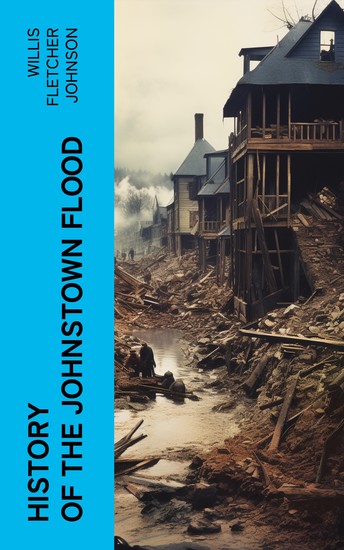
History of the Johnstown Flood - cover

History of the Johnstown Flood

Willis Fletcher Johnson

Publisher: e-artnow

  • 0
  • 0
  • 0

Summary

This publication chronicles the catastrophic event known as the Johnstown Flood. ​​The floor occurs after the catastrophic failure of the South Fork Dam, located on the south fork of the Little Conemaugh River, 14 miles (23 km) upstream of the town of Johnstown, Pennsylvania, United States. The dam ruptured after several days of extremely heavy rainfall, releasing 14.55 million cubic meters of water. With a volumetric flow rate that temporarily equaled the average flow rate of the Mississippi River, the flood killed 2,209 people and accounted for $17 million of damage (about $534 million in 2022 money).
Available since: 11/23/2023.
Print length: 1848 pages.

Other books that might interest you

  • The Freedom of Letting Go - Finding Health and Happiness Through Forgiveness - cover

    The Freedom of Letting Go -...

    Steven Lucas

    • 0
    • 0
    • 0
    "The Freedom of Letting Go: Finding Health and Happiness Through Forgiveness" by Steven Lucas explores the transformative power of forgiveness. Drawing from research and real-life examples, Lucas demonstrates how letting go of grudges and embracing forgiveness can lead to improved mental and physical health, healthier relationships, and greater resilience. Through a practical four-step process, he offers readers a roadmap for cultivating forgiveness in their lives, along with exercises to integrate forgiveness into daily practice. This compassionate and insightful book serves as a guide for personal growth, healing, and emotional freedom.
    Show book
  • Active Listening - How to listen understand and validate to improve and deepen relationships by becoming an active listener - cover

    Active Listening - How to listen...

    Lilly De Sisto

    • 0
    • 0
    • 0
    Finally available is a guide to know everything, really everything, about really listening to others! 
      
    You've finally found the listen you've been looking for: minute after minute, you'll be able to embark on a path that will guide you, step by step, to the knowledge of how to effectively communicate with other people! 
    In this pause-resisting listen, you will get to know and understand the following topics:Types of listeningThe characteristics necessary for empathic listening skillsHow to improve these characteristicsHow to listen to your clientsHow to listen to your employeesHow to listen to your childrenHow to listen to your partner 
    Buy the manual now! 
    What are you waiting for? 
    Don't you want to finally stop pretending to listen to people, not understanding what they really want to tell you, and coming off as cocky? 
    Get a copy of the book and learn everything you need to know about actively listening even if you are denied to do it! 
    Show book
  • A Rare Recording of Franklin Delano Roosevelt - cover

    A Rare Recording of Franklin...

    Franklin Delano Roosevelt

    • 0
    • 0
    • 0
    The following is Roosevelt's Infamy Speech to a joint session of Congress on December 8, 1941, one day after the Japanese bombed Pearl Harbor. Franklin Delano Roosevelt (January 30, 1882 - April 12, 1945), was an American politician and lawyer who served as the 32nd president of the United States from 1933 until his death in 1945. As the leader of the Democrat Party, Roosevelt won a record four presidential elections, directing the federal government during most of the Great Depression, implementing his New Deal domestic agenda, which would define modern liberalism in the United States throughout the middle third of the 20th century. His third and fourth terms were dominated by World War II, which ended in victory shortly after he died in office.
    Show book
  • Permanent War for Permanent Peace with Robert Anton Wilson - cover

    Permanent War for Permanent...

    Robert Anton Wilson

    • 0
    • 0
    • 0
    Recorded more than 3 decades ago, this BetterLIsten Classic course features Robert Anton Wilson in top form, discussing politics, science, and more. His incredible wit and humor shines light on subjects that are both personal and timeless. His commentary on politics, the human condition and yes, even conspiracy theories are prescient and entirely relevant tot eh precarous state of the society in 2022. In this lecture Robert Anton Wilson speaks of how wars are fought in self defense rather than for profit. It is "A game without end." Once you have defined the world where you are surrounded by enemies who are collecting weapons to attack war becomes permanent out of fear. He believed he that every war results from the struggle for markets and spheres of influence, and every war is sold to the public by professional liars and totally sincere religious maniacs, as a Holy Crusade to save God and Goodness from Satan and Evil. 
    Show book
  • Answer to the Question An: What is Enlightenment? - cover

    Answer to the Question An: What...

    Immanuel Kant

    • 0
    • 0
    • 0
    "Answering the Question: What Is Enlightenment?" is a 1784 essay by the philosopher Immanuel Kant. In the December 1784 publication of the Berlinische Monatsschrift (Berlin Monthly), edited by Friedrich Gedike and Johann Erich Biester, Kant replied to the question posed a year earlier by the Reverend Johann Friedrich Zöllner, who was also an official in the Prussian government. Zöllner's question was addressed to a broad intellectual public community, in reply to Biester's essay entitled: "Proposal, not to engage the clergy any longer when marriages are conducted" (April 1783) and a number of leading intellectuals replied with essays, of which Kant's is the most famous and has had the most impact. Kant's opening paragraph of the essay is a much-cited definition of a lack of enlightenment as people's inability to think for themselves due not to their lack of intellect, but lack of courage.
    Kant's essay also addressed the causes of a lack of enlightenment and the preconditions necessary to make it possible for people to enlighten themselves. He held it necessary that all church and state paternalism be abolished and people be given the freedom to use their own intellect. Kant praised Frederick II of Prussia for creating these preconditions. Kant focused on religious issues, saying that "our rulers" had less interest in telling citizens what to think in regard to artistic and scientific issues.
    Show book
  • Kiran Mazumdar-Shaw - cover

    Kiran Mazumdar-Shaw

    Press Trust Of India

    • 0
    • 0
    • 0
    Kiran Mazumdar-Shaw recognized among world's top 20 inspirational leaders in Biopharma
    Show book