Junte-se a nós em uma viagem ao mundo dos livros!
Adicionar este livro à prateleira
Grey
Deixe um novo comentário Default profile 50px
Grey
Assine para ler o livro completo ou leia as primeiras páginas de graça!
All characters reduced
White Sox the story of the reindeer in Alaska - cover
LER

White Sox the story of the reindeer in Alaska

William Thomas Lopp

Editora: Good Press

  • 0
  • 0
  • 0

Sinopse

In "White Sox: The Story of the Reindeer in Alaska," William Thomas Lopp crafts a captivating narrative that intertwines the ecological and cultural tapestry of Alaska with the historical journey of reindeer herding. Lopp employs a lyrical prose style that oscillates between vivid descriptions of the Alaskan landscape and the intricate lives of its inhabitants, capturing the essence of human-animal relationships within an unforgiving environment. The book contextualizes the transformative impact of reindeer on Indigenous Alaskan communities and reflects a broader commentary on sustainability and adaptation in a changing world. Lopp's deep-rooted connection to Alaska, coupled with his extensive background in wildlife biology and cultural anthropology, informs his exploration of this unique subject matter. His keen observations and intimate understanding of the region illuminate both the challenges and triumphs faced by those who have historically relied on reindeer for their livelihood. Through firsthand accounts and meticulous research, Lopp seamlessly bridges the gap between scientific inquiry and narrative storytelling. "White Sox" is an essential read for anyone interested in wildlife conservation, Indigenous cultures, and the intersection of human and ecological narratives. Lopp's insightful examination not only educates but also inspires readers to reflect on their relationship with nature, making it a significant contribution to contemporary Alaskan literature and environmental studies.
Disponível desde: 02/03/2025.
Comprimento de impressão: 160 páginas.

Outros livros que poderiam interessá-lo

  • Famine of Fear - The Holodomor and Soviet Suppression - cover

    Famine of Fear - The Holodomor...

    Sarah Willards

    • 0
    • 0
    • 0
    The Holodomor, one of the most devastating famines in modern history, cannot be understood without first examining the upheaval that gave rise to the Soviet Union. The collapse of the Russian Empire in 1917 marked the beginning of radical change across Eastern Europe, and Ukraine found itself at the center of a volatile political landscape. The chaos of World War I, followed by the Bolshevik Revolution, dismantled centuries-old institutions, replacing them with a new, ideologically driven regime determined to reshape society. 
    Ukraine’s struggle for autonomy intensified during this transitional period. After the fall of the Romanovs, various Ukrainian factions attempted to establish an independent nation, but their efforts were short-lived. The Bolsheviks, intent on consolidating power, saw Ukraine not as a sovereign entity but as a key agricultural region vital to the survival and success of the Soviet state. By the early 1920s, Ukraine was forcibly incorporated into the USSR, and its political identity was subordinated to Moscow's vision of a unified socialist republic. 
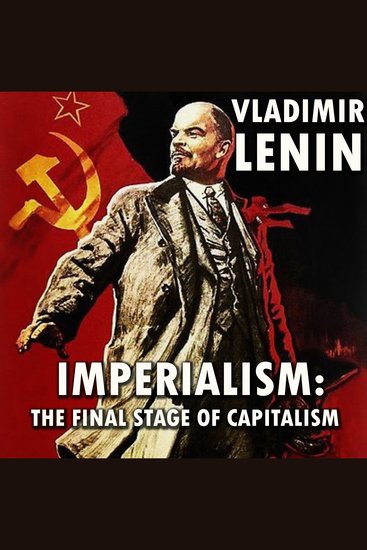
    The Bolsheviks, led initially by Vladimir Lenin, promised land to peasants and equality for all workers, which won them temporary support. However, these promises quickly dissolved into policies that centralized power and suppressed regional identities. The Soviet leadership viewed Ukrainian nationalism as a threat to their authority, prompting efforts to erase cultural distinctions and eliminate opposition. Lenin’s New Economic Policy offered some relief and flexibility to rural communities, but this period of relative leniency ended with his death and Joseph Stalin’s rise to power.
    Ver livro
  • Learn how to learn self hypnosis meditation - A guided meditation - DST Hypno with Stu Newman - cover

    Learn how to learn self hypnosis...

    Stuart Newman

    • 0
    • 0
    • 0
    Learning how to learn self hypnosis meditation with DST Hypno and Stu Newman is an invaluable tool for anyone looking to improve their mental health.  
    From birth you have been learning how to do things. Sometimes negative mental health compromises your self belief. 
    Self hypnosis has been proven to reduce stress, anxiety, and depression levels while also helping people gain clarity of thought in order to make better decisions. 
      
    With the help of Stu Newman's expertise in this field, you can learn techniques that will enable you to take control of your own mind and body so that you can achieve a state of relaxation quickly and easily.  
    Not only will this help boost your overall wellbeing but it could even lead towards greater success as well!  
    So why wait?  
    Start learning how to learn again with DST Hypno today!
    Ver livro
  • Meditations - cover

    Meditations

    Marcus Aurelius

    • 0
    • 0
    • 0
    "Meditations" is a series of personal writings by the Roman Emperor Marcus Aurelius. It is a collection of philosophical reflections and insights that provide a glimpse into the Stoic philosophy practiced by Marcus Aurelius. The work is considered one of the greatest works of philosophy and has been widely read and studied for its timeless wisdom.
    Ver livro
  • Humanism - Celebrating Human Potential and Values - cover

    Humanism - Celebrating Human...

    Hector Davidson

    • 0
    • 0
    • 0
    Humanism is a philosophical and ethical stance that emphasizes the value and agency of human beings, individually and collectively. At its core, humanism advocates for the belief that humans are capable of leading meaningful lives based on reason, ethics, and justice. It is grounded in the understanding that humans have the capacity for rational thought, empathy, and creativity, which are fundamental to the flourishing of individuals and societies. 
    The roots of humanism can be traced back to the classical civilizations of Greece and Rome, where the focus was on human potential and the pursuit of knowledge. However, it gained significant momentum during the Renaissance, a period marked by a renewed interest in classical antiquity and a shift away from religious dogma toward human-centered exploration. Renaissance thinkers, such as Petrarch and Erasmus, championed the importance of human dignity, education, and the ability to shape one's own destiny through knowledge and reason. These principles would later influence the development of modern humanist thought. 
    Unlike religious philosophies that place divine beings at the center of moral order, humanism is secular in nature. It does not rely on supernatural explanations or interventions, but rather promotes the idea that humans themselves are responsible for creating meaning and morality in their lives. Humanism calls for an ethical framework based on reason, scientific inquiry, and compassion, with the goal of improving human well-being and contributing to the common good.
    Ver livro
  • Urbanization and Its Impact - Understanding City Growth - cover

    Urbanization and Its Impact -...

    Lyric Vale

    • 0
    • 0
    • 0
    Urbanization refers to the process by which an increasing proportion of a population comes to reside in urban areas, often transforming rural landscapes into bustling cities. It is a complex and multidimensional phenomenon that encompasses social, economic, cultural, and environmental changes. The rapid expansion of urban areas is one of the most defining features of modern society, reflecting humanity's growing tendency to cluster in cities for opportunities, convenience, and better access to resources. 
    Historically, urbanization began with the establishment of early agricultural settlements, which served as hubs for trade and governance. Over time, these settlements grew into cities as advancements in technology, transportation, and infrastructure facilitated their expansion. The Industrial Revolution, in particular, marked a pivotal moment in the history of urbanization, drawing large numbers of people into urban centers in search of work and prosperity. Today, urbanization continues at an unprecedented pace, driven by industrial growth, globalization, and population migration from rural to urban regions. 
    The scope of urbanization extends far beyond the mere growth of cities. It profoundly influences nearly every aspect of human life, from economic development to social interactions and environmental sustainability. Economically, cities serve as engines of growth, innovation, and creativity, offering concentrated markets, skilled labor, and access to advanced infrastructure. Socially, urban areas often promote cultural exchange and diversity, creating spaces where people from different backgrounds can interact and collaborate. However, this growth also comes with challenges, such as overcrowding, inequality, and the strain on public services and infrastructure.
    Ver livro
  • 1914: The History and Legacy of World War I’s First Year - cover

    1914: The History and Legacy of...

    Editors Charles River

    • 0
    • 0
    • 0
    Needless to say, the First World War came at an unfortunate time for those who would fight in it. After an initial period of relatively rapid maneuver during which the German forces pushing through Belgium and the French and British forces attempting to stymie them made an endless series of abortive flanking movements that extended the lines to the sea, a stalemate naturally tended to develop. The infamous trench lines soon snaked across the French and Belgian countryside, creating an essentially futile static slaughterhouse whose sinister memory remains to this day. 
    If trench warfare was an inevitability during the war, it is only because the events leading up to the First Battle of the Marne were quite different. The armies at the beginning of the war moved quickly through the land, but the First Battle of the Marne devolved into a bloody pitched battle that led to the construction of trenches after the Germans retreated, blocked in their pursuit of Paris. When the aftermath disintegrated into a war between trenches, some Germans thought they had the upper hand since they were occupying French territory, but with fewer soldiers than the combined Allied nations and fewer resources and supplies, it was possibly only a matter of time before they were ultimately defeated. The commander of the German armies, General Helmuth von Moltke, allegedly said to Kaiser Wilhelm II immediately after the First Battle of the Marne, "Your Majesty, we have lost the war." Winston Churchill himself would later reference that anecdote, writing, “Whether General von Moltke actually said to the Emperor, ‘Majesty, we have lost the war,’ we do not know. We know anyhow that with a prescience greater in political than in military affairs, he wrote to his wife on the night of the 9th, ‘Things have not gone well. The fighting east of Paris has not gone in our favour, and we shall have to pay for the damage we have done.’"
    Ver livro