¡Acompáñanos a viajar por el mundo de los libros!
Añadir este libro a la estantería
Grey
Escribe un nuevo comentario Default profile 50px
Grey
Suscríbete para leer el libro completo o lee las primeras páginas gratis.
All characters reduced
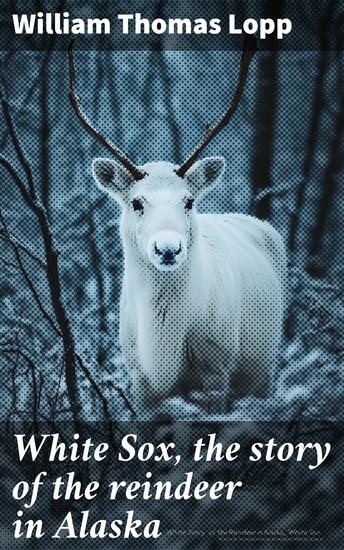
White Sox the story of the reindeer in Alaska - cover

White Sox the story of the reindeer in Alaska

William Thomas Lopp

Editorial: Good Press

  • 0
  • 0
  • 0

Sinopsis

In "White Sox: The Story of the Reindeer in Alaska," William Thomas Lopp crafts a captivating narrative that intertwines the ecological and cultural tapestry of Alaska with the historical journey of reindeer herding. Lopp employs a lyrical prose style that oscillates between vivid descriptions of the Alaskan landscape and the intricate lives of its inhabitants, capturing the essence of human-animal relationships within an unforgiving environment. The book contextualizes the transformative impact of reindeer on Indigenous Alaskan communities and reflects a broader commentary on sustainability and adaptation in a changing world. Lopp's deep-rooted connection to Alaska, coupled with his extensive background in wildlife biology and cultural anthropology, informs his exploration of this unique subject matter. His keen observations and intimate understanding of the region illuminate both the challenges and triumphs faced by those who have historically relied on reindeer for their livelihood. Through firsthand accounts and meticulous research, Lopp seamlessly bridges the gap between scientific inquiry and narrative storytelling. "White Sox" is an essential read for anyone interested in wildlife conservation, Indigenous cultures, and the intersection of human and ecological narratives. Lopp's insightful examination not only educates but also inspires readers to reflect on their relationship with nature, making it a significant contribution to contemporary Alaskan literature and environmental studies.
Disponible desde: 02/03/2025.
Longitud de impresión: 160 páginas.
Otros libros que te pueden interesar

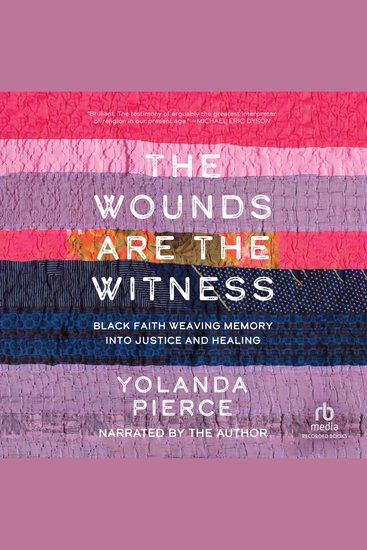
  • The Wounds Are the Witness - Black Faith Weaving Memory into Justice and Healing - cover

    The Wounds Are the Witness -...

    Yolanda Pierce

    • 0
    • 0
    • 0
    From celebrated scholar Dr. Yolanda Pierce comes this indelible meditation on Black faith, suffering, hope, and the healing possibilities of justice, written in the venerable tradition of James Cone and Kelly Brown Douglas. 
      
    What do we do with wounds—our own, others', and a nation's? We can turn away, avert our gaze. We can make a spectacle of suffering. Or like the doubting disciple who longed to touch Jesus's side, we can acquaint ourselves with the wounds: both the story they tell and the healing they prefigure. 
      
    In The Wounds Are the Witness, Yolanda Pierce, dean of Vanderbilt University Divinity School and author of In My Grandmother's House, weaves together her own memories, vignettes from Black life, and scenes from scripture, especially the passion of Christ. To work for liberation in a broken world, we cannot look away from crucified flesh. Bones from the Middle Passage, GI Bill benefits denied to Black veterans, women inmates shackled while giving birth: we must take all such wounds seriously. They testify to both the pain and the faith of a people. 
      
    With the lyrical eye of a poet and the moral precision of a preacher, Pierce casts readers into the astounding story of God's healing. From the curative powers of a spiderweb to the work of justice in history, politics, medicine, higher education, and the Black church, Pierce asks: Where are the remedies for the battered and broken? What does accountability look like? Is there any cure? 
      
    Healing takes time, Pierce writes, and even the wounds of the risen Christ do not immediately close. When the wounds become the witness, we find a faith reimagined and a hope transfigured. They tell the truth: about the extent of the injury and the extraordinary work of healing.
    Ver libro
  • Ougat - From a hoe into a housewife and then some - cover

    Ougat - From a hoe into a...

    Shana Fife

    • 0
    • 0
    • 0
    There’s an entire generation of South African women who ought to read this book.’ – Sara-Jayne King, author of Killing Karoline 
      
    ‘Ougat is masterfully written – raw, unpretentious, unsettling. Shana Fife captures all the darkness from her body, psyche and life with fearless honesty and transparency.’ – Frazer Barry, award-winning theatre practitioner, writer and musician 
    By the time Shana Fife is 25 she has two kids from different fathers. To the Coloured people she grew up around, she is a jintoe, a jezebel, jas, a woman with mileage on the pussy. She is alone, she has no job and, as she is constantly reminded by her community, she is pretty much worthless and unloveable. How did she become this woman, the epitome of everything she was conditioned to strive not to be? 
    Unsettlingly honest and brutally blunt, Ougat is Shana Fife’s story of survival: of surviving the social conditioning of her Cape Flats upbringing, of surviving sexual violence and depression and of ultimately escaping a cycle of abuse. 
    A powerful, fresh and disarming new voice – Shana’s writing is like nothing you’ve read before.
    Ver libro
  • The Length of the Shackles On Freedom in the 21st Century - cover

    The Length of the Shackles On...

    Denis Collin

    • 0
    • 0
    • 0
    Our contemporary societies let us believe that we are free—it is a delusion. We are still shackled in our chains, even in the West. Chains that we take for wings: we believe ourselves to be in a democracy, we think that work allows us to emancipate ourselves, and we imagine that new technologies facilitate our lives. This is our daily “Newspeak.”
    But oligarchy reigns. People are mired in consumerism and liberalism. Security control is more and more prevalent, while medical progress in procreation brings us closer to an “industrial fabrication of human beings.” In this context, we must question and rethink the conditions of a true human liberation.
    This is the work that Denis Collin has undertaken. Basing himself on numerous historical and philosophical references, he redefines the concepts and opens up new political, economic, social and metaphysical perspectives. The setting up of “partial associations” at all levels of political organization, the end of wage labor in favor of the cooperation of producers, the realization of man through his creative activity, the guarantee of the primacy of subjectivity in the face of scientism, are among the weapons intended to break our chains.
    Ver libro
  • Airplane Mode - An Irreverent History of Travel - cover

    Airplane Mode - An Irreverent...

    Shahnaz Habib

    • 0
    • 0
    • 0
    Longlisted for the Andrew Carnegie Medals of Excellence 


    The conditions of travel have long been dictated by the color of passports and the color of skin. 


    The color of one's skin and passport have long dictated the conditions of travel.  For Shahnaz Habib, travel and travel writing have always been complicated pleasures. Habib threads the history of travel with her personal story as a child on family vacations in India, an adult curious about the world, and an immigrant for whom roundtrips are an annual fact of life. Tracing the power dynamics that underlie tourism, this insightful debut parses who gets to travel, and who gets to write about the experience. 


    Threaded through the book are inviting and playful analyses of obvious and not-so-obvious travel artifacts: passports, carousels, bougainvilleas, guidebooks, trains, the idea of wanderlust itself. Together, they tell a subversive history of travel as a Euro-American mode of consumerism—but as any traveler knows, travel is more than that. As an immigrant whose loved ones live across continents, Habib takes a deeply curious and joyful look at a troubled and beloved activity.
    Ver libro
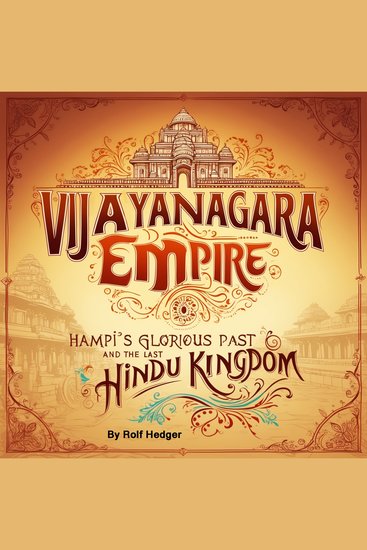
  • Vijayanagara Empire - Hampi's Glorious Past and the Last Hindu Kingdom - cover

    Vijayanagara Empire - Hampi's...

    Rolf Hedger

    • 0
    • 0
    • 0
    The Vijayanagara Empire emerged as one of the most significant and powerful dynasties in Indian history, rising at a time when the Indian subcontinent was fragmented and facing threats from expanding Islamic sultanates. Its foundation in the 14th century was a turning point that not only established a strong Hindu kingdom in southern India but also laid the groundwork for a cultural and economic renaissance. 
    The origins of Vijayanagara trace back to the political instability of the Deccan region. The Delhi Sultanate had extended its influence into the south, leading to the weakening of older Hindu kingdoms such as the Kakatiyas, Hoysalas, and Pandyas. Amid this turmoil, two brothers, Harihara and Bukka, originally serving under the Kakatiya rulers, rose to prominence. After being captured and later released by the Delhi Sultanate, they sought guidance from the sage Vidyaranya, who inspired them to establish a strong Hindu kingdom to resist further invasions. In 1336, they founded the city of Vijayanagara on the banks of the Tungabhadra River, marking the birth of the empire. 
    From its inception, the Vijayanagara Empire was strategically positioned to thrive. The Tungabhadra River provided a natural defensive barrier, while the rocky terrain of Hampi served as a formidable protection against enemy invasions. The early rulers focused on consolidating power, expanding their territories, and strengthening their military capabilities. Under Harihara I, the empire extended its control over parts of Karnataka and Andhra Pradesh, securing key trade routes and fortifying its defenses.
    Ver libro
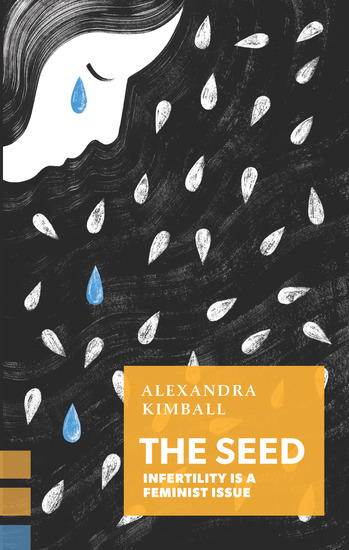
  • The Seed - cover

    The Seed

    Alexandra Kimball

    • 0
    • 0
    • 0
    Notes on desire, reproduction, and grief, and how feminism doesn't support women struggling to have children 
       
    In pop culture as much as in policy advocacy, the feminist movement has historically left infertile women out in the cold. This book traverses the chilly landscape of miscarriage, and the particular grief that accompanies the longing to make a family. Framed by her own desire for a child, journalist Alexandra Kimball brilliantly reveals the pain and loneliness of infertility, especially as a lifelong feminist. Her experience of online infertility support groups - where women gather in forums to discuss IVF, surrogacy, and isolation - leaves her longing for a real life community of women working to break down the stigma of infertility.
       
    In the tradition of Eula Biss's On Immunity and Barbara Ehrenreich's Bright-sided, Kimball marries perceptive analysis with deep reportage - her findings show the lie behind the prevailing, and at times paradoxical, cultural attitudes regarding women's right to actively choose to have children. Braiding together feminist history, memoir, and reporting from the front lines of the battle for reproductive rights and technology, The Seed plants in readers the desire for a world where no woman is made to feel that her biology is her destiny.
    Ver libro