¡Acompáñanos a viajar por el mundo de los libros!
Añadir este libro a la estantería
Grey
Escribe un nuevo comentario Default profile 50px
Grey
Suscríbete para leer el libro completo o lee las primeras páginas gratis.
All characters reduced
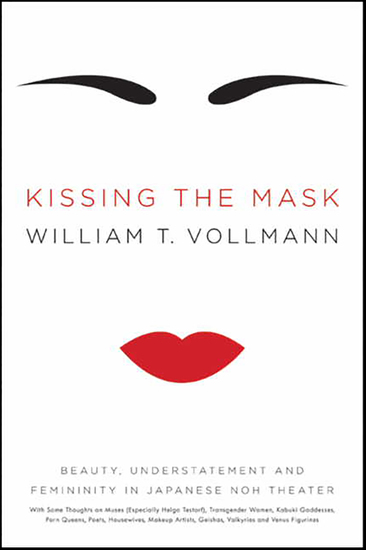
Kissing the Mask - Beauty Understatement and Femininity in Japanese Noh Theater - cover

Kissing the Mask - Beauty Understatement and Femininity in Japanese Noh Theater

William T. Vollmann

Editorial: HarperCollins e-books

  • 0
  • 0
  • 0

Sinopsis

“Intrepid journalist and novelist William T. Vollman’s colossal body of work stands unsurpassed for its range, moral imperative, and artistry.”—BooklistWilliam T. Vollmann, the National Book Award–winning author of Europe Central, offers a charming, evocative, and piercing examination of the ancient Japanese tradition of Noh theatre and the keys it holds to our modern understanding of beauty.  Kissing the Mask is the first major book on Nohby an American writer since the 1916 publication the classic study Pisan Cantos and the Noh by Ezra Pound. But Kissing the Mask is pure Vollman—illustrated with photos by the author with provocative related side-discussions on femininity, transgender, kabuki, pornography, geishas, and more.
Disponible desde: 13/04/2010.
Longitud de impresión: 530 páginas.

Otros libros que te pueden interesar

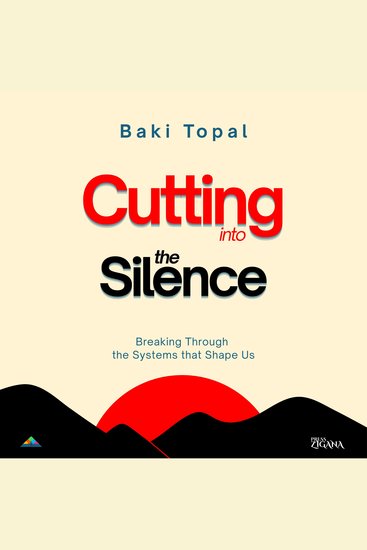
  • Cutting into the silence - Breaking through the systems that shape us - cover

    Cutting into the silence -...

    Baki Topal

    • 0
    • 0
    • 0
    A cancer surgeon and acclaimed academic turns the scalpel inward — exploring the systems that guide, limit, and often distance us from what truly matters. Beginning with stories from his childhood in a mountain village near the Black Sea, he traces the growing gap between ideals and reality — in healthcare, and in life. 
    In this powerful debut, personal memoir meets social reflection and existential questioning. With clarity and compassion, the author reveals what’s at risk when efficiency overrides human connection, and when authenticity is quietly replaced by conformity. His observations cut through assumptions, challenge deep-rooted beliefs, and question the roles we’re expected to play. 
    As the journey unfolds, the author introduces the Zigana model — a dynamic compass for those seeking to grow consciously and courageously, beyond boundaries and silence. 
    Cutting into the silence is literary non-fiction at its most vital — a call to rethink freedom, care, and meaning in a world shaped by invisible systems.
    Ver libro
  • New Zealand: A Captivating Guide to the History of the Land of the Long White Cloud and Māori People - cover

    New Zealand: A Captivating Guide...

    Captivating History

    • 0
    • 0
    • 0
    Two manuscripts in one audiobook:History of New Zealand: A Captivating Guide to the History of the Land of the Long White Cloud, from the Polynesians Through the Māori Musket Wars to the PresentMāori History: A Captivating Guide to the History of the Indigenous Polynesian People of New Zealand 
    In the first part of this audiobook, you will learn about:Extinct animals that used to call New Zealand home;The arrival of the Polynesians and what that meant for the region;The early European explorations and who is credited with discovering the island nation;Colonization efforts and their impact on the Māori;How New Zealand was run under European control;The progressive changes that took place; 
    In the second part of this audiobook, you will discover:The origins of the Māori people.How the Māori civilization developed in seclusion from the rest of the world.What Māori life was like before European contact.How and when the Māori isolation period ended.How the European presence changed the Māori civilization.Why the Māori-European relations soured.The Māori heroes in the struggles against the colonial settlers.What happened during the New Zealand Wars.How the Māori survived the European challenges.Who led the Māori into modernity and newfound prosperity. 
    Scroll up and click the “add to cart” button to begin learning about New Zealand and Māori History!
    Ver libro
  • Awkwardness - A Theory - cover

    Awkwardness - A Theory

    Alexandra Plakias

    • 0
    • 0
    • 0
    Awkwardness offers an account of the psychology and philosophical significance of a ubiquitous social phenomenon. Our aversion to awkwardness mirrors our desire for inclusion. This explains its power to influence and silence us: as social creatures, we don't want to mark ourselves as outsiders. As a result, our fear of awkwardness inhibits critique and conversation, acting as an impediment to moral and social progress. Even the act of describing people as "awkward" exacerbates existing inequities, by consigning them to a social status that gives them less access to the social goods (knowledge, confidence, social esteem) needed to navigate potentially awkward situations. 


    Awkwardness discusses how we ostracize and punish those who fail to fit into existing social categories; how we all depend on—and are limited by—social scripts and norms for guidance; and how these norms frequently let us down when we need them. But awkwardness has a positive side: it can highlight opportunities for moral and social improvement, by revealing areas where our social norms and scripts fail to meet our needs or have yet to catch up with changing social and moral realities. Awkwardness ultimately underscores the conflict between our moral motivations and our desire for social approval and conformity.
    Ver libro
  • Mughal Empire The: The History of the Modern Dynasty that Ruled Much of India Before the British - cover

    Mughal Empire The: The History...

    Editors Charles River

    • 0
    • 0
    • 0
    In the late 15th century, Western Europe entered the Renaissance, which is often credited with the origins of modern, scientific thought. The Age of Exploration also began around that time, and 1517 is when the Reformation began. Meanwhile, the Islamic world was also quickly evolving around the same time, with the Ottoman Empire expanding into Eastern Europe and wiping the Orthodox Christian Byzantine Empire off the face of the map. And while the Ottomans were establishing themselves as the premier Islamic power with the help of early gunpowder weapons, hundreds of miles away in Central Asia, another “gunpowder empire” was forming.  
    	The Mughals, a group with Turkish and Mongolian roots, also used gunpowder weapons to sweep into northern India, topple the existing Islamic dynasty in Delhi, and eventually subject most of India to their rule. The term “gunpowder empire” was originally coined by Russian scholar V. V. Bartold and popularized by American historians William McNeil and Marshall Hodgson in the mid-20th century to describe the Islamic Ottoman, Safavid, and Mughal empires, which they claimed came to power through gunpowder. Although that core thesis has been challenged by historians in recent years, who argue that gunpowder weapons were a feature or result of the rise of these empires, not the cause for them, the term is still used (Streusand 2011, 3).  
    	To be fair, the Mughals rose through a combination of political acumen and battlefield brutality, and they held onto their empire for hundreds of years in much the same way. In the process, the Mughals developed a state that was unique in many ways, adopting elements of Islamic culture and meshing them with native Indian culture and even Western European culture. When the British conquered India in the mid-19th century, they had the benefit of inheriting the Mughal system, which, despite many problems, proved to be a suitable template for rule over a land as vast and diverse as India.
    Ver libro

  • DARE to Say No - Policing and the War on Drugs in Schools - cover

    DARE to Say No - Policing and...

    Max Felker-Kantor

    • 0
    • 0
    • 0
    With its signature "DARE to keep kids off drugs" slogan and iconic t-shirts, DARE (Drug Abuse Resistance Education) was the most popular drug education program of the 1980s and 1990s. But behind the cultural phenomenon is the story of how DARE and other antidrug education programs brought the War on Drugs into schools and ensured that the velvet glove of antidrug education would be backed by the iron fist of rigorous policing and harsh sentencing. 


    Max Felker-Kantor has assembled the first history of DARE, which began in Los Angeles in 1983 as a joint venture between the police department and the unified school district. By the mid-'90s, it was taught in seventy-five percent of school districts across the United States. DARE received near-universal praise from parents, educators, police officers, and politicians and left an indelible stamp on many millennial memories. But the program had more nefarious ends, and Felker-Kantor complicates simplistic narratives of the War on Drugs. He shows how policing entered US schools and framed drug use as the result of personal responsibility, moral failure, and poor behavior deserving of punishment rather than something deeply rooted in state retrenchment, the abandonment of social service provisions, and structures of social and economic inequality.
    Ver libro
  • Ethics of Liberty The: Book Summary & Analysis - cover

    Ethics of Liberty The: Book...

    Briefly Summaries

    • 0
    • 0
    • 0
    This is a concise summary and analysis of The Ethics of Liberty, by Murray N. Rothbard.
    It is not the original book and is not affiliated with or endorsed by 
    Murray N. Rothbard.
    Ideal those seeking a quick and insightful overview.
     
    The Ethics of Liberty is a groundbreaking exploration of natural law and its application to a free society. This incisive work presents a compelling framework for understanding individual rights, justice, and the role of government. From foundational principles to practical considerations, it argues for a society built on voluntary cooperation and personal freedom. Through rigorous logic and historical analysis, the book challenges prevailing political ideologies and offers a bold vision for a world where liberty reigns supreme.
    Ver libro