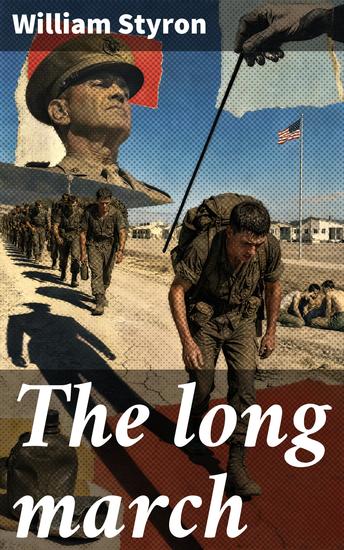
The long march
William Styron
Editorial: Good Press
Sinopsis
In The Long March, William Styron compresses into novella form a tense meditation on military discipline, bodily ordeal, and the violence latent within American institutions. Set at a Marine base in the postwar United States, the narrative follows an absurdly punishing forced march ordered by a ruthless commanding officer, exposing the clash between authority and human limits. Styron's prose is lean yet lyrical, combining psychological acuity with physical immediacy; the work stands within the tradition of postwar American fiction that scrutinizes systems of power while probing masculine identity, obedience, and moral exhaustion. Styron, one of the major American novelists of the twentieth century, was deeply shaped by his own experience in the U.S. Marines, and that proximity to military culture informs the book's precision and intensity. Born in Virginia in 1925, he emerged as a writer preoccupied with extreme states of consciousness, historical burden, and the pressures exerted by social structures on the individual. The Long March reflects both autobiographical knowledge and Styron's broader concern with authority, suffering, and the fragility of civilized restraint. This is a book to recommend to readers interested in war literature beyond the battlefield: it is less about combat than coercion, endurance, and the psychology of command. Brief but resonant, it rewards readers who value stylistic control, moral seriousness, and incisive postwar critique.
Disponible desde: 29/06/2026.
Longitud de impresión: 58 páginas.