¡Acompáñanos a viajar por el mundo de los libros!
Añadir este libro a la estantería
Grey
Escribe un nuevo comentario Default profile 50px
Grey
Suscríbete para leer el libro completo o lee las primeras páginas gratis.
All characters reduced
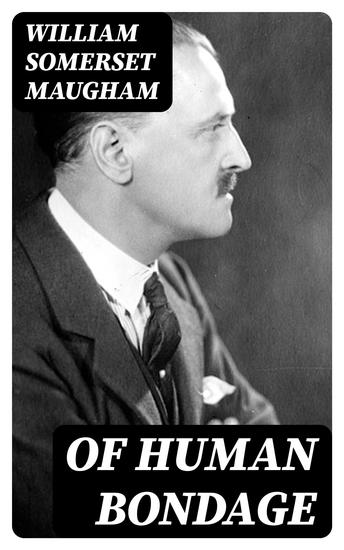
Of Human Bondage - Classic of English Literature - cover

Of Human Bondage - Classic of English Literature

William Somerset Maugham

Editorial: DigiCat

  • 0
  • 0
  • 0

Sinopsis

William Somerset Maugham's seminal novel, "Of Human Bondage," intricately weaves the autobiographical elements of his life with a profound exploration of human desire and existential struggle. Set in the early 20th century, the narrative follows Philip Carey, a young man marked by physical deformity and an insatiable yearning for belonging and love. Maugham's narrative style is characterized by its rich psychological insight and a masterful blend of realism and existential philosophy, reflecting the influences of contemporary literary movements, such as naturalism and modernism. The novel delves deep into the themes of obsession, freedom, and the complexities of human relationships, making it a poignant examination of the bonds that bind and restrict us. Maugham, a literary figure known for his deep psychological insight and diverse life experiences, draws from his own struggles with identity and emotional entanglement in crafting Philip Carey's journey. Born into a tumultuous family situation and harboring a keen interest in the human condition, Maugham's experiences as a medical student and his extensive travels undoubtedly informed the observations he offers about society, love, and personal choice in this timeless work. Highly recommended for readers intrigued by the intricacies of human emotions and the perpetual quest for autonomy, "Of Human Bondage" stands as a classic study of the individual's pursuit of meaning against societal constraints. This evocative narrative invites contemplation and will resonate with anyone grappling with the complexities of human relationships and self-discovery.
Disponible desde: 11/10/2022.
Longitud de impresión: 745 páginas.

Otros libros que te pueden interesar

  • A Very Short Romance - From their pens to your ears genius in every story - cover

    A Very Short Romance - From...

    Vsevolod Garshin

    • 0
    • 0
    • 0
    Vsevolod Mikhailovich Garshin was born on 14th February 1855 in what is now Dnipro in the Ukraine, but then part of the Russian Empire. 
    After attending secondary school he studied at the Saint Petersburg Mining Institute.  
    Wars between and on behalf of Empires were a regular feature of the decades then.  Garshin volunteered to serve in the Russian army at the beginning of the Russo-Turkish War in 1877.  
    He began as a private in the Balkans campaign and was wounded in action.  By the end of the war, in 1878, he had been promoted to officer rank.  
    By now Garshin, having previously published some articles and reviews in newspapers, wished to devote himself to a literary career.  The decision made he resigned his army commission. 
    His time as a soldier provided rich experiences for his early stories. His first ‘Four Days’ was related as the interior monologue of a wounded soldier left for dead on the battlefield for four days, face to face with the corpse of a Turkish soldier he had killed, gained him early admiration as an author of note.  
    He wrote perhaps only 20 stories, but their influence was immense, although in these more modern times he is barely remembered and lives in the more prolific shadows of others.  His characters are superbly worked into stories that come alive in the intensity and reality of his prose.   
    Garshin’s most well-known story is ‘The Red Flower’, also known as ‘Scarlet Blossom’ and is easily amongst the first rank of stories dealing with mental health issues.  
    Despite early literary success, he himself experienced periodical bouts of mental illness.   
    In one such bout Garshin attempted to commit suicide by throwing himself down the stone stairs leading into his apartment building.  Although not immediately fatal, Vsevolod Garshin died as a result of his injuries in a St Petersburg hospital on 5th April 1888.  He was 33.
    Ver libro
  • Les Misérables: Volume 2: Cosette - Book 4: The Gorbeau Hovel (Unabridged) - cover

    Les Misérables: Volume 2:...

    Victor Hugo

    • 0
    • 0
    • 0
    Victor-Marie Hugo (26 February 1802 - 22 May 1885) was a French poet, novelist, essayist, playwright, and dramatist of the Romantic movement. During a literary career that spanned more than sixty years, he wrote abundantly in an exceptional variety of genres: lyrics, satires, epics, philosophical poems, epigrams, novels, history, critical essays, political speeches, funeral orations, diaries, and letters public and private, as well as dramas in verse and prose.
    BOOK 4: THE GORBEAU HOVEL: Forty years ago, a rambler who had ventured into that unknown country of the Salpêtrière, and who had mounted to the Barrière d'Italie by way of the boulevard, reached a point where it might be said that Paris disappeared.
    Ver libro
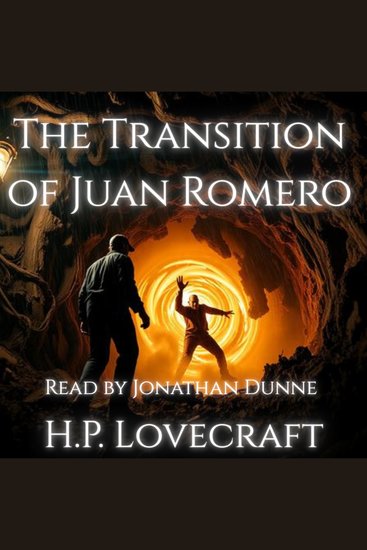
  • The Transition of Juan Romero - cover

    The Transition of Juan Romero

    H.P. Lovecraft

    • 0
    • 0
    • 0
    Title: The Transition of Juan Romero 
    Author: H. P. Lovecraft 
    Narrator: Jonathan Dunne 
    Original Publication: 1944 
    Public Domain: Yes 
    Series Placement: Number 54 in the Timeless Terrors series 
    Description: 
    The Transition of Juan Romero is a stark tale of subterranean dread from H. P. Lovecraft’s earliest period — a story of inexplicable terror lurking deep beneath the earth. 
    Set in a remote Nevada mining camp, the narrative follows a miner who witnesses a fellow worker, Juan Romero, drawn by an unseen force into the depths of an abandoned shaft. As the ground shakes and the darkness seems to breathe, something ancient stirs below — something that should never have been awakened. 
    With its bleak desert atmosphere, claustrophobic mine shafts, and hints of cosmic forces at work beneath the soil, this story bridges Lovecraft’s early horror with the cosmic themes that would later define his mythos. 
    Narrated by Amazon-bestselling horror author Jonathan Dunne, this performance brings the tension, isolation, and subterranean terror to life. While the text is in the public domain, this narration is an original performance and copyright © 2025 Jonathan Dunne. 
    Part of Timeless Terrors, a series devoted to resurrecting the masters of the macabre and uncanny, The Transition of Juan Romero remains a chilling reminder that some depths are better left unexplored.
    Ver libro
  • Babbitt - cover

    Babbitt

    Sinclair Lewis

    • 0
    • 0
    • 0
    'Babbitt respected bigness in anything: in mountains, jewels, muscles, wealth or words.'
    
    First published in 1922, Babbitt is a scathing satirical novel that wittily condemns the vacuous and superficial lives of the middle class in early twentieth-century America.
    
    George F. Babbitt, a successful real estate agent in the fictional city of Zenith in the Midwest, is openly conservative: he embraces proper social etiquette, business success and traditional values. But secretly, a disillusion with the American Dream begins to take root. As he begins to question the emptiness of his life, Babbitt goes to extreme lengths to uncover a novel sense of personal freedom. But when the pressures of societal expectation and fear of nonconformity threaten to destroy the life he once loved, Babbitt is forced to reconsider his actions. A masterclass in satire and literary realism, Babbitt remains an American classic for the ages.
    Sinclair Lewis (1885 – 1951) was an American novelist, short story writer and dramatist. In 1930, he was awarded the Nobel Prize in Literature. His work often critiqued capitalism and the materialist nature of inter-war America, and is still widely read to this day.
    Ver libro
  • Wake Not the Dead - One of the earliest ever vampire stories this tale full of suspense and intrigue has been hugely influential - cover

    Wake Not the Dead - One of the...

    Ernst Raupach

    • 0
    • 0
    • 0
    Ernst Benjamin Salomo Raupach was born on 21st May 1784 at Straupitz in Silesia, a son of the village pastor.  
     
    After attending the gymnasium at Liegnitz, he studied theology at the university of Halle.  This led to a tutorship in St Petersburg in 1804 and occasionally some preaching in the German Lutheran church.  He was also hard at work writing his first dramatic tragedies and in 1817 he gained a professorship in German literature and history. 
     
    In 1822, after anti-German outbreaks in Russia, he left for Italy and thence to Berlin, where he would remain for the rest of his life.  In his career he wrote some 80 plays and other works which greatly influenced life and Culture in the Prussian capital across tragedies, comedies and historical dramas.  
     
    His seminal early prose vampire story ‘Wake Not the Dead’ was originally published in 1823 in Minerva Magazine.  When translated into English it was for many decades wrongly attributed to Johann Ludwig Tieck. 
     
    Ernst Raupach died in Berlin on 18th March 1852.   He was 67.
    Ver libro
  • The Facts in the Case of Monsieur Valdemar - From their pens to your ears genius in every story - cover

    The Facts in the Case of...

    Edgar Allan Poe

    • 0
    • 0
    • 0
    Edgar Poe was born in Boston Massachusetts on 19th January 1809. His father abandoned his family the following year and within a year his mother had died leaving him an orphan.   
    He was taken in by the Allan family but never formally adopted although he now referred to himself as Edgar Allan Poe.  His father alternatively spoiled or chastised him and tension was frequent over gambling debts and monies for his education.  His university years to study ancient and modern languages was cut short by lack of money and he enlisted as a private in the army claiming he was 22, it is more probable he was 18. After 2 years he obtained a discharge in order to take up an appointment at the military academy, West Point, where he failed to become an officer. 
    Poe had released his 1st poetry volume in 1827 and after his 3rd turned to prose and placing short stories in several magazines and journals.  At age 26 he obtained a licence to marry his cousin.  She was a mere 13 but they stayed together until her death from tuberculosis 11 years after. 
    In January 1845 ‘The Raven’ was published and became an instant classic.  Thereafter followed the prose works for which he is now so rightly famed as a master of the mysterious and the macabre. 
    Edgar Allan Poe died at the tragically early age of 40 on 7th October 1849 in Baltimore, Maryland. Newspapers at the time reported Poe's death as ‘congestion of the brain’ or ‘cerebral inflammation’, common euphemisms for death from disreputable causes such as alcoholism but the actual cause of death remains a mystery.
    Ver libro