Junte-se a nós em uma viagem ao mundo dos livros!
Adicionar este livro à prateleira
Grey
Deixe um novo comentário Default profile 50px
Grey
Assine para ler o livro completo ou leia as primeiras páginas de graça!
All characters reduced
A new account of Guinea and the slave-trade - cover
LER

A new account of Guinea and the slave-trade

William Snelgrave

Editora: Good Press

  • 0
  • 0
  • 0

Sinopse

In "A New Account of Guinea, and the Slave-Trade," William Snelgrave presents a comprehensive exploration of West Africa, particularly the territories along the Guinea coast. His vivid narrative is structured around his extensive travels, interweaving meticulous observations of local cultures, trade practices, and the harrowing realities of the slave trade. Snelgrave's literary style is characterized by clarity and detail, making the ethnographic elements accessible while also offering critical reflections on moral and economic implications. The book serves as a significant historical document, situating itself amid the growing discourse on colonialism and ethical conscience during the early 18th century. Snelgrave, an English trader and ship captain, draws from his firsthand experiences in the region, revealing not just the allure and tragedy of the coastal trade but also the paradoxes of European engagement in Africa. His insights into both the customs of the African people and the exploitative nature of the slave trade highlight his evolving perspective, rooted in a desire for ethical reflection. His dual position as participant and observer enables a rare authenticity in his account, as he grapples with the impacts of his actions on both sides of the Atlantic. This book is essential reading for scholars of colonial history and those interested in the nuances of early modern trade and ethics. Snelgrave's work is invaluable for understanding the interconnectedness of cultures and the complex moral questions raised by colonial practices. A "New Account of Guinea" not only enlightens readers on the historical realities of the time but also urges contemporary reflections on trade, morality, and cultural understanding.
Disponível desde: 24/04/2025.
Comprimento de impressão: 200 páginas.

Outros livros que poderiam interessá-lo

  • Not So Scary Stories Pt 2 - A Collection of Short Horror Stories - cover

    Not So Scary Stories Pt 2 - A...

    Elias Blackwood

    • 0
    • 0
    • 0
    Not every story has to be drenched in blood to send a chill down your spine. Not So Scary Stories by Elias Blackwood presents a series of unsettling, thought-provoking tales that toy with the line between the strange and the supernatural. These eerie stories sneak up on you—seemingly harmless at first, but leaving you with a lingering sense of unease. From curious happenings in small towns to unexplained mysteries hidden in plain sight, each story offers a subtle yet sinister twist. Perfect for readers who enjoy their horror more psychological than gruesome, this collection provides a creepy, atmospheric journey into the unknown without relying on overt terror. Welcome to Part 2
    Ver livro
  • Essays: First Series Prudence - cover

    Essays: First Series Prudence

    Ralph Waldo Emerson

    • 0
    • 0
    • 0
    Prudence is not timidity. It is not caution for its own sake. It is the art of knowing when to act and when to wait, when to follow reason and when to trust instinct. In Prudence, Ralph Waldo Emerson reclaims this often-misunderstood virtue, not as mere carefulness but as the wisdom of navigating life with both vision and restraint.
    For Emerson, prudence is not the enemy of boldness but its quiet architect. It does not stifle ambition but shapes it, guiding passion with clarity and purpose. A mind without prudence rushes blindly; a mind ruled by it never moves at all. The balance is where true mastery lies.
    Part of Essays: First Series, Prudence is neither a defense of conservatism nor a rejection of daring. It is an exploration of how thought and action, reason and impulse, can coexist in harmony. To read it is to rethink not just how we act, but how we decide when to act at all.
    Ver livro
  • New World Order and Globalist Agenda (Unabridged) - cover

    New World Order and Globalist...

    Catherine Dumont

    • 0
    • 0
    • 0
    "The New World Order" posits that a secret group of powerful individuals dominates governments and financial systems around the world. In his compelling research, with its strengths and weaknesses, the author argues that this elite has been working behind the scenes for centuries to establish a world government and control the resources of all countries.
    Ver livro
  • When Science Meets Power - 1st Edition - cover

    When Science Meets Power - 1st...

    Geoff Mulgan

    • 0
    • 0
    • 0
    Science and politics have collaborated throughout human history and science is repeatedly invoked today in political debates, from pandemic management to climate change. 


    Leading policy analyst Geoff Mulgan here calls attention to the growing frictions caused by the expanding—and unsolicited—authority being heaped upon science. As science increasingly competes with politics, a defined plan of cooperation is urgently needed. 


    Mulgan outlines science and politics as two distinct, imperfect forms of collective intelligence. Whereas science is ordered around what we know and what is, politics engages what we feel and what matters. Politics functions because it recognizes the limits of power, the need for delegation and expert advice. The intellectual logic of science, on the other hand, focuses on detail and depth, struggling to place its knowledge in wider contexts. The crux of the matter, Mulgan argues, is how can we ensure that crucial decisions taken in democracies are both well informed and legitimate? 


    Rooted in understanding that science and politics are not just fields of ideas but also fields of action, this book proposes ways to ensure that the two work effectively together.
    Ver livro
  • A Quick Introduction To Spanish Grammar - A Beginner's Guide To Key Grammar Topics - cover

    A Quick Introduction To Spanish...

    Alessio Ruiz

    • 0
    • 0
    • 0
    This comprehensive Spanish grammar guide is designed to help English speakers gain a deeper understanding of the language’s structure and usage. Whether you're a beginner learning Spanish for the first time or an advanced student looking to refine your grammar skills, this resource provides clear explanations and practical examples to support your progress. 
    The guide covers key grammar topics essential for effective communication, including noun gender, verb conjugation, subject and object pronouns, and sentence structure. Learners will also find in-depth discussions on frequently confused concepts, such as the difference between ser and estar, the use of por vs. para, and when to apply the subjunctive mood. These detailed explanations help demystify Spanish grammar and make it easier to form accurate and natural sentences. 
    For those looking to expand their vocabulary, the guide highlights common false cognates—words that appear similar in Spanish and English but have different meanings—as well as true cognates that can accelerate vocabulary acquisition. Additionally, it explores essential verb tenses, from the present and past tenses to the conditional and future, ensuring that learners can confidently discuss different timeframes. 
    Designed to be practical and user-friendly, this guide also addresses regional variations in Spanish grammar and usage, helping learners navigate differences in how the language is spoken across Spain and Latin America. Whether you're studying for an exam, preparing for travel, or simply aiming to improve your fluency, this Spanish grammar reference provides the tools you need to communicate effectively and confidently. 
    With its clear structure, real-world examples, and focus on practical application, this guide serves as an invaluable resource for anyone looking to master Spanish grammar.
    Ver livro
  • Why You Should Go to Dubrovnik - cover

    Why You Should Go to Dubrovnik

    Mark Ferdinand

    • 0
    • 0
    • 0
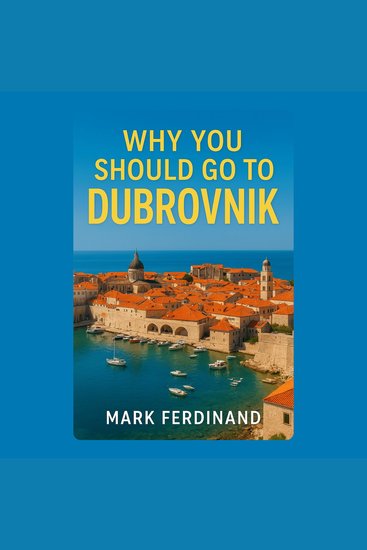
    Dubrovnik is a city where time seems to stand still—yet its beauty and history evolve with every step you take. Known as the "Pearl of the Adriatic," Dubrovnik’s ancient stone walls, baroque churches, and terracotta rooftops create a landscape that’s as captivating as it is historic. Whether you're strolling along the iconic Stradun, relaxing by the crystal-clear waters, or wandering through the UNESCO World Heritage Old Town, the city feels like a living museum. 
    Mark Ferdinand guides you through the enchanting streets and scenic vistas of this Croatian gem. From the lush island of Lokrum to the grand medieval city walls, Dubrovnik is a place where the past and present coexist beautifully. With its rich culture, stunning views, and warm Mediterranean climate, you'll quickly understand why Dubrovnik is one of the most sought-after destinations in Europe.
    Ver livro