Junte-se a nós em uma viagem ao mundo dos livros!
Adicionar este livro à prateleira
Grey
Deixe um novo comentário Default profile 50px
Grey
Assine para ler o livro completo ou leia as primeiras páginas de graça!
All characters reduced
Edge Computing - From Basics to Expert Proficiency - cover
LER

Edge Computing - From Basics to Expert Proficiency

William Smith

Editora: HiTeX Press

  • 0
  • 0
  • 0

Sinopse

"Edge Computing: From Basics to Expert Proficiency" is an authoritative and comprehensive guide that delves into the transformative world of edge computing. Designed for professionals, researchers, and students alike, this book meticulously covers the fundamental principles, architectural components, and advanced techniques essential for mastering edge computing. From understanding the historical context and key concepts to exploring intricate details of network protocols, data management, and security, each chapter is structured to build progressively on the last.As the field of edge computing rapidly evolves, the book provides invaluable insights into practical applications across various industries, including manufacturing, healthcare, smart cities, and telecommunications. It also addresses the integration of edge computing with cloud services, development of edge applications, and the implementation of AI and machine learning at the edge. By examining current challenges and forecasting future trends, this book equips readers with the knowledge and expertise necessary to navigate and leverage the dynamic landscape of edge computing, ensuring they are prepared to innovate and lead in this cutting-edge domain.
Disponível desde: 09/08/2024.
Comprimento de impressão: 330 páginas.

Outros livros que poderiam interessá-lo

  • In the Herbarium - The Hidden World of Collecting and Preserving Plants - cover

    In the Herbarium - The Hidden...

    Maura C. Flannery

    • 0
    • 0
    • 0
    Collections of preserved plant specimens, known as herbaria, have existed for nearly five centuries. These pressed and labeled plants have been essential resources for scientists, allowing them to describe and differentiate species and to document and research plant changes and biodiversity over time—including changes related to climate. 


    Maura C. Flannery tells the history of herbaria, from the earliest collections belonging to such advocates of the technique as sixteenth-century botanist Luca Ghini, to the collections of poets, politicians, and painters, and to the digitization of these precious specimens today. She charts the growth of herbaria during the Age of Exploration, the development of classification systems to organize the collections, and herbaria's indispensable role in the tracking of climate change and molecular evolution. Herbaria also have historical, aesthetic, cultural, and ethnobotanical value—these preserved plants can be linked to the Indigenous peoples who used them, the collectors who sought them out, and the scientists who studied them. 


    This book testifies to the central role of herbaria in the history of plant study and to their continued value, not only to biologists but to entirely new users as well: gardeners, artists, students, and citizen-scientists.
    Ver livro
  • The Emotional Brain - The System That Decides for You - cover

    The Emotional Brain - The System...

    Gregory Bicaj

    • 0
    • 0
    • 0
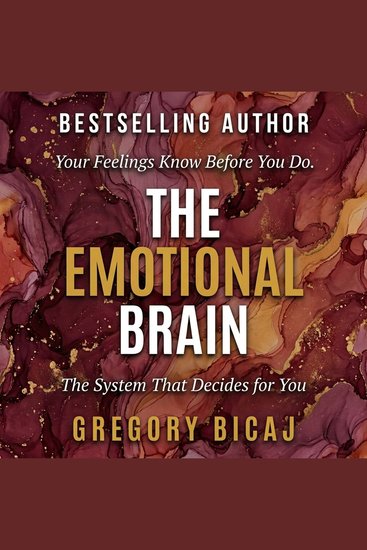
    Why do intelligent people make foolish decisions? Why does a calm conversation suddenly explode into conflict? Why do we eat, spend, react, and regret — and then do it all again? The answer lies not in weakness of character, but in the way the human brain was built.
    In The Emotional Brain: The System That Decides for You, neuroscientist and clinical psychologist Gregory Bicaj draws on two decades of laboratory research and clinical practice to reveal the hidden architecture of human behavior. At the center of his account is a simple but transformative idea: every modern human runs three systems simultaneously — an ancient survival brain, an emotional brain shaped by attachment and connection, and a late-evolving reasoning brain. Most suffering, most regret, and most self-sabotage occur when the wrong system is in charge at the wrong moment.
    Bicaj takes readers on a journey through the latest neuroscience and psychology, translating landmark research into vivid, usable insights. He draws on Antonio Damasio's discovery that emotion is essential to rational decision-making, Joseph LeDoux's work on the fear system and the amygdala's lightning-fast threat detection, Daniel Kahneman's two-system model of the mind, Jonathan Haidt's rider-and-elephant metaphor, John Gottman's data on what makes relationships thrive or fail, and research from the Harvard Study of Adult Development — one of the longest studies of human life ever conducted — showing that the quality of our close relationships matters more than wealth, status, or intelligence.
    Along the way, readers learn why anger, anxiety, and sadness are not enemies to silence but signals to decode, how delayed gratification depends on trust more than willpower, what flow, hope, and optimism share as motivational systems, why empathy can both connect us and mislead us, how trauma reorganizes the brain and body — and how healing becomes possible, what the best research says about raising emotionally resilient children, why psychological safety is the true engine of high-performing teams, and how the digital age is quietly eroding the attention that emotional life requires.
    Through compelling case studies — including Viktor Frankl in Auschwitz, Nelson Mandela in prison, and Admiral James Stockdale under torture — Bicaj shows what emotional mastery actually looks like under unbearable pressure: not the suppression of feeling, but a practiced ability to feel fully, observe honestly, and choose wisely.
    The Emotional Brain is not a self-help manual promising quick fixes. It is a serious, evidence-based, deeply humane guide to understanding the system that shapes every decision, relationship, and moment of your life — and a practical invitation to begin the lifelong work of emotional development. For readers of Jonathan Haidt, Gabor Maté, and Daniel Goleman, this book offers a rare integration of laboratory neuroscience and clinical wisdom, written by a scientist who has spent his career on both sides of that divide.
    Ver livro

  • The Sadness Business - cover

    The Sadness Business

    Patrick Landman

    • 0
    • 0
    • 0
    Have you lost a loved one? Your sadness becomes depression. Your child is a little too lively? He or she may be a danger to society. Do you have a penchant for cake? You have a psychiatric disorder.
    The new standard way of thinking about mental health, dictated by the publication of an international guide, the Diagnostic and Statistical Manual of Mental Disorders, is authorian and overshadows Therapeutic Listening in favor of the drug treatment—its latest version, the DSM-5, lists more than 350 diseases.
    Patrick Landman exposes the abuses of such a takeover—the range of normality is reduced and we all become consumers of psychotropic drugs, and even potential lunatics.
    Ver livro
  • Ballistic - The New Science of Injury-Free Athletic Performance - cover

    Ballistic - The New Science of...

    Henry Abbott

    • 0
    • 0
    • 0
    Blending cutting-edge science with gripping storytelling, award-winning data journalist and competitive amateur athlete Henry Abbott reveals that we are on the cusp of a new era in sports medicine, built around the science of ballistic movements—leaping and landing—and the unique fingerprint of your body's physics. 


    Abbott's inspiring narrative tells the story of sports scientist Dr. Marcus Elliott and the Peak Performance Project (P3), who use technology to study how athletes move and why they get hurt. Applying machine learning and lessons from biomechanics, medicine, and physiology, doctors at P3 can now detect elevated risk of an ACL tear or a pulled hamstring like an echocardiogram can see warning signs of a heart attack. 


    Through riveting stories of elite athletes overcoming injuries and pushing themselves to the limit, Abbott presents an evidence-based case for intervening early to protect our bodies. And he suggests that we can all harness the science of ballistic movement not just to run fast or jump high but to move with joy and lead fulfilling athletic lives.
    Ver livro
  • Impasse - Climate Change and the Limits of Progress - cover

    Impasse - Climate Change and the...

    Roy Scranton

    • 0
    • 0
    • 0
    A Next Big Idea Club "Must Read" for August 2025! 
     
    Extreme heat, fires, floods, and storms are transforming our planet. Yet we get increasing emissions, divisive politics, and ersatz solutions that offer more of the same: more capitalism, more complexity, more "progress." 
     
    The impasse we face is not only political and institutional, but cognitive, existential, and narrative. We're incapable of grasping the scale, speed, and impact of global warming. And we optimistically cling to a narrative that promises a better tomorrow if we just keep doing what we're doing. 
     
    It's past time to free ourselves from our dangerous and dogmatic faith. Such unwarranted optimism will accelerate our disintegration. If we want to have hope for the future, it must be grounded in a recognition of human limits—a view Scranton calls ethical pessimism. 
     
    Scranton describes the challenges we face in making sense of our predicament, from problems in communication to questions of justice, from the inherent biases in human perception to the difficulties of empirical knowledge. What emerges is a challenging but hopeful proposition: if we have the courage to accept our limits, we may find a way to embrace our future.
    Ver livro
  • The Essential Book of AI - Master the Mysteries of Artificial Intelligence in 12 Short Chapters - cover

    The Essential Book of AI -...

    Anne Rooney

    • 0
    • 0
    • 0
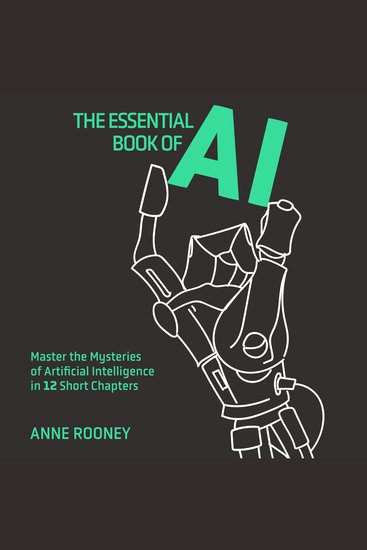
    Explore the impact and potential of AI technologies in this, written by award-winning science author Anne Rooney. 
     
    Artificial intelligence is one of the most significant technological developments of recent times, with the possibility to reshape society as we know it. In this engaging volume, the author explains the cutting-edge science behind artificial intelligence models as well as the philosophical implications in simple and accessible language. Covering subjects such as deep learning, neural networks, large language models, The Essential Book of Artificial Intelligence provides the perfect starting point for anyone interested in the subject. 
     
    ABOUT THE SERIES: Arcturus Concepts is a series of titles diving into some of the most compelling subjects in modern science. Written by a variety of experts, these editions provide a perfect starting point to a range of fascinating topics.
    Ver livro