Join us on a literary world trip!
Add this book to bookshelf
Grey
Write a new comment Default profile 50px
Grey
Subscribe to read the full book or read the first pages for free!
All characters reduced
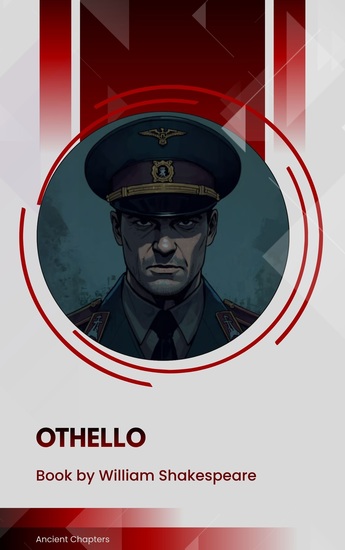
Othello - cover

Othello

William Shakespeare

Publisher: Ancient Chapters

  • 0
  • 0
  • 0

Summary

A dramatic and emotionally intense masterpiece of love and deception.

The noble general Othello is drawn into a web of lies and manipulation that slowly destroys trust, love, and reason. Consumed by jealousy and suspicion, he faces devastating consequences driven by betrayal and human weakness.

Deeply psychological and timeless, the play explores themes of love, race, envy, loyalty, and tragedy.

Written by William Shakespeare.

Discover a timeless tragedy of emotion and betrayal—download your copy today.
Available since: 05/25/2026.
Print length: 123 pages.

Other books that might interest you

  • Equally True - cover

    Equally True

    Sandra Soper

    • 0
    • 0
    • 0
    These poems arise from a life shaped by profound love and the long, faithful work of grief. They move through marriage, motherhood, belief, addiction, endurance, and loss with tenderness and clarity, offering not a record of suffering but a listening presence within it. At their heart is the conviction that love does not end and that grief, though costly, can become a place of deep spiritual attention.
    
    Grounded in lived experience, the poems dwell on the ordinary objects and moments that carry the weight of the sacred. A pair of insoles cut by hand, a jug on a windowsill, a remembered look or phrase. Such details become touchstones, holding what cannot be resolved yet continues to shape the soul. Memory here is active and alive, a form of communion rather than recollection.
    
    Faith is not assumed or neatly affirmed. It is questioned, tested, and returned to in fragments, gestures, and acts of care. Grief is shown as both breaking and refining, a slow discipline that sharpens compassion and deepens understanding.
    
    Written with musical sensitivity and brave emotional honesty, these poems offer recognition rather than answers. They speak to those who know that powerful love leaves a lasting imprint and that through loss, the soul may be changed, enlarged, and quietly sustained by grace.
    Show book
  • The Highwayman - cover

    The Highwayman

    Alfred Noyes

    • 0
    • 0
    • 0
    A Highwayman ravages the countryside, robbing the unsuspecting traveler. He promises to come at midnight for Bess, the landlord's daughter. But when the redcoats come, and lay a trap for the Highwayman at the inn, Bess warns her lover in a method and manner never to be forgotten.
    Show book
  • Simultaneously Part II - cover

    Simultaneously Part II

    Christina Trezevant McGriff

    • 0
    • 0
    • 0
    A book capturing the end of the Covid-19 Pandemic, the current activities of the 1st term of (#46) Biden administration in contrast to the past 1st term of (#45) Trump administration. Hot button topics such as abortion, climate control, gun control, inflation, and the ever perpetual have and have-nots in America. These sociological events are written in poetry form with pictures to capture moments in real time.
    Show book
  • The Classic Collection of Dante Alighieri - The Divine Comedy The New Life - cover

    The Classic Collection of Dante...

    Dante Alighieri

    • 0
    • 0
    • 0
    The Dante Alighieri Classic Collection: The Divine Comedy, New Life offers listeners an exquisite journey through Dante's masterpieces. This volume includes The Divine Comedy, Dante's epic exploration of Hell, Purgatory, and Paradise, and The New Life, a poetic meditation on his love for Beatrice.Contents:Divine Comedy- Hell- Purgatory- ParadiseNew life
    Show book
  • Comedie Hell - cover

    Comedie Hell

    Alighieri Dante

    • 0
    • 0
    • 0
    Dante Alighieri's*Inferno*, here titled *Hell*, is the first canticle of his great narrative poem *Commedìa* (1314-1321), considered by many to be the foundation of modern vernacular literature, which consigned to the past the literary use of Latin. Dante's visionary description of the afterlife and the profound humanity of his characters have been admired by many generations of readers and writers, and the beauty of its verse has never been surpassed. The translation presented here is by Leon Stephens, who is also the reader.
    Show book
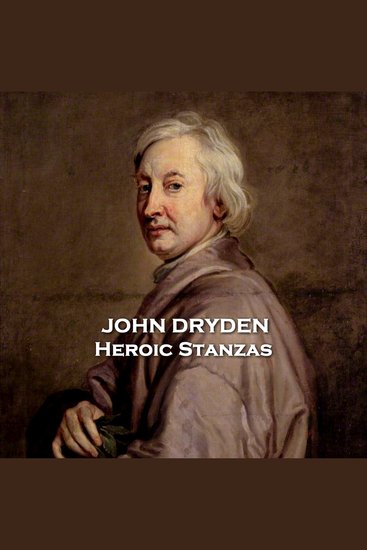
  • Heroic Stanzas - The Age of Dryden' is a fitting marker for why he stood above all the others of his age - cover

    Heroic Stanzas - The Age of...

    John Dryden

    • 0
    • 0
    • 0
    John Dryden was born on August 9th, 1631 in the village rectory of Aldwincle near Thrapston in Northamptonshire. As a boy Dryden lived in the nearby village of Titchmarsh, Northamptonshire. In 1644 he was sent to Westminster School as a King's Scholar.  
    Dryden obtained his BA in 1654, graduating top of the list for Trinity College, Cambridge that year.  
    Returning to London during The Protectorate, Dryden now obtained work with Cromwell's Secretary of State, John Thurloe. 
     At Cromwell's funeral on 23 November 1658 Dryden was in the company of the Puritan poets John Milton and Andrew Marvell.  The setting was to be a sea change in English history. From Republic to Monarchy and from one set of lauded poets to what would soon become the Age of Dryden. 
    The start began later that year when Dryden published the first of his great poems, Heroic Stanzas (1658), a eulogy on Cromwell's death.  
    With the Restoration of the Monarchy in 1660 Dryden celebrated in verse with Astraea Redux, an authentic royalist panegyric. 
     With the re-opening of the theatres after the Puritan ban, Dryden began to also write plays. His first play, The Wild Gallant, appeared in 1663 but was not successful. From 1668 on he was contracted to produce three plays a year for the King's Company, in which he became a shareholder. During the 1660s and '70s, theatrical writing was his main source of income.  
    In 1667, he published Annus Mirabilis, a lengthy historical poem which described the English defeat of the Dutch naval fleet and the Great Fire of London in 1666. It established him as the pre-eminent poet of his generation, and was crucial in his attaining the posts of Poet Laureate (1668) and then historiographer royal (1670). 
    This was truly the Age of Dryden, he was the foremost English Literary figure in Poetry, Plays, translations and other forms. 
    In 1694 he began work on what would be his most ambitious and defining work as translator, The Works of Virgil (1697), which was published by subscription. It was a national event.  
    John Dryden died on May 12th, 1700, and was initially buried in St. Anne's cemetery in Soho, before being exhumed and reburied in Westminster Abbey ten days later.
    Show book