Join us on a literary world trip!
Add this book to bookshelf
Grey
Write a new comment Default profile 50px
Grey
Subscribe to read the full book or read the first pages for free!
All characters reduced
Othello - cover

Othello

William Shakespeare

Publisher: Bu Classics Books

  • 0
  • 0
  • 0

Summary

Watch the systematic destruction of a noble general by a subordinate whose malice is as baseless as it is terrifying. The play traces the poisoning of a hero's mind, turning his deep love for his wife into a murderous jealousy through mere suggestion and circumstance. It is an intense, claustrophobic tragedy that examines the dangers of insecurity, the destructiveness of racism, and the fragility of trust. The villain, Iago, stands as one of the most chillingly effective manipulators in literary history.
Available since: 01/29/2026.
Print length: 110 pages.

Other books that might interest you

  • Qing Dynasty - A History from Beginning to End - cover

    Qing Dynasty - A History from...

    Hourly History

    • 0
    • 0
    • 0
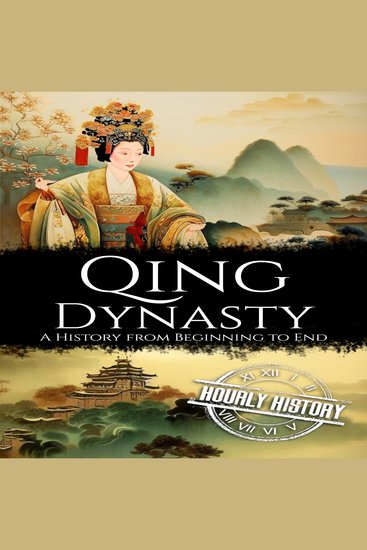
    The history of China as a single nation began more than 2,000 years ago when Qin Shi Huangdi first united a group of warring kingdoms into a single empire. China was then ruled by a series of imperial dynasties until the last one—the Qing Dynasty—fell in 1912. The 275-year period of Qing rule saw China becoming a world superpower, gaining dominance over present-day Korea, Tibet, and Vietnam as well as becoming the center of global trade. However, it also included the most tumultuous times in China’s long history. As acquisitive European kingdoms grew, they sought to expand their areas of power into Asia, using new military technologies and tactics that China, then clinging to traditional weapons and tactics, seemed powerless to oppose. 
    Nevertheless, it was internal turmoil that would finally destroy this dynasty. The Manchu elites who ruled China deliberately distanced themselves from the mass of Han Chinese people. This view of the rulers as outsiders led to a series of rebellions that began in 1794, continued throughout the nineteenth century, and finally led to the uprising that would destroy the Qing Dynasty at the beginning of the twentieth century. This is the story of a dynasty of immense power that was faced throughout its history by implacable foes both outside and in. This is the story of the bridge between traditional and modern China: the Qing Dynasty.
    Show book
  • Submarines and the World Wars: The History of Submarine Warfare in World War I and World War II - cover

    Submarines and the World Wars:...

    Editors Charles River

    • 0
    • 0
    • 0
    During World War I, German U-boats operated solo except on one occasion. Initially, the British and nations supplying England with food and materiel scattered vessels singly across the ocean, making them vulnerable to the lone submarines. However, widespread late war re-adoption of the convoy system tipped the odds in the surface ships' favor, as one U-boat skipper described: “The oceans at once became bare and empty; for long periods at a time the U-boats, operating individually, would see nothing at all; and then suddenly up would loom a huge concourse of ships, thirty or fifty or more of them, surrounded by a strong escort of warships of all types.” 
    World War I proved the value of submarines, ensuring their widespread employment in the next conflict, and one critical innovation in World War II's Atlantic U-boat operations consisted of wolf-pack tactics, in which Admiral Karl Dönitz put great faith: “The greater the number of U-boats that could be brought simultaneously into the attack, the more favorable would become the opportunities offered to each individual attacker. 
    Meanwhile, submarines exercised a decisive impact on the outcome of the Pacific Theater in World War II. The U.S. submarine fleet, largely though not exclusively under the overall command of Vice Admiral Charles Lockwood, strangled the supply lines and shipping traffic of the Empire of Japan. Their commerce raiding crippled both Japan's ability to keep its frontline units supplied and to manufacture the weapons, vessels, and vehicles needed to successfully carry on the struggle. Though constituting only 1.6% of the total U.S. Navy’s tonnage in the Pacific, the submarine fleet inflicted massive losses on the Imperial Japanese Navy and Japan's crucial merchant marine. Submarines sank 55% of the merchant shipping lost, or approximately 1,300 vessels
    Show book
  • RMS Titanic Lifeboat No 6 - The Story of Julia Cavendish who Survived - cover

    RMS Titanic Lifeboat No 6 - The...

    William Cavendish

    • 0
    • 0
    • 0
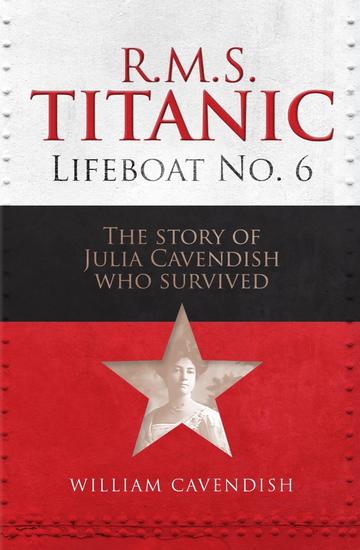
    Tyrell and Julia booked to travel on the Titanic with their two sons to introduce them to their American grandfather, but the children were too ill to travel. Julia persisted in going without them. The fatal and tragic decision not only led to the unnecessary loss of her husband, it was to haunt her for the next fifty years. Why was she so determined to go? In a letter written to her sons, as her death approached, she claimed the purpose of the visit was 'to gain her wealthy father's support for his son-in-law's ambition to stand as a Member of Parliament.' Yet Tyrell had shown no enthusiasm for making the journey, as Julia had already made the trip alone, the previous year quite safely. From the Carpathia Julia cabled her father, Henry Siegel, to have clothes from his department stores ready for the Titanic's survivors. In 1992 and 2002 her son and grandson learnt from chance encounters with New Yorkers of Julia's father's shocking fall from grace, the grandfather who owned a famous department store with a 'soda fountain meeting place'. Now can be revealed the true reason for her mission.
    Show book
  • Rhymes of Murder and Suicide - Living Amongst Depressed Bullied and Mental Ill Shooters - cover

    Rhymes of Murder and Suicide -...

    Raymond Sturgis

    • 0
    • 0
    • 0
    "Mental health is not a disease but a disability in which its reality can become problematic for everyone without help. The mass shootings stem from individuals who have not been help or are off their medications to avert them from criminal activity. Suicides are high amongst our youth, due to depression and those that surround them fail or refuse to acknowledge their cry for help. If we desire to live free and enjoy life, we urgently must answer the mentally ill in our families, communities and workplace cry for help, or they will inevitably kill us or themselves to gain attention we ignored."
    Show book
  • The Future Is Disabled - Prophecies Love Notes and Mourning Songs - cover

    The Future Is Disabled -...

    Leah Lakshmi Piepzna-Samarasinha

    • 0
    • 0
    • 0
    In The Future Is Disabled, Leah Laksmi Piepzna-Samarasinha asks some provocative questions: What if, in the near future, the majority of people will be disabled—and what if that's not a bad thing? And what if disability justice and disabled wisdom are crucial to creating a future in which it's possible to survive fascism, climate change, and pandemics and to bring about liberation? 


    Building on the work of her game changing book Care Work: Dreaming Disability Justice, Piepzna-Samarasinha writes about disability justice at the end of the world, documenting the many ways disabled people kept and are keeping each other—and the rest of the world—alive during Trump, fascism, and the COVID-19 pandemic. Other subjects include crip interdependence, care, and mutual aid in real life, disabled community building, and disabled art practice as survival and joy. 


    Written over the course of two years of disabled isolation during the pandemic, this is a book of love letters to other disabled QTBIPOC (and those concerned about disability justice, the care crisis, and surviving the apocalypse); honor songs for kin who are gone; recipes for survival; questions and real talk about care, organizing, disabled families, and kin networks and communities; and wild brown disabled femme joy in the face of death.
    Show book
  • Stories from Kathasaritasagara series -4 - From Various sources - cover

    Stories from Kathasaritasagara...

    Anusha HS

    • 0
    • 0
    • 0
    The book Kathasaritsagara has been created by Soma Deva. It consists of 21,500 shlokas. 
    This book Kathasaritsagara has been divided into 18 lambakaas, and those 18 lambakaas are still more divided into 125 Tharanga's. 
    Some lambakaas are very big, while some are very small. 
    If there are 115 Shlokas in the 11th Lambaka, there are around 4925 Shlokas in 12th Lambaka. 
    During ancient times from the mouth of Lord Shiva, this story got birth. Those who listen to this story will experience all sorts of worldly pleasures. They will be blessed by Lord Shiva and at last reach jnana Loka by the blessings of lord shiva.
    Show book