¡Acompáñanos a viajar por el mundo de los libros!
Añadir este libro a la estantería
Grey
Escribe un nuevo comentario Default profile 50px
Grey
Suscríbete para leer el libro completo o lee las primeras páginas gratis.
All characters reduced
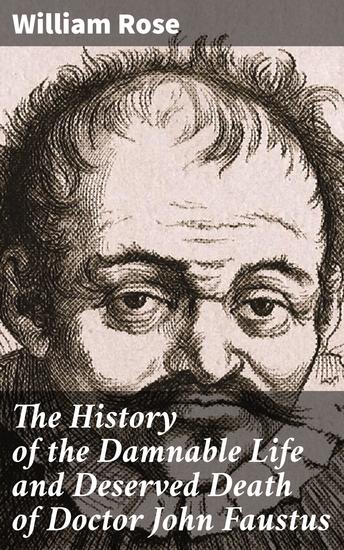
The History of the Damnable Life and Deserved Death of Doctor John Faustus - A Dark Exploration of Ambition and Supernatural Deals - cover

The History of the Damnable Life and Deserved Death of Doctor John Faustus - A Dark Exploration of Ambition and Supernatural Deals

William Rose

Editorial: Good Press

  • 0
  • 0
  • 0

Sinopsis

In "The History of the Damnable Life and Deserved Death of Doctor John Faustus," William Rose delves into the compelling narrative of ambition and moral conflict through the tragic tale of Doctor Faustus, a scholar who sells his soul to the devil for earthly knowledge and pleasures. Written with a blend of Elizabethan prose and poetic elements, the book reflects the era's fascination with the supernatural and the tension between Renaissance humanism and emerging Protestant ethics. Rose challenges the reader to engage with themes of hubris, repentance, and the consequences of overreaching, set against a backdrop of rich allegory and allegorical figures that breathe depth and realism into Faustus's descent into damnation. William Rose, an astute scholar and playwright in his own right, was steeped in the literary currents of the 16th and 17th centuries. His works often draw from historical events, philosophical discourse, and theological debates of his time. The exploration of Faustus's tragic journey might be a reflection of Rose's own inquiries into the moral implications of unchecked ambition and the duality of human nature as he grappled with the complexity of faith and science during the Enlightenment period. This book is highly recommended for those who appreciate classic literature rich in allegorical meaning and moral questioning. Rose's work invites reflection on the eternal struggle between aspiration and ethical boundaries, making it a significant read for students of literature, history, and philosophy alike.
Disponible desde: 10/07/2023.
Longitud de impresión: 217 páginas.

Otros libros que te pueden interesar

  • The Era of Liberation - 1862-1894 - cover

    The Era of Liberation - 1862-1894

    Louis Kossuth, Abraham Lincoln,...

    • 0
    • 0
    • 0
    The late 19th Century was a time of liberation. After the collapse of empires, people of all creeds demanded their equality.We begin with two speeches that represent the old order, by Bismarck. Between the two speeches he went from being Prussia’s last Minister President to being the Germany’s first Chancellor. A statesman in the oldest mold, he argues for nationalist dominance against forces temporal and religious.The counter is given by Sullivan, who excoriates the British government for the Zulu war, asking why the country supported wars of aggression in foreign lands.From there, we move to the liberation of nations and peoples. Louis Kossuth embodied Hungary’s struggle against imperial oppression, Castelar argues for a Spanish republic, and Gambetta for the education of the peasantry in France. Across Europe, a tide rose demanding the government serve the people rather than use them.In America, Lincoln defined the struggle between the Union and Confederacy as the start of universal emancipation and freedom for all men. In contrast, Chief Joseph’s speech drips with pathos, as he lays down his spear forever, desperate to find what is left of his massacred and desolate peoples in the wilderness. After the Civil War ends, Susan Anthony’s speech demands that women should have the vote, as guaranteed in the constitution for all citizens.A series of speeches by Swami Vivekananda follow, given at the first World’s Parliament of Religions. These speeches brought Buddhism and Hinduism into the Anglosphere, and began a trend of searching for spiritual liberation alongside the more material demands of the time.We finish on a lighter tone, as Mark Twain bemoans the decay of the art of lying. In an age of such seriousness, the tall tale fell out of fashion, and the simple joy of telling a fisherman’s tale was lost.
    Ver libro
  • Champagne Charlie - The Frenchman Who Taught Americans to Love Champagne - cover

    Champagne Charlie - The...

    Petie Kladstrup, Don Kladstrup

    • 0
    • 0
    • 0
    Champagne Charlie tells the story of a dashing young Frenchman, Charles Heidsieck, who introduced hard-drinking Americans to champagne in the mid-nineteenth century and became famously known as Champagne Charlie. Ignoring critics who warned that America was a dangerous place to do business, Heidsieck plunged right in, considering it "the land of opportunity" and succeeding there beyond his wildest dreams. Those dreams, however, became a nightmare when the Civil War erupted and he was imprisoned and nearly executed after being charged with spying for the Confederacy. 


    Only after the Lincoln administration intervened was Heidsieck saved, but his champagne business had gone bankrupt and was virtually dead. Then, miraculously, Heidsieck became owner of nearly half the city of Denver, the fastest-growing city in the West. By selling the land, Heidsieck was eventually able to resurrect his business to its former glory. 


    For all its current-day glamour, effervescence, and association with the high life, champagne had a lackluster start. It was pale red in color, insipid in taste, and completely flat. Champagne's success can be traced back to King Louis XV and his mistress Madame de Pompadour, Napoleon Bonaparte, countless wars and prohibitions, and, most important to the United States, Charles Heidsieck.
    Ver libro
  • How to Become a Public Speaker - cover

    How to Become a Public Speaker

    William Pittenger

    • 0
    • 0
    • 0
    How to Become a Public Speaker by William Pittenger is a comprehensive guide designed to equip aspiring speakers with the necessary tools to communicate effectively and persuasively. Written in an engaging and instructive style, the book explores the fundamental principles of oratory, from organizing thoughts with clarity to delivering speeches with confidence and passion.
     
    Pittenger debunks the myth that great speakers are simply born with talent, asserting that eloquence is a skill that can be cultivated through proper training and practice. He outlines various methods of speech delivery, discusses the importance of imagination and emotion in oratory, and provides practical exercises to enhance vocal strength and articulation. The book also addresses common obstacles such as stage fright and unstructured discourse, offering strategies to overcome these challenges.
     
    For those engaged in public speaking—whether as lecturers, debaters, politicians, clergy, or business professionals—this book remains a timeless and essential resource in the art of persuasive communication.
    Ver libro
  • Reagan-Mondale Debate 2 - cover

    Reagan-Mondale Debate 2

    Ronald Reagan, Walter Mondale

    • 0
    • 0
    • 0
    The second of two debates between President Ronald Reagan and former Vice President Walter F. Mondale was held in Kansas City, Missouri on October 21, 1984. Edwin Newman was the debate moderator. Georgie Anne Geyer, Marvin Kalb, Morton Kondracke, and Henry Trewhitt were the four panelists who asked questions. 
    This second debate was on defense and foreign policy. Questions focused on the following topics: Central America, the Soviet Union, regions vital to U.S. interests, Eastern Europe, use of military force, Nicaragua, Lebanon, the president’s age, strategic missiles, the president’s leadership, illegal immigration, Armageddon, the Strategic Defense Initiative, nuclear freeze, support for U.S. allies, nuclear weapons, and closing statements. Reagan won a landslide victory in 1984 winning every state except Minnesota and the District of Columbia. 
    To see both a text version and a video version of this debate, search online for “Ronald Reagan major speeches”. Audio recording courtesy of the Ronald Reagan Presidential Library. 
    aspenleafmedia.com
    Ver libro
  • The Book Of Enoch - cover

    The Book Of Enoch

    Unknown Unknown

    • 0
    • 0
    • 0
    The Book of Enoch, an ancient text attributed to the biblical figure Enoch, unveils a captivating narrative that transcends traditional religious boundaries. This enigmatic work, also known as 1 Enoch, delves into realms seldom explored in mainstream religious texts. Comprising various sections, the Book of Enoch offers a vivid portrayal of cosmic visions, angelic hierarchies, and apocalyptic prophecies. Its pages weave a tapestry of mysticism, blending elements of otherworldly journeys and divine revelations. As readers traverse the intricate prose, they encounter a vivid spectrum of celestial beings, from the righteous Watchers to the fallen angels. The Book of Enoch, with its ethereal imagery and prophetic insights, invites contemplation on the complexities of the divine, leaving an indelible mark on those who seek to unravel the mysteries it presents.
    Ver libro
  • Russian Nuclear Orthodoxy - Religion Politics and Strategy - cover

    Russian Nuclear Orthodoxy -...

    Dmitry Adamsky

    • 0
    • 0
    • 0
    A nuclear priesthood has arisen in Russia. From portable churches to the consecration of weapons systems, the Russian Orthodox Church has been integrated into every facet of the armed forces to become a vital part of Russian national security, politics, and identity. This extraordinary intertwining of church and military is nowhere more visible than in the nuclear weapons community, where the priesthood has penetrated all levels of command and the Church has positioned itself as a guardian of the state's nuclear potential. Russian Nuclear Orthodoxy considers how, since the Soviet collapse in 1991, the Church has worked its way into the nuclear forces, the most significant wing of one of the world's most powerful military organizations. 


    Dmitry Adamsky describes how the Orthodox faith has merged with Russian national identity as the Church continues to expand its influence on foreign and domestic politics. The Church both legitimizes and influences Moscow's assertive national security strategy in the twenty-first century. This book sheds light on the role of faith in modern militaries and highlights the implications of this phenomenon for international security. Ultimately, Russian Nuclear Orthodoxy interrogates the implications of the confluence of religion and security for other members of the nuclear club, beyond Russia.
    Ver libro