¡Acompáñanos a viajar por el mundo de los libros!
Añadir este libro a la estantería
Grey
Escribe un nuevo comentario Default profile 50px
Grey
Suscríbete para leer el libro completo o lee las primeras páginas gratis.
All characters reduced
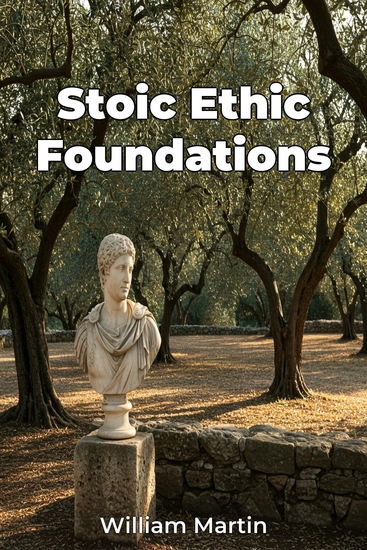
Stoic Ethic Foundations - cover

Stoic Ethic Foundations

William Martin

Traductor A AI

Editorial: Publifye

  • 0
  • 0
  • 0

Sinopsis

Stoic Ethic Foundations explores how the ancient philosophy of Stoicism offers valuable insights for modern life, emphasizing the cultivation of virtue, resilience, and ethical decision-making. It delves into the core tenets of Stoicism, as articulated by philosophers like Seneca and Epictetus, presenting them as a practical guide for achieving personal well-being, or eudaimonia. This approach isn't just theoretical; it highlights the importance of reason and social duty in navigating life's complexities.

 
The book examines the historical roots of Stoicism and its development within the Roman Empire, providing context for understanding its principles. It emphasizes the dichotomy of control, highlighting what we can and cannot influence, and advocates for focusing on virtue as a path to a meaningful life.

 
Proceeding through the works of key Stoic figures, the book culminates by illustrating how Stoic ethics can be integrated into daily routines and relationships, promoting ethical leadership and offering strategies for self-improvement in the face of adversity.
Disponible desde: 05/05/2025.
Longitud de impresión: 63 páginas.
Otros libros que te pueden interesar

  • Rubáiyát of Omar Khayyám The (Fitzgerald) - cover

    Rubáiyát of Omar Khayyám The...

    Omar Khayyám

    • 0
    • 0
    • 0
    Rubaiyat of Omar Khayyam. The Rubáiyát is a collection of poems, originally written in the Persian language and of which there are about a thousand, attributed to the Persian mathematician and astronomer Omar Khayyám (1048 – 1123). Rubaiyat" (derived from the Arabic root word for 4) means "quatrains": verses of four lines." (summary from Wikipedia.)
    Ver libro
  • A Rare Recording of Joseph Kennedy Patriarch of the Kennedy Family - cover

    A Rare Recording of Joseph...

    Joseph Kennedy

    • 0
    • 0
    • 0
    Joseph Patrick Kennedy (September 6, 1888 - November 18, 1969) was an American businessman, philanthropist, and politician. He was the patriarch of the Irish-American Kennedy family, which included President John F. Kennedy, U.S. Attorney General and Senator Robert F. Kennedy, and longtime Senator Ted Kennedy. He served as the first head of the Securities and Exchange Commission from 1934-1935 and United States Ambassador to the United Kingdom under FDR from 1938 to 1940. The following recording includes three audio clips: Kennedy's arrival in Britain (1938), his praise for the resiliency of the British people (1940), and a speech he gave in favor for keeping America out of World War II (1941).
    Ver libro
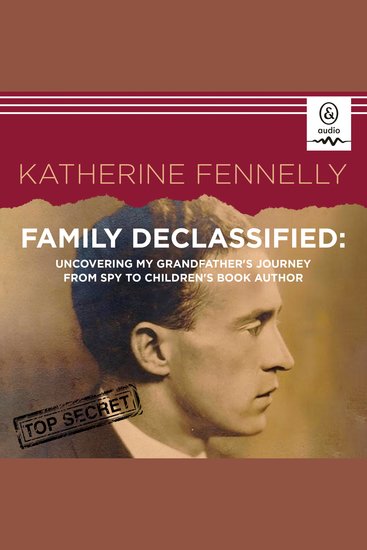
  • Family Declassified - Uncovering My Grandfather's Journey from Spy to Children's Book Author - cover

    Family Declassified - Uncovering...

    Katherine Fennelly

    • 0
    • 0
    • 0
    Uncovering My Grandfather's Journey from Spy to Children's Book Author — 
    Why do people keep deep secrets about their lives and ancestry? In Family Declassified, Katherine Fennelly applies her expertise as a social science researcher to answer this question regarding her maternal grandfather, a Jewish Hungarian immigrant who arrived in the US one hundred years ago. A Google search for ‘Francis Kalnay’ yields more than 54,000 results—the vast majority related to the children’s book, Chucaro: Wild Pony of the Pampa, for which he won a Newbery Honor in 1959. Buried deep within the search results are a few references to his years at the Office of Strategic Services (OSS)—the precursor to the CIA. However, none describes how a foreign-born sailor overcame a childhood marked by tragedy and became the head of an elite espionage unit for the Allied Forces during World War II. At the OSS Kalnay was one of the few foreign-born Americans informed and ‘indoctrinated’ in what we now know as the ULTRA decrypts, the German Enigma messages that were used to capture or thwart almost all German offensive intelligence activity during the Second World War. 
    It took several years of reviewing previously unexamined government records and conducting personal interviews and genealogical searches to piece together the life of a man who hid his Jewish identity, the nature of his work as a spy, and the murder of his sister and nephew by Hungarian Nazis. The result is a manuscript that examines the nature of family myths and presents the gripping story of a man whose life was shaped by some of the most extraordinary events of the 20th century.
    Ver libro
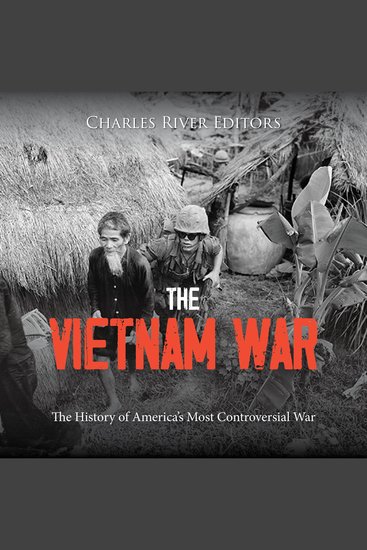
  • Vietnam War The: The History of America’s Most Controversial War - cover

    Vietnam War The: The History of...

    Editors Charles River

    • 0
    • 0
    • 0
    The Vietnam War could have been called a comedy of errors if the consequences weren’t so deadly and tragic. In 1951, while war was raging in Korea, the United States began signing defense pacts with nations in the Pacific, intending to create alliances that would contain the spread of Communism. As the Korean War was winding down, America joined the Southeast Asia Treaty Organization, pledging to defend several nations in the region from Communist aggression. One of those nations was South Vietnam.  
    	Before the Vietnam War, most Americans would have been hard pressed to locate Vietnam on a map. South Vietnamese President Diệm’s regime was extremely unpopular, and war broke out between Communist North Vietnam and South Vietnam around the end of the 1950s. Kennedy’s administration tried to prop up the South Vietnamese with training and assistance, but the South Vietnamese military was feeble. A month before his death, Kennedy signed a presidential directive withdrawing 1,000 American personnel, and shortly after Kennedy’s assassination, new President Lyndon B. Johnson reversed course, instead opting to expand American assistance to South Vietnam. 
    	The post-analysis of war is a complicated and process that benefits from hindsight, and the involvement of the United States in Vietnam over about a decade was no exception. Never formally declared as a “war,” the Vietnam War was not fought in clean lines or with clear missions. Viewers of the evening news listening to the “box score” of killed and wounded each night had at best a hazy notion of what was happening a world away in Southeast Asia. If anything, their leaders were both attentive to reelection and on a certain level were themselves unsure of what was truly taking place. A military draft that sent over 50,000 American soldiers to their deaths was triggered by a resolution sought by President Lyndon B. Johnson in a decision to contain communism in a distant Asian land. 
    Ver libro
  • Taittriyaka Upanishad - cover

    Taittriyaka Upanishad

    Unknown

    • 0
    • 0
    • 0
    The word Upanishad (upa-ni-shad) consists of, "Upa" means "near;" "ni" means "down;" "shad" means "to sit." Thus, Upanishad is to sit down near the teacher to discuss, learn, practice, and experience. There are some 200 or more Upanishads. Some are lost and are only known about because of being referenced in other Upanishads. Most of the Upanishads were kept secret for centuries, only passed on to others orally in the form of Shloka (a category of verse line developed from the Vedic Anustubh meter).Taittiriya is a Sanskrit word that means "from Tittiri". The root of this name has been interpreted in two ways: "from Vedic sage Tittiri" or a collection of verses from mythical students who became Tittiris (birds, partridges) in order to gain knowledge.This Upanishad is divided into three sections called Vallis: Siksha (Pronunciation /Instruction) Valli ,  Ananda (bliss of Brahman) Valli , and Bhrigu (son of Varuna, the god of all water elements) Valli.The chronology of Taittriyaka Upanishad is unclear; it is ancient and generally placed around 1st half of 1st millennium BCE.The 11 principal Upanishads to which Sankara appeals in his great commentary on the Vedanta-Surtras are: Chandogya, Talavakara or Kena, Aitareya, Kaushitaki, Vajasaneyi or Isha, Katha, Mundaka, Taittirtiyaka or Taittiriya, Brihadaranyaka, Svetasvatara, and Prasna. They are also called the 11 classical Upanishads or the fundamental Upanishads of the Vedanta Philosophy. Apart from these, Maitrayana-Brahmana-Upanishad is also considered as an important Upanishad. The Upanishadic literature is not a religious scripture and is free from dogma and doctrines. It is not a part of any religion but is a philosophy for all times and for all. German philosopher Arthur Schopenhauer, impressed by the Upanishads, called the texts "the production of the highest human wisdom".  Summary by Jothi
    Ver libro
  • The Drive for Dollars - How Fiscal Politics Shaped Urban Freeways and Transformed American Cities - cover

    The Drive for Dollars - How...

    Eric A. Morris, Brian D. Taylor,...

    • 0
    • 0
    • 0
    The story of the interplay between finance, freeways, and urban form in the twentieth century and their enduring impact on American cities and neighborhoods in the twenty-first. 


    American cities are distinct from almost all others in the degree to which freeways and freeway travel dominate urban landscapes. In The Drive for Dollars, Brian D. Taylor, Eric A. Morris, and Jeffrey R. Brown tell the largely misunderstood story of how freeways became the centerpiece of US urban transportation systems, and the crucial, though usually overlooked, role of fiscal politics in bringing freeways about. The authors chronicle how the ways that we both raise and spend transportation revenue have shaped our transportation system and the lives of those who use it, from the era before the automobile to the present day. They focus on how the development of one revolutionary type of road—the freeway—was inextricably intertwined with money. With the nation's transportation finance system at a crossroads today, this book sheds light on how we can best fund and plan transportation in the future. The authors draw on these lessons to offer ways forward to pay for transportation more equitably, provide travelers with better mobility, and increase environmental sustainability and urban livability.
    Ver libro