¡Acompáñanos a viajar por el mundo de los libros!
Añadir este libro a la estantería
Grey
Escribe un nuevo comentario Default profile 50px
Grey
Suscríbete para leer el libro completo o lee las primeras páginas gratis.
All characters reduced
Idle Hours in a Library - cover

¡Lo sentimos! La editorial o autor ha eliminado este libro de nuestro catálogo. Pero no te preocupes, tenemos más de 500.000 otros libros que puedes disfrutar.

Idle Hours in a Library

William Henry Hudson

Editorial: DigiCat

  • 0
  • 0
  • 0

Sinopsis

In 'Idle Hours in a Library,' William Henry Hudson delves into the evolution of English literature from the era of Shakespeare to the stirring of literary Bohemia. Composed of a series of erudite essays, Hudson's work meticulously examines the contributions of iconic figures such as Shakespeare himself, diarist Samuel Pepys, and the novelists who defined the Restoration period. The prose is both reflective and informative, steeped in a scholarly tone that provides a rich tapestry of literary criticism and historical context. Hudson's narrative provides a window into the sensibilities and the transformative nature of English literary tradition, bringing to life the socio-cultural forces that shaped the works of these towering figures of literature.

William Henry Hudson, an author and naturalist, was uniquely positioned to craft such an expansive overview, his own literary career spanning diverse genres and topics. His attachment to the natural world and passion for storytelling is evident in his meticulous attention to detail and sweeping narrative arcs. In 'Idle Hours in a Library,' Hudson's own literary sensibilities blend with his scholarly pursuits, yielding insights that only a writer of his caliber can provide. This work is buoyed by his breadth of knowledge and his desire to draw connections between the intricate patterns of literary development and broader cultural movements.

For aficionados of English literature and scholars alike, 'Idle Hours in a Library' stands as a testament to the enduring power of the written word and the rich tapestry of English literary heritage. Hudson's essays are a gateway to understanding the stylistic and thematic currents that have shaped the canon of English literature. Readers seeking an in-depth exploration of literary figures, keener insights into their works, and the cultural underpinnings that defined the eras they lived in will find this book an invaluable addition to their collection.
Disponible desde: 22/11/2022.
Longitud de impresión: 129 páginas.

Otros libros que te pueden interesar

  • How We Think - cover

    How We Think

    John Dewey

    • 0
    • 0
    • 0
    "How We Think" is a seminal work by John Dewey, an influential American philosopher, psychologist, and educational reformer. Published in 1910, the book explores the nature of thought, inquiry, and problem-solving, particularly within the context of education and learning. Dewey argues that thinking is an active process involving inquiry, reflection, and experimentation rather than a passive absorption of knowledge. He emphasizes the importance of critical thinking, creative problem-solving, and the integration of experiences in shaping one's understanding of the world.
    Ver libro
  • The Human Brain - Anatomy Functions and Disorders - cover

    The Human Brain - Anatomy...

    Ava Westwood

    • 0
    • 0
    • 0
    The human brain is the command center of the body, responsible for processing information, regulating bodily functions, and enabling cognitive abilities such as thinking, memory, and emotions. As the most complex organ in the human body, the brain contains billions of neurons that communicate through intricate networks, allowing for seamless coordination of voluntary and involuntary actions. Understanding the structure and function of the brain is essential for gaining insights into neurological health, mental well-being, and the mechanisms underlying various cognitive and motor processes. 
    The brain is divided into three primary regions: the cerebrum, cerebellum, and brainstem. The cerebrum, the largest part of the brain, is responsible for higher cognitive functions such as reasoning, problem-solving, language, and sensory perception. It is further divided into four lobes—frontal, parietal, temporal, and occipital—each with distinct roles in processing information. The cerebellum, located at the back of the brain, is crucial for coordinating movement, maintaining balance, and fine motor control. The brainstem, connecting the brain to the spinal cord, regulates vital autonomic functions such as breathing, heart rate, and digestion, ensuring the body’s survival. 
    Neurons, the fundamental units of the brain, communicate through electrical and chemical signals. This intricate communication network enables the processing of sensory inputs, the initiation of motor responses, and the storage of memories. Supporting cells known as glial cells play a crucial role in maintaining brain health by providing nutrients, removing waste, and protecting neurons from damage. Neurotransmitters, chemical messengers in the brain, facilitate signal transmission between neurons and influence mood, behavior, and cognitive functions.
    Ver libro
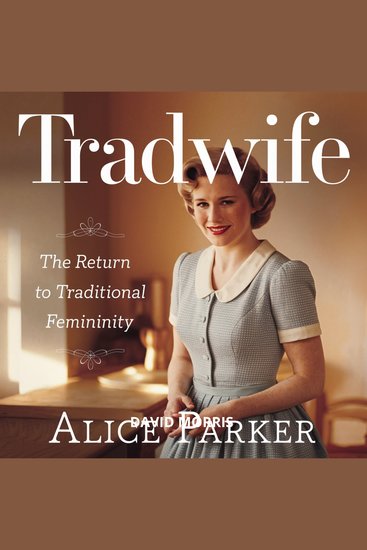
  • Tradwife – The Return to Traditional Femininity - The Role of the Traditional Wife in Modern Society - cover

    Tradwife – The Return to...

    Alice Parker

    • 0
    • 0
    • 0
    In a fast-paced, modern world, a growing number of women are rediscovering the values of traditional femininity. The tradwife movement emphasizes homemaking, nurturing, and supporting family life in ways that echo the past while shaping the future. 
    This audiobook explores the philosophy, challenges, and rewards of embracing a traditional wife role. Why are so many women choosing to return to old-fashioned values? Is this movement about empowerment or submission? 
    Tradwife – The Return to Traditional Femininity is an insightful journey into the lifestyle, mindset, and cultural shifts behind the tradwife phenomenon. Perfect for those interested in relationships, femininity, and personal fulfillment.
    Ver libro
  • Ending the World Wars: The History of the Events and Battles that Finished World War I and World War II - cover

    Ending the World Wars: The...

    Charles River Editors

    • 0
    • 0
    • 0
    For much of 1917, things went the Germans’ way. With the Bolshevik Revolution underway, the Germans were able to move soldiers to the Western front as the Russians quit the war. Moreover, the Allied powers had failed badly in its Nivelle Offensive in May 1917 and suffered a defeat in November against at the Battle of Caporetto in Slovenia. Unbelievably, the French and British had not bothered to coordinate their commands until after those defeats: they finally formed a Supreme Council to coordinate their armies’ movements and strategies. However, the Allied Powers began a counteroffensive known as the Hundred Days Offensive in August 1918 that was highly successful in pushing the Germans backward. In September, Bulgaria reached a separate armistice with the Allied powers, ceding control of the Balkans and cutting off German supplies. The defeated Ottoman Empire surrendered in late October. As the fortunes of the Central Powers waned, several lands in Austria-Hungary’s empire began declaring independence. Finally, in November, Germany’s Kaiser Wilhelm II was forced into exile, and the Germans reached an armistice with the Allied powers at 11:00 a.m. on November 11, 1918. World War I had finally ended. 
    	After the successful amphibious invasion on D-Day in June 1944, the Allies began racing east toward Germany and liberating France along the way. The Allies had landed along a 50 mile stretch of French coast, and despite suffering 8,000 casualties on D-Day, over 100,000 still began the march across the western portion of the continent. By the end of August 1944, the German Army in France was shattered, with 200,000 killed or wounded and a further 200,000 captured. However, Adolf Hitler reacted to the news of invasion with glee, figuring it would give the Germans a chance to destroy the Allied armies that had water to their backs.
    Ver libro
  • Journey to Deeper Love: Embracing Values and Spiritual Growth - "Transform your love journey! Access inspiring audio lessons for values and spiritual growth success" - cover

    Journey to Deeper Love:...

    Gareth Holloway

    • 0
    • 0
    • 0
    Journey to Deeper Love: Embracing Values and Spiritual Growth 
    ⭐⭐ Simplified Audio Guide ⭐⭐ 
    Are you looking to progress in your career and solidify your understanding of deeper love through transformative personal insights? 
    Seeking a comprehensive guide that provides all necessary elements to embrace and grow your spiritual values? 
    Your search ends here! 
    This audiobook serves as your definitive companion for deepening your understanding, applying your skills, and engaging in transformative exercises. With this, you're geared for success. 
    Updated for the latest insights and practices. 
    Key features of this enriched guide: 
    - Profound insights about discovering deeper love through transformative personal insights 
    - Detailed explanation of concepts and values that nurture spiritual growth 
    - Fruitful strategies for embracing values and fostering spiritual development 
    Our guide distinguishes itself through comprehensive coverage, which is essential for your journey to deeper love. Concepts aren't merely skimmed; they are delved into with precision. 
    Please note that this guide is not affiliated with any official entity and is purely an independent resource for your benefit. 
    Designed with a clear structure and easy-to-understand language, our guide on deepening love and spiritual growth ensures smooth transitions between topics. Say goodbye to dense jargon and welcome clear, precise, and technically accurate content. 
    So, why wait? Click the BUY NOW button, secure your guide, and begin your journey to deeper love and spiritual growth!
    Ver libro
  • The Birth of the Internet – A Digital Revolution - How Innovation Machines and Factories Transformed the World - cover

    The Birth of the Internet – A...

    Carter Reed

    • 0
    • 0
    • 0
    The world we live in today—one of skyscrapers, mass production, and global trade—was born from one of history’s greatest transformations: the Industrial Revolution. But how did we go from handcrafting goods to building massive factories, steam-powered locomotives, and electric cities? 
    This audiobook takes you deep into the story of the Industrial Revolution, uncovering its inventions, economic impact, and the people who drove progress forward. Discover: 
    ✅ How steam engines, textile mills, and railroads reshaped economies 
    ✅ The key figures behind industrial breakthroughs, from James Watt to Henry Ford 
    ✅ The social effects of urbanization, child labor, and factory life 
    ✅ How the Industrial Revolution paved the way for the modern technological era 
    The Industrial Revolution – The Birth of Modern Society is a must-listen for history lovers, technology enthusiasts, and anyone fascinated by the forces that shaped today’s world.
    Ver libro