

¡Acompáñanos a viajar por el mundo de los libros!
Añadir este libro a la estantería
Grey
Escribe un nuevo comentario Default profile 50px
Grey
Suscríbete para leer el libro completo o lee las primeras páginas gratis.
All characters reduced
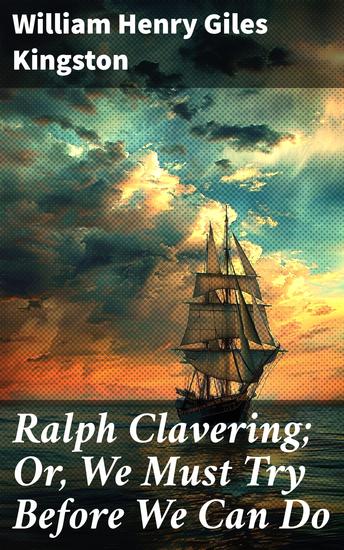
Ralph Clavering; Or We Must Try Before We Can Do - A Journey of Perseverance and Courage on the High Seas - cover

Ralph Clavering; Or We Must Try Before We Can Do - A Journey of Perseverance and Courage on the High Seas

William Henry Giles Kingston

Editorial: Good Press

  • 0
  • 0
  • 0

Sinopsis

Ralph Clavering; Or, We Must Try Before We Can Do is a quintessential example of Victorian adventure literature, imbued with themes of perseverance, discovery, and personal growth. Kingston employs an engaging narrative that seamlessly weaves together adventurous escapades and moral lessons, characteristic of his writing style that prioritizes exuberant storytelling matched with educational undertones. The novel follows the youthful Ralph Clavering as he navigates the vicissitudes of life at sea, meeting diverse characters and confronting challenges that test his mettle and resilience, reflecting the era's fascination with exploration and the moral imperative of action over inaction. William Henry Giles Kingston, a prolific author of boys' adventure stories, drew from his own seafaring experiences and a deep admiration for naval history to craft this compelling tale. Kingston's career was shaped by his desire to inspire young readers, instilling in them the courage to confront life's uncertainties through the lenses of adventure and moral integrity. His firsthand voyages and understanding of maritime life importantly inform Clavering's development, making it a richly authentic narrative for its time. This novel is ideal for readers who appreciate a blend of adventure and moral instruction, inviting them to explore the importance of determination and initiative. Kingston's vivid storytelling and compelling characters create an engaging journey, making Ralph Clavering a timeless narrative that resonates with anyone eager to discover the virtues of courage and action in the face of adversity.
Disponible desde: 04/10/2023.
Longitud de impresión: 42 páginas.

Otros libros que te pueden interesar

  • Uncle Wiggily and Puss in Boots - cover

    Uncle Wiggily and Puss in Boots

    Howard R. Garis

    • 0
    • 0
    • 0
    Uncle Wiggily and Puss in Boots is written by Howard R. Garis. The gentleman rabbit Uncle Wiggily is out and he hears a cat crying. "Without my boots they will take me out of all the story books!". He finds Puss in Boots, but without his boots! Uncle Wiggily helps out. The moral of the story is: Put good out, you get good back. Recommended for age 3+.
    Ver libro
  • Rumpelstiltskin - Story Time Episode 21 (Unabridged) - cover

    Rumpelstiltskin - Story Time...

    Brothers Grimm

    • 0
    • 0
    • 0
    The Brothers Grimm retold the story Rumpelstiltskin from folktales that they were told. This is the story of a miller who gets his daughter in hot water by falsely telling the King she can spin straw into gold. The king locks her in a room and forces her to prove her abilities or die.
    Ver libro
  • The Great Gatsby - cover

    The Great Gatsby

    F. Scott Fitzgerald

    • 0
    • 0
    • 0
    The Great Gatsby is a classic novel written by F. Scott Fitzgerald, published in 1925. Set in the Jazz Age on Long Island, near New York City, the novel tells the tragic story of Jay Gatsby, a self-made millionaire, and his pursuit of Daisy Buchanan, a wealthy young woman whom he loved in his youth. The story is narrated by Nick Carraway, a Yale graduate and World War I veteran who rents a house next to Gatsby's mansion and becomes friends with him. 
    The novel explores themes of decadence, idealism, resistance to change, social upheaval, and excess, creating a portrait of the Roaring Twenties that has been described as a cautionary tale regarding the American Dream. Gatsby's lavish parties, his mysterious past, and his unrelenting desire to rekindle his romance with Daisy are central elements of the story. The novel critically examines the American society of the time, revealing the disparity between the rich and the poor, and the moral decay hidden beneath the glittering surface of wealth and glamour.
    Ver libro
  • Oh Whistle and Ill Come to You - cover

    Oh Whistle and Ill Come to You

    M. R. James

    • 0
    • 0
    • 0
    'Who is this who is coming?'
    Oh, Whistle and I'll Come To You, My Lad is one of M.R. James's most celebrated ghost stories, praised for its subtle horror, atmospheric tension and exploration of the clash between rationalism and the supernatural.
    
    A young college professor is exploring the ruins of a Knights Templar site on the East Anglian coast when he discovers an ancient bronze whistle that carries a mysterious Latin inscription. After blowing it, he begins to experience eerie phenomena - strange visions, unsettling dreams, and the sense that he is being followed by a spectral presence. The haunting intensifies, culminating in a terrifying encounter with a supernatural force which preys on fear – and causes him to question his previously confirmed beliefs about the paranormal.
    Oh, Whistle and I'll Come To You, My Lad helped reshape the ghost story by showing that the most chilling horrors are often the ones we can't fully see or understand.
    Montague Rhodes James (1862–1936) was a distinguished English medievalist scholar and academic, serving as Provost of King's College, Cambridge, and later Eton College. His ghost stories, widely regarded as the finest in the English language, have been widely influential on modern horror and many - including Oh, Whistle and I'll Come For You, My Lad,The Tractate Middoth, A View from a Hill and Casting the Runes (aka Night of the Demon) - have been adapted for the screen.
    Ver libro
  • Horror at Red Hook The (Unabridged) - cover

    Horror at Red Hook The (Unabridged)

    H. P. Lovecraft

    • 0
    • 0
    • 0
    The story begins with Detective Malone describing an on-duty incident in Red Hook, Brooklyn, that gave him a phobia of large buildings. Back-tracking to where it all began, the Brooklyn waterfront slum Red Hook is described in detail, with its gangs and crime, and hinting at an occult underbelly. The "case of Robert Suydam" is then told to be the driving force behind Malone's federally ordered involvement at Red Hook. Suydam's demeanor changes suddenly. Known as a shabby recluse, he is seen around town looking younger and more radiant. News arrives of his engagement to a well-to-do woman, while, at the same time, there is an increase in local kidnappings. A police raid, involving Malone, uncovers nothing useful from Suydam's Red Hook flat save a few strange inscriptions. After Suydam's wedding, he and his bride leave on a ship. Aboard, a scream is heard and, when the crew enter Suydam's stateroom, they find him and his wife dead, with claw-marks on his wife's body. Later, some strange men from another ship come on board and lay claim to Suydam's body. Malone enters Suydam's flat to see what he can find. In the basement, he comes across a door that breaks open and sucks him inside, revealing a hellish landscape. He witnesses human sacrifices and a ritual that reanimates Suydam's corpse. Malone is found in the basement of Suydam's flat, which has caved in inexplicably above him, killing everyone else inside. The tunnels and chambers uncovered in the raids are filled in and cemented, though, as Malone recounts, the threat in Red Hook subtly re-emerges.
    Ver libro
  • Adventures of Chanticleer and Partlet The - Story Time Episode 25 (Unabridged) - cover

    Adventures of Chanticleer and...

    Brothers Grimm

    • 0
    • 0
    • 0
    A rooster and hen go to eat nuts. They make a carriage of nutshells to come back in; the hen rides and the rooster draws it. The duck attacks them for eating nuts, but the rooster defeats him, and he lets himself be harnessed to the carriage instead. A pin and needle join them. They offer an innkeeper the hen's egg and the duck to let them stay, but in the morning, they eat the hen's egg, stick the needle in the innkeeper's chair and the pin in his towel. The duck also goes off. The innkeeper is pricked by both the needle and pin and the eggshell from the hen flies at his eyes. He resolves to never have such ragamuffins in his inn again.
    Ver libro
