Junte-se a nós em uma viagem ao mundo dos livros!
Adicionar este livro à prateleira
Grey
Deixe um novo comentário Default profile 50px
Grey
Assine para ler o livro completo ou leia as primeiras páginas de graça!
All characters reduced
Lincoln as I knew him - A reminiscence of President Lincoln’s bodyguard - cover
LER

Lincoln as I knew him - A reminiscence of President Lincoln’s bodyguard

William Henry Crook

Editora: Edizioni Aurora Boreale

  • 0
  • 0
  • 0

Sinopse

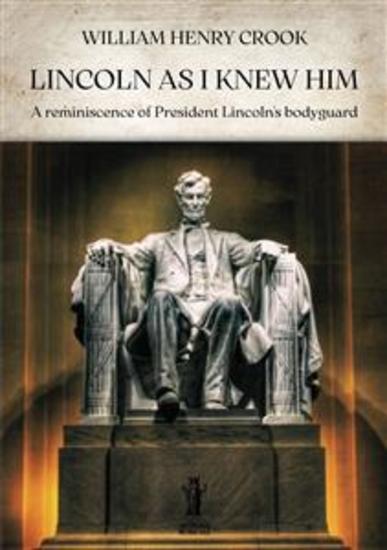
William Henry Crook (October 15, 1839 - March 13, 1915) was one of President Abraham Lincoln’s bodyguards in 1865. After Lincoln’s assassination (while Crook was off duty), he continued to work in the White House for a total of more than 50 years, serving 12 Presidents.Crook set his memoirs down on paper in the book Through Five Administrations: Reminiscences of Colonel William H. Crook, Body-Guard to President Lincoln, compiled and edited by Margarita Spalding Gerry and published for the first time in 1910. There are six administrations covered, however, from Lincoln to Chester A. Arthur, although James A. Garfield and Arthur are dealt with in a single chapter.Lincoln as I knew him is one of the most interesting reminiscences by William Henry Crook. It was published on the Harper’s Monthly Magazine in December 1917.
Disponível desde: 14/01/2023.

Outros livros que poderiam interessá-lo

  • Learn YouTube channel - cover

    Learn YouTube channel

    Govind singh

    • 0
    • 0
    • 0
    Learn YouTube channel release and growth yourself
    Ver livro
  • The Shaking Woman or A History of My Nerves - cover

    The Shaking Woman or A History...

    Siri Hustvedt

    • 0
    • 0
    • 0
    While speaking at a memorial event in 2006, Siri Hustvedt suffered a violent seizure from the neck down. Despite her flapping arms and shaking legs, she continued to speak clearly and was able to finish her speech. It was as if she had suddenly become two people: a calm orator and a shuddering wreck. Then the seizures happened again and again. The Shaking Woman tracks Hustvedt's search for a diagnosis, one that takes her inside the thought processes of several scientific disciplines, each one of which offers a distinct perspective on her paroxysms but no ready solution. In the process, she finds herself entangled in fundamental questions: What is the relationship between brain and mind? How do we remember? What is the self? 


    During her investigations, Hustvedt joins a discussion group in which neurologists, psychiatrists, psychoanalysts, and brain scientists trade ideas to develop a new field: neuropsychoanalysis. She volunteers as a writing teacher for psychiatric in-patients at the Payne Whitney clinic in New York City and unearths precedents in medical history that illuminate the origins of and shifts in our theories about the mind-body problem. Hustvedt synthesizes her experience and research into a compelling mystery: Who is the shaking woman? In the end, the story she tells becomes, in the words of George Makari, "a brilliant illumination for us all."
    Ver livro
  • Myla's Letter - cover

    Myla's Letter

    Thomas Millhouse

    • 0
    • 0
    • 0
    Sunny, A United States postal letter Carrier,proffers his duty as a mailman to Myla. 
     Myla is a lovely girl who loves to write letters and collect stamps. She writes excellently,
    Ready to relish her sweet experiences through her letters. She gets an invitation from her grandparents to come on a weekend boat ride and to view the West Quaddy Head Lighthouse from the sea! She is super excited!
    
    WHAT IS HER RESPONSE?
     Will Sunny be the one who delivers myla's letter?  How will myla's letter reach it reach its destination?
    Ver livro
  • Excessive Control - Dominating Another Person's Actions and Thoughts - cover

    Excessive Control - Dominating...

    Cito Harder

    • 0
    • 0
    • 0
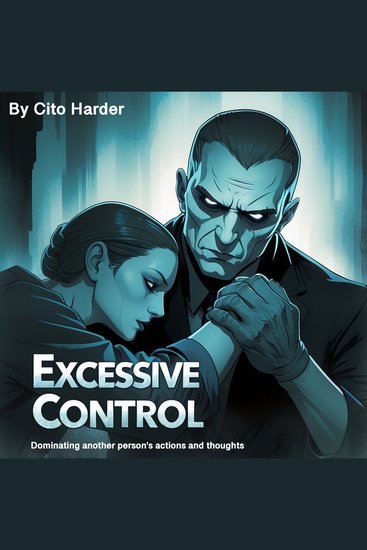
    Excessive control is a form of domination in which one individual or entity seeks to regulate another’s thoughts, actions, and decisions to an unhealthy degree. While some level of structure and guidance is necessary in various aspects of life, such as in parenting, leadership, and governance, excessive control crosses the line into coercion, manipulation, and restriction of personal freedom. This type of control can occur in different settings, including personal relationships, workplaces, political systems, and even media influence. 
    At its core, excessive control is often driven by fear, insecurity, or the desire for power. Those who exert extreme control may believe that they are acting in the best interest of others, while in reality, they strip individuals of autonomy and self-determination. This behavior can manifest in different ways, such as micromanaging, imposing rigid rules, discouraging independent thinking, or using emotional, psychological, or even physical tactics to ensure compliance. Over time, the person being controlled may experience anxiety, self-doubt, and a loss of confidence in their ability to make choices. 
    In personal relationships, excessive control can take the form of possessiveness, constant monitoring, and manipulation. A controlling partner may demand to know every detail of the other person’s life, limit their interactions with others, or make decisions on their behalf. Similarly, in family settings, parents or guardians who exert too much control over their children may prevent them from developing independence, leading to long-term emotional and psychological struggles.
    Ver livro
  • Ancient Civilizations Explored - A Journey Through the Foundations of Human History and Culture - cover

    Ancient Civilizations Explored -...

    Virversity Online Courses

    • 0
    • 0
    • 0
    This course offers a comprehensive exploration of ancient civilizations, tracing the development of early human societies and their lasting impact on the modern world. Students gain insights into the historical, cultural, social, and technological advancements that shaped humanity’s past, enriching critical thinking and providing context for understanding today’s societies.Explore the origins and growth of early civilizations from Mesopotamia to ancient China. Study social structures, belief systems, and cultural expressions across diverse societies. Examine key technological innovations, economic systems, and trade routes connecting ancient peoples. Understand the roles of writing, art, architecture, and governance in shaping civilization and the causes behind the decline of ancient empires. Learn archaeological methods that reveal the secrets of the past.The course begins with the earliest human societies and their transition to complex civilizations, highlighting Mesopotamia as the “Cradle of Civilization” and the emergence of city-states. Discover Egypt’s riverine empires, Greece’s democratic and philosophical contributions, and Rome’s political and engineering achievements. Delve into writing systems like cuneiform and hieroglyphics, religious beliefs, social hierarchies, economic structures, and technological advances that shaped tools and infrastructure. Explore arts and architecture as expressions of power, faith, and identity.Further, examine Asian ancient civilizations such as the Indus Valley and early Chinese empires, emphasizing their unique contributions and roles in trade networks. The course addresses the complex causes behind the rise and fall of these societies and their enduring legacies. Students also learn archaeological techniques that help reconstruct historical narratives.
    Ver livro
  • Augosto Pinochet - Biography of a Modern Chilean Dictator - cover

    Augosto Pinochet - Biography of...

    Kelly Mass

    • 0
    • 0
    • 0
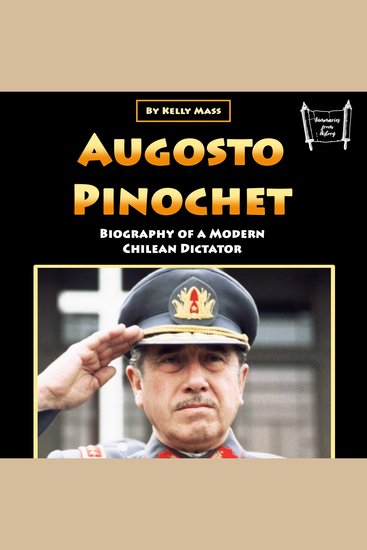
    Augusto José Ramón Pinochet Ugarte was a Chilean military officer and politician who dominated Chilean politics as a military dictator from 1973 to 1990. His rise to power marked a pivotal and controversial chapter in the nation’s history. Initially serving as the leader of the Military Junta of Chile from 1973 to 1981, he was declared President of the Republic by the junta in 1974, consolidating his role as Chile's de facto head of state. With the approval of a new constitution in 1981, his presidency was formalized, making him the de jure leader of the country until 1990. 
    Pinochet’s military career set the stage for his rise to power. After steadily climbing the ranks of the Chilean Army, he achieved the position of General Chief of Staff in 1972. In an unexpected turn, President Salvador Allende, leader of the democratically elected left-wing Unidad Popular government, appointed Pinochet as Commander-in-Chief of the Chilean Army on August 23, 1973, just weeks before his eventual ouster. This appointment would prove consequential as Pinochet played a central role in the coup that toppled Allende's government on September 11, 1973. Supported by the United States, the coup ended civilian rule in Chile and marked the beginning of Pinochet’s authoritarian regime.
    Ver livro