Junte-se a nós em uma viagem ao mundo dos livros!
Adicionar este livro à prateleira
Grey
Deixe um novo comentário Default profile 50px
Grey
Assine para ler o livro completo ou leia as primeiras páginas de graça!
All characters reduced
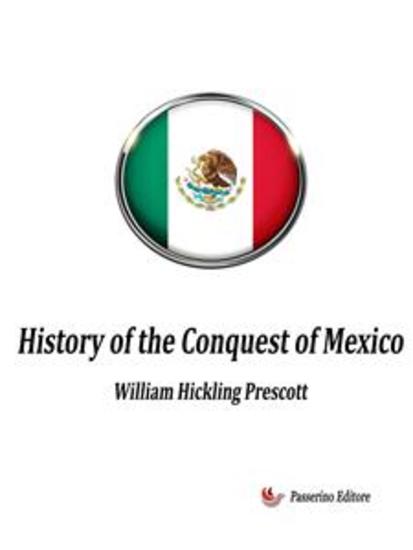
History of the Conquest of Mexico - cover
LER

History of the Conquest of Mexico

William H. Prescott

Editora: Passerino

  • 0
  • 0
  • 0

Sinopse

The Spanish conquest of the Aztec Empire, also known as the Conquest of Mexico or the Spanish-Aztec War (1519–21), was one of the primary events in the Spanish colonization of the Americas. There are multiple 16th-century narratives of the events by Spanish conquistadors, their indigenous allies, and the defeated Aztecs. It was not solely a contest between a small contingent of Spaniards defeating the Aztec Empire but rather the creation of a coalition of Spanish invaders with tributaries to the Aztecs, and most especially the Aztecs' indigenous enemies and rivals. They combined forces to defeat the Mexica of Tenochtitlan over a two-year period. For the Spanish, the expedition to Mexico was part of a project of Spanish colonization of the New World after twenty-five years of permanent Spanish settlement and further exploration in the Caribbean.


William Hickling Prescott (May 4, 1796 – January 28, 1859) was an American historian and Hispanist, who is widely recognized by historiographers to have been the first American scientific historian. Despite having serious visual impairment, which at times prevented him from reading or writing for himself, Prescott became one of the most eminent historians of 19th century America. He is also noted for his eidetic memory.
After an extensive period of study, during which he sporadically contributed to academic journals, Prescott specialized in late Renaissance Spain and the early Spanish Empire. His works on the subject, The History of the Reign of Ferdinand and Isabella the Catholic (1837), The History of the Conquest of Mexico (1843), A History of the Conquest of Peru (1847) and the unfinished History of the Reign of Phillip II (1856–1858) have become classic works in the field, and have had a great impact on the study of both Spain and Mesoamerica. During his lifetime, he was upheld as one of the greatest living American intellectuals, and knew personally many of the leading political figures of the day, in both the United States and Britain. Prescott has become one of the most widely translated American historians, and was an important figure in the development of history as a rigorous academic discipline. Historians admire Prescott for his exhaustive, careful, and systematic use of archives, his accurate recreation of sequences of events, his balanced judgments and his lively writing style. He was primarily focused on political and military affairs, largely ignoring economic, social, intellectual, and cultural forces that in recent decades historians have focused on. Instead, he wrote narrative history, subsuming unstated causal forces in his driving storyline.
Disponível desde: 26/08/2022.

Outros livros que poderiam interessá-lo

  • The Feudal System - How Lords Vassals and Serfs Shaped Medieval Europe - cover

    The Feudal System - How Lords...

    Arlo Holders

    • 0
    • 0
    • 0
    Feudalism was a dominant social, economic, and political system in medieval Europe that shaped the lives of millions from the 9th to the 15th centuries. Rooted in the decline of the Roman Empire, it emerged as a response to the need for local defense, stability, and order. With the fall of centralized authority, particularly in the wake of the collapse of Roman imperial power, local leaders, and warriors filled the vacuum, giving rise to a new hierarchical structure that became the backbone of medieval society. 
    At the heart of feudalism was the relationship between lords and vassals, defined by a system of land ownership and mutual obligations. The land, or fief, was the most valuable asset in the feudal system. Lords, or landowners, granted portions of their land to vassals, typically in exchange for military service, loyalty, and other obligations. In return for this land, vassals swore an oath of fealty to their lord, pledging to serve him in times of war, provide counsel, and honor the lord’s authority. This bond was often formalized through ceremonies that emphasized loyalty and trust, making feudalism not just a legal arrangement but a deeply personal relationship. 
    In addition to the lord-vassal dynamic, serfs and peasants formed the labor force that sustained the feudal economy. While lords and vassals fought battles and governed lands, serfs worked the fields and managed agriculture, which was the primary source of wealth in the medieval world. Unlike slaves, serfs were bound to the land, unable to leave without their lord’s permission. In exchange for protection and the right to work the land, serfs provided a portion of their crops and other goods as rent.
    Ver livro
  • Body Language - cover

    Body Language

    Ryan Martinez

    • 0
    • 0
    • 0
    Body language can say a lot about another person. Without saying a single word, you can express feelings, influence others, and change what other people think about you.When you are in a room full of strangers, don’t you ever wish you knew how to interpret gestures or how to use them effectively to get your message through?People talk not only with spoken language but also with nonverbal cues. The most effective speakers and leaders let their body do a significant part of the talking. They let their subconscious talk to other people by using gestures, postures, facial expressions, eye contact, touch, and other nonverbal signals or actions.Learning how to interpret body language can help you understand people better or let you express your thoughts more clearly. This book can help you improve relationships because you’ll be understanding other people beyond what they say.You can break cultural and social boundaries by understanding how different people communicate through body signals.Use the knowledge of body language to your advantage by learning it through this book.
    Ver livro
  • Justinian: The Emperor Who Built an Empire… and Doomed It - The Ambition Triumphs and Tragedies of Byzantium’s Greatest Emperor - cover

    Justinian: The Emperor Who Built...

    Phil J. Ponce

    • 0
    • 0
    • 0
    Dive into the gripping history of Emperor Justinian, the ruler who sought to restore the Roman Empire to its former glory but instead left a legacy of both brilliance and downfall. Through conquests, legal reforms, and architectural wonders, Justinian reshaped the Byzantine world-yet his ambitious vision led to economic strain and political unrest. This audiobook unpacks the triumphs and tragedies of his reign, offering a compelling portrait of one of history’s most fascinating figures.
    Ver livro
  • When Money Talks - A History of Coins and Numismatics - cover

    When Money Talks - A History of...

    Frank L. Holt

    • 0
    • 0
    • 0
    Coinage—it is one of the most successful and consistent technologies ever invented. Nothing else we still use in everyday life has a history quite like it. Look around at all the things that would bewilder a Greek, Roman, or Renaissance ancestor; then, dig into your purse or pocket for that one artifact that they would immediately recognize. Historian Frank L. Holt takes us on a journey through the history of numismatics, the study of coins—one of the oldest and most important contributions to the arts and humanities. 


    For 2600 years, poets, economists, philosophers, historians, and theologians have pondered the mysteries of money. Who invented coins, and why? Does coinage function beyond our control? How has it changed world history and culture? What does numismatics reveal about our past that could never be discovered from any other source? How has numismatics advanced using modern science? Does it still suffer from racist ideas about physiognomy and phrenology? The approach taken in this book is as multifaceted as coined money itself. Coins are integral to our economic, social, political, religious, and cultural history. When Money Talks explores each aspect of coinage, and takes a special interest in how coins have appeared in literature and pop culture, ranging in its analysis from Greek drama and the New Testament to TV sitcoms and meme theory.
    Ver livro
  • How to Be Open-Minded - cover

    How to Be Open-Minded

    Olivia Werner

    • 0
    • 0
    • 0
    [How to Be Open-Minded] unfolds as an intimate exploration of consciousness, where certainty dissolves into curiosity and rigid thinking transforms into fluid understanding. Through delicate prose that traces the architecture of thought, this meditation on mental flexibility reveals how our preset notions sit like familiar furniture in darkened rooms of the mind, waiting to be rearranged. At its heart, this work isn't just about changing what we think—it's about transforming how we think, offering readers a profound journey through the landscapes of belief, doubt, and the spaces between. Like a carefully crafted map of consciousness, it guides us through the subtle art of holding ideas lightly, showing how true strength lies not in the rigidity of our convictions but in their capacity to evolve.
    Ver livro
  • Electric Dreams - Sex Robots and the Failed Promises of Capitalism - cover

    Electric Dreams - Sex Robots and...

    Heather Parry

    • 0
    • 0
    • 0
    In the future, we'll all be having sex with robots… won't we?
    
    Roboticists say they're a distracting science fiction, yet endless books, films and articles are written on the subject. Campaigns are even mounted against them. So why are sex robots such a hot topic?
    
    Electric Dreams picks apart the forces that posit sex robots as either the solution to our problems or a real threat to human safety, and looks at what's being pushed aside for us to obsess about something that will never happen.
    Ver livro