Join us on a literary world trip!
Add this book to bookshelf
Grey
Write a new comment Default profile 50px
Grey
Subscribe to read the full book or read the first pages for free!
All characters reduced
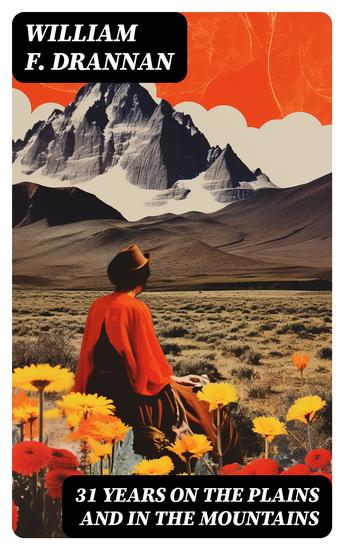
31 Years on the Plains and in the Mountains - An Authentic Record of a Life Time of Hunting Trapping Scouting and Fighting in the Far West - cover

31 Years on the Plains and in the Mountains - An Authentic Record of a Life Time of Hunting Trapping Scouting and Fighting in the Far West

William F. Drannan

Publisher: DigiCat

  • 0
  • 0
  • 0

Summary

In "31 Years on the Plains and in the Mountains," William F. Drannan presents a vivid tapestry of his life as a frontiersman, chronicling his experiences across the American West during the mid-19th century. This autobiographical narrative adopts a straightforward, yet evocative literary style, immersing readers in the harsh realities and breathtaking landscapes of the plains and mountains. Drannan's observations on the diverse cultures, including Native American tribes he encountered, coupled with his perilous adventures, render the book a significant contribution to the literature of westward expansion and frontier life, providing a rare firsthand account of the tumultuous era. Drannan, born in 1832, was not only a skilled horse trader and teamster but also an active participant in the tumultuous events that shaped the American frontier. His extensive travels and encounters with both settlers and Indigenous peoples were deeply influential, shaping his perspectives and leading him to document his rich experiences. His unique vantage point as a witness to both conflict and camaraderie enhances the authenticity of his narrative, making it an essential historical record. "31 Years on the Plains and in the Mountains" is a must-read for anyone interested in American history, particularly the stories of those who forged lives on the frontier. Drannan's eloquent prose and unvarnished truth-telling paint a compelling picture of a world that is both familiar and foreign, appealing not just to history enthusiasts but also to readers seeking to understand the complexities of the American identity.
Available since: 11/14/2023.
Print length: 371 pages.

Other books that might interest you

  • Alexander Hamilton - The American Statesman Politician Military Commander and Economist - cover

    Alexander Hamilton - The...

    Kelly Mass

    • 0
    • 0
    • 0
    Alexander Hamilton was a Caribbean-born American leader, political leader, legal scholar, army leader, legal representative, lender, and economic expert who lived from January eleventh, 1755 or 1757 till July twelfth, in 1804. He was a founding father of the US of America. 
    He was the creator of the country's monetary system, the Federalist Party, the USA Coast Guard, and the New York Post paper, and a popular translator and advocate of the U.S. Constitution. 
    Hamilton, as first secretary of the Treasury, was the driving force behind President George Washington's financial policy. 
    Let’s learn more about this clever man of money in this book.
    Show book
  • Ottomans The: An Enthralling Overview of the Rise and Fall of the Ottoman Empire and the Life of Suleiman the Magnificent - cover

    Ottomans The: An Enthralling...

    Billy Wellman

    • 0
    • 0
    • 0
    Two manuscripts in one book:The Ottoman Empire: An Enthralling Guide to One of the Mightiest and Longest-Lasting Dynasties in World HistorySuleiman the Magnificent: An Enthralling Guide to the Sultan Who Ruled during the Golden Age of the Ottoman Empire 
    Spanning three continents and controlling lands in the Balkans, the Caucasus, Crimea, Anatolia, the Middle East, the Levant, Egypt, and North Africa, the Ottoman Empire was one of the most menacing powers at the height of its power in the 16th century. It was feared by other great empires of Europe. But how exactly did the Ottomans achieve this great power, and how did they lose it by the early 20th century? 
    In the first part of this book, you will discover the following:The emergence of the Ottoman state under its first leader, OsmanThe different sultans of the empire and their reignsThe fall of Constantinople and the Golden Age of the Ottoman EmpireDifferent wars and political processes that shaped the empire’s history 
    Suleiman the Magnificent certainly earned his name. He not only had a huge impact on the history of Turkey and the Middle East but also on the European politics of his day, allying himself with France against the Habsburgs of Spain. He is also known for his life-long love affair with Roxelana, a slave girl who became his wife and, some say, co-ruler of the empire. 
    In the second part of the book, you will find out:Why Suleiman was a master goldsmith as well as a sultanHow he became a major patron of the arts, employing the famous architect Sinan and changing the skyline of IstanbulWhy he is known to the Turks as “Suleiman the Law Maker (Kanuni)” 
    Scroll up and click the “add to cart” button to begin learning about the Ottomans!
    Show book
  • Call of the Kingfisher - Bright sights and bird song in a year by the river - cover

    Call of the Kingfisher - Bright...

    Nick Penny

    • 0
    • 0
    • 0
    “All writers want the reader to see through their eyes, but few succeed in making them hear through their ears as successfully as Nick Penny… Very special.” Jamie Blackett, Country Life"An odyssey of simple joy, filled with historical facts and stories, where the writer makes us feel part of the journey. It’s like strolling the riverbank with a friend - and is a timely reminder that regular paths walked can lead to irregular and surprising encounters" - Ceri Levy, Caught by the RiverCall of the Kingfisher is the enchanting debut from composer and wildlife recordist Nick Penny. This love letter to a short stretch of Northamptonshire’s River Nene (UK) celebrates all the wild things that live there, especially the kingfishers. The original print book comes with access to 42 wildlife sound recordings made by the author. These are woven into the audiobook along with the spoken text.Nick has walked beside the river at Oundle in Northamptonshire for four decades. But for a whole year he gave the waterway all the time it asked for. The more attention he gave it, the more he saw the kingfishers and heard their high whistling calls. Set in a lovely but little-known part of England, Call of the Kingfisher relates a year by the river, the author’s experiences there and the different people he meets. Other strands are woven around the elusive feathered protagonist: explorations of local history and landscape, from Roman and Bronze Age sites to watermills and centuries-old stone churches; visits at different times and to different places in the valley; homages to naturalists who lived nearby; forest dawns and dusks listening to the precious song of nightingales. But the background tapestry is the sights and sounds, and greens and browns, of the riverbank, shot through with the blue and orange threads of a kingfisher’s glowing feathers.
    Show book
  • Stories from Kathasaritasagara series -15 - From various sources - cover

    Stories from Kathasaritasagara...

    Anusha HS

    • 0
    • 0
    • 0
    The book Kathasaritsagara has been created by Soma Deva. It consists of 21,500 shlokas. 
    This book Kathasaritsagara has been divided into 18 lambakaas, and those 18 lambakaas are still more divided into 125 Tharanga's. 
    Some lambakaas are very big, while some are very small. 
    If there are 115 Shlokas in the 11th Lambaka, there are around 4925 Shlokas in 12th Lambaka. 
    During ancient times from the mouth of Lord Shiva, this story got birth. Those who listen to this story will experience all sorts of worldly pleasures. They will be blessed by Lord Shiva and at last reach jnana Loka by the blessings of lord shiva.
    Show book
  • The Collapse of the Soviet Union - How the Superpower Disintegrated and the New World Order Emerged - cover

    The Collapse of the Soviet Union...

    Fredrich Hazelton

    • 0
    • 0
    • 0
    The Soviet Union, once the most powerful socialist state on the planet, dominated global politics and economics for much of the 20th century. From its establishment in 1922 until its disintegration in 1991, the USSR stood as a superpower, rivaling the United States in military strength, technological innovation, and ideological influence. The Soviet Union was not just a political entity; it was the manifestation of a grand vision of socialist governance that sought to reshape the world. Its rise to power was marked by revolution, war, and the forging of a unique socio-economic structure that stood in stark contrast to the capitalist world. 
      
    However, by the late 1980s, the Soviet Union faced insurmountable challenges. The centralized economy, which had initially driven industrial growth, was beginning to falter under the weight of inefficiency and stagnation. The military and political dominance the USSR had long enjoyed began to erode, and the ideological tenets that had once inspired its citizens no longer resonated with the younger generation. The political leadership, while still powerful, was marked by infighting, and the population grew disillusioned with the government’s inability to reform. Amid this turmoil, Mikhail Gorbachev ascended to the position of General Secretary of the Communist Party of the Soviet Union in 1985. Gorbachev’s policies of perestroika (restructuring) and glasnost (openness) sought to address the growing dissatisfaction and revive the Soviet state, but they inadvertently exposed the deep-rooted problems that had been festering for decades. 
      
    The decision to allow greater political freedom and economic flexibility unintentionally sparked a wave of unrest throughout the Soviet republics. Nationalist movements, long suppressed, began to rise, and demands for greater autonomy became louder...
    Show book
  • The Legends of China and Slavic Lore - Ancient Stories of the East (3 in 1) - cover

    The Legends of China and Slavic...

    Odessa Nightshade

    • 0
    • 0
    • 0
    This bundle delves into the rich mythological traditions of the East, showcasing a fascinating collection of ancient stories from China, Slavic cultures, and the Hindu pantheon. These legends have shaped the spiritual and cultural landscapes of their respective regions, offering timeless wisdom, cosmic tales, and moral lessons that continue to resonate today. 
    The first part of the collection explores The Legends of Ancient China, where gods, dragons, and emperors abound. In Chinese mythology, celestial beings play pivotal roles in shaping the destiny of mankind, and the stories of ancient heroes and supernatural creatures offer insight into the balance between heaven and earth. The enduring tale of the Yellow Emperor, the story of the great flood, and the legendary journey of the Monkey King are just some of the captivating narratives woven into China’s ancient lore. 
    Next, The Mythology of the Slavs introduces a world of spirits, gods, and mystical beings who govern the natural world. From the powerful Perun, god of thunder and war, to the mischievous domovoi, a house spirit, Slavic mythology is filled with both divine and folk elements. These stories emphasize the deep connection between humans and nature, as well as the complex relationships between gods, demons, and ancestors. The Slavic pantheon reveals a culture steeped in rituals, symbolism, and reverence for the earth. 
    Lastly, The Hindu Pantheon takes readers on a journey through one of the world’s oldest and most intricate mythologies. The Hindu gods—each with their unique powers and personalities—shaped the spiritual landscape of India and beyond. From the creation stories involving Brahma to the heroic exploits of Vishnu and Shiva, these tales illustrate cosmic principles, divine intervention, and the eternal battle between good and evil.
    Show book