Junte-se a nós em uma viagem ao mundo dos livros!
Adicionar este livro à prateleira
Grey
Deixe um novo comentário Default profile 50px
Grey
Assine para ler o livro completo ou leia as primeiras páginas de graça!
All characters reduced
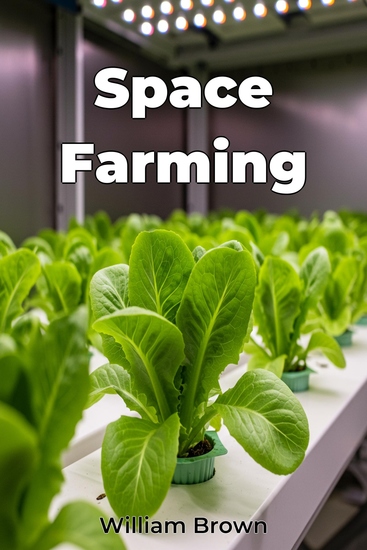
Space Farming - cover
LER

Space Farming

William F. Brown

Tradutor A Ai

Editora: Publifye

  • 0
  • 0
  • 0

Sinopse

Space Farming delves into the groundbreaking concept of cultivating plants beyond Earth, offering solutions for long-duration space missions and addressing terrestrial agricultural challenges. It examines how growing crops in space could revolutionize food production, providing a sustainable food source in resource-scarce environments. Understanding plant behavior in microgravity, including photosynthesis and nutrient uptake, is crucial. Early experiments on the International Space Station have paved the way for advanced research simulating Martian conditions, highlighting the evolution of plant biology in space. The book systematically explores the fundamentals of plant biology in space, detailing ongoing experiments and analyzing their results. It investigates technologies like hydroponics, aeroponics, and LED lighting, assessing their potential for optimizing plant growth in controlled environments and creating closed-loop life support systems. By drawing upon scientific publications, NASA reports, and insights from plant biologists and aerospace engineers, Space Farming bridges the gap between scientific research and practical application. Ultimately, Space Farming argues that cultivating plants in space is not merely a futuristic dream but a viable path toward enabling space exploration and developing innovative solutions for agriculture on Earth to improve food security and combat climate change. The book progresses from foundational principles to advanced technologies, culminating in a discussion of the broader implications for sustainable agriculture and resource management.
Disponível desde: 06/03/2025.
Comprimento de impressão: 67 páginas.

Outros livros que poderiam interessá-lo

  • Mastering AI Game Development with Unreal - Unleash Creativity Empower Gameplay and Transform Player Experiences with Advanced AI Techniques in Unreal Engine - cover

    Mastering AI Game Development...

    Hrishikesh Andurlekar

    • 0
    • 0
    • 0
    Elevate your Unreal Engine skills with This Essential Guide to AI-Driven Game Development!
    Book Description
    In the rapidly evolving world of game development, integrating Artificial Intelligence (AI) into your Unreal Engine projects is no longer optional—it’s essential. Mastering AI for Unreal Engine is your definitive guide to unlocking the transformative power of AI, propelling your games beyond the ordinary and into the realm of cutting-edge, immersive experiences. 
    Through a step-by-step approach, you will explore a wide range of AI techniques, including pathfinding, behavior trees, perception systems, and the powerful Environment Query System (EQS). Each chapter delves into the theoretical underpinnings of these AI components, followed by hands-on exercises and real-world examples that demonstrate their integration within Unreal Engine. We will learn to create intelligent, dynamic, and engaging game experiences by leveraging the power of AI. 
    What sets this book apart is its deep dive into emerging AI frameworks like the Mass Framework, giving you a strategic edge in adopting the latest trends and technologies that are shaping the future of gaming. You’ll learn how to optimize your AI systems, enhance performance, and master debugging techniques critical for smooth, efficient development processes. 
    Mastering AI for Unreal Engine doesn’t just teach you AI—it empowers you to innovate, create intelligent game worlds, and stand out in the fiercely competitive game development landscape. 
    Table of Contents
    
    1. Introduction to Unreal Engine
    2. Unreal Blueprints
    3. Understanding AI in Games
    4. Navigation and Pathfinding
    5. Behavior Trees and Blackboards
    6. AI Perception
    7. StateTree
    8. Environment Query System
    9. SmartObjects
    10. Debugging AI in Unreal Engine
    11. Mass Framework and Future Trends in GameAI   
    Index
    Ver livro
  • AI for Cybersecurity - Starseed AI - cover

    AI for Cybersecurity - Starseed AI

    Starseed

    • 0
    • 0
    • 0
    In an age where cyber threats evolve with lightning speed, traditional defenses are no longer enough. AI in Cybersecurity: Protecting the Digital Future is your guide to understanding how artificial intelligence is revolutionizing the fight against digital crime. 
    This comprehensive book delves into AI's transformative role in cybersecurity, from identifying and mitigating sophisticated threats to mastering critical concepts like machine learning and anomaly detection. You’ll gain practical insights into integrating cutting-edge AI tools into your strategies, ensuring you stay ahead of emerging risks in an ever-changing digital landscape. 
    Cybercriminals are already leveraging AI to outsmart conventional systems. This book empowers you to outthink and outmaneuver them, equipping individuals and organizations to protect their most valuable assets with confidence. 
    Authored by experts at Starseed, a leading advocate for accessible education, this book is more than just a resource—it’s a call to action. Join a forward-thinking community dedicated to shaping the future of cybersecurity. Together, we can build a safer, AI-driven world. 
    Whether you’re an IT professional, a student, or simply curious about AI’s potential, AI in Cybersecurity offers the knowledge and tools you need to thrive. The future of cybersecurity starts now. Don’t wait—step into the future and safeguard what matters most.
    Ver livro
  • Building Model-based Enterprise Architecture - Implementing model-based enterprise architecture with Sparx EA MDG and the TOGAF Standard - cover

    Building Model-based Enterprise...

    Mudar Bahri

    • 0
    • 0
    • 0
    DESCRIPTION  
    Building trust with your business stakeholders starts with providing them with accurate, up-to-date information. This book shows you how to create a unified enterprise architecture repository, a central database for all your diagrams, catalogs, and other artifacts. Information supporting stakeholders' decisions may be delivered through a single artifact or a combination of multiple artifacts. 
    This book systematically covers the entire process, starting with a crash course in Sparx EA and mastering the principles of Model Driven Generation (MDG) to build a custom metamodel. You will then learn how to structure your repository and model key architectural artifacts, including business capabilities, projects, applications, data integrations, and technology environments like the cloud. The book also provides detailed guidance on modeling business services, organizational structures, and strategies. Finally, you will discover crucial repository management processes and learn to publish your artifacts as professional documents or web content for wider consumption. 
    By the end of this book, you will be fully competent in using Sparx EA to build, manage, and publish a professional-grade EA repository. This expertise will enable you to effectively analyze, communicate, and drive strategic change within your organization, making you a vital asset in any enterprise architecture team. 
    WHAT YOU WILL LEARN 
    ● Developing a custom metamodel using MDG. 
    ● Maintaining EA artifacts and diagrams. 
    ● Distinguishing between physical, logical, and conceptual models.  
    ● Learn the TOGAF 10 content metamodel through practical EA workspace examples.
    Ver livro
  • The Curious History of the Heart - A Cultural and Scientific Journey - cover

    The Curious History of the Heart...

    Vincent M. Figueredo

    • 0
    • 0
    • 0
    For much of recorded history, people considered the heart to be the most important organ in the body. In cultures around the world, the heart—not the brain—was believed to be the location of intelligence, memory, emotion, and the soul. Over time, views on the purpose of the heart have transformed. Modern medicine and science dismissed what was once the king of the organs as a mere blood pump subservient to the brain, yet the heart remains a potent symbol of love and health and an important part of our cultural iconography. 


    This book traces the evolution of our understanding of the heart from the dawn of civilization to the present. Vincent M. Figueredo—an accomplished cardiologist and expert on the history of the human heart—explores the role and significance of the heart in art, culture, religion, philosophy, and science across time and place. He examines how the heart really works, its many meanings in our emotional and daily lives, and what cutting-edge science is teaching us about this remarkable organ. Figueredo considers the science of heart disease, recent advancements in heart therapies, and what the future may hold. He highlights the emerging field of neurocardiology, which has found evidence of a "heart-brain connection" in mental and physical health, suggesting that ancient views hold more truth than moderns suspect.
    Ver livro
  • Oath and Law - cover

    Oath and Law

    Hippocrates

    • 0
    • 0
    • 0
    The Oath and Law by Hippocrates is a document that outlines the ethical code of conduct for medical professionals. The oath is a pledge to uphold the highest standards of care for patients, and the law is a set of guidelines for how physicians should behave. The oath and law are designed to protect patients and ensure that they receive the best possible care. Read in English, unabridged.
    Ver livro
  • Plasma Physics - Exploring the Fourth State of Matter - cover

    Plasma Physics - Exploring the...

    Mark Hedges

    • 0
    • 0
    • 0
    Plasma, often referred to as the fourth state of matter, is a unique and dynamic state in which gas is ionized, allowing free electrons and ions to coexist. Unlike solids, liquids, and gases, plasma exhibits collective behavior due to long-range electromagnetic interactions among its charged particles. It is the most abundant form of matter in the universe, making up stars, the interstellar medium, and even artificial applications on Earth. 
    The concept of plasma dates back to the late 19th and early 20th centuries when scientists first began studying ionized gases. The term "plasma" was coined in 1928 by Irving Langmuir while researching electrical discharges in gases. Since then, plasma physics has evolved into a vast field, influencing multiple scientific and technological disciplines, including astrophysics, nuclear fusion, space exploration, and industrial applications. 
    One of the defining characteristics of plasma is its ability to conduct electricity and respond to magnetic fields. Unlike neutral gases, where collisions dominate particle interactions, plasmas are governed by electromagnetic forces, leading to complex behaviors such as waves, instabilities, and turbulence. This property allows plasmas to sustain structures like magnetospheres around planets and controlled fusion reactors designed for energy production.
    Ver livro