Begleiten Sie uns auf eine literarische Weltreise!
Buch zum Bücherregal hinzufügen
Grey
Einen neuen Kommentar schreiben Default profile 50px
Grey
Jetzt das ganze Buch im Abo oder die ersten Seiten gratis lesen!
All characters reduced
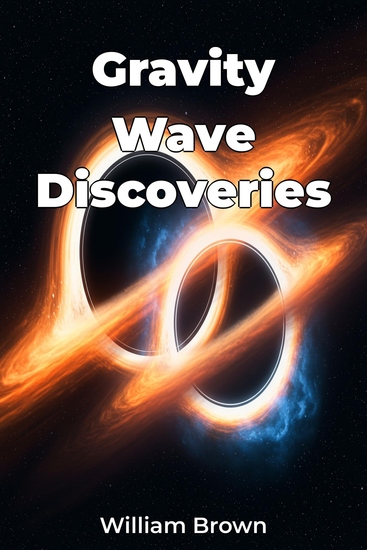
Gravity Wave Discoveries - cover

Gravity Wave Discoveries

William F. Brown

Übersetzer A AI

Verlag: Publifye

  • 0
  • 0
  • 0

Beschreibung

Gravity Wave Discoveries explores the revolutionary field of gravitational waves, ripples in spacetime predicted by Einstein's general relativity and recently detected through advanced instruments like LIGO and Virgo. These discoveries provide a brand-new window into the cosmos, allowing us to observe events previously invisible, such as black hole mergers and neutron star collisions. One intriguing aspect is how these waves confirm Einstein's theory that gravity isn't a force, but a curvature of spacetime caused by mass and energy.

 
The book details the theoretical underpinnings of gravitational waves, the intricate design of the detectors used to find them, and the astrophysical sources that create them. It explains how scientists isolate faint gravitational wave signals from background noise, highlighting the challenges involved in confirming these detections.

 
The book progresses from introducing theoretical concepts to discussing the history of the search, culminating in the astrophysical implications of these discoveries and future applications for probing the early universe and testing fundamental physics.

 
This book’s value lies in its balanced approach, making complex physics accessible to science enthusiasts and students alike. It presents information in a clear, engaging manner, offering a comprehensive overview of gravitational wave science and its profound impact on our understanding of the universe.
Verfügbar seit: 22.02.2025.
Drucklänge: 61 Seiten.

Weitere Bücher, die Sie mögen werden

  • The Fantastic Book of Chemistry Jokes: - For Everyone not Just Chemists - cover

    The Fantastic Book of Chemistry...

    Shane Van

    • 0
    • 0
    • 0
    Welcome, welcome! With so many people slapping their neon The Fantastic Book of Chemistry Jokes, this author’s edition has been released. No matter your understanding of chemistry, I am sure you'll get a reaction, because the jokes within, are sodium funny. These jokes have been accumulated through years of interactions with fellow scientists and teachers and lots of drinking in strange bars late at night. A word of caution must be had, some jokes are innocent, and some are rude & lewd, but none are meant to offend. As studies have shown, the darker your sense of humour, the more intelligent you are. With that being said, sit back, put your feet up and wait for the nerdy fluorine, uranium, nitrogen-filled laughs to tickle your fancy. 
    “Chemistry can be a good and bad thing. Chemistry is good when you make love with it. Chemistry is bad when you make crack with it.” 
    -Adam Sandler
    Zum Buch
  • Why Do Men Have Nipples? - Hundreds of Questions You'd Only Ask A Doctor After Your Third Martini - cover

    Why Do Men Have Nipples? -...

    Mark Leyner, Billy Goldberg

    • 0
    • 0
    • 0
    Is There a Doctor in the House? 
    Finally, answers to all those strange questions you'd like to ask your own doctor but haven't had the guts (or more likely the time) to do so. If you've ever wanted to ask a doctor . . .How do people in wheelchairs have sex?Why do I get a killer headache when I suck down my milkshake too fast?Can I lose my contact lens inside my head forever?Why does asparagus make my pee smell?Why do old people grow hair on their ears?Is the old adage ""beer before liquor, never sicker, liquor before beer. . .,"" really true? 
    . . .then Why Do Men Have Nipples? is the book for you. 
    Compiled by Billy Goldberg, an emergency medicine physician, and Mark Leyner, bestselling author and well-known satirist, Why Do Men Have Nipples? offers real factual and really funny answers to some of the big questions about the oddities of our bodies.
    Zum Buch
  • Blockchain - The Building Blocks of Trust and Transparency in the Digital Age - cover

    Blockchain - The Building Blocks...

    Jasper Donovan

    • 0
    • 0
    • 0
    Are you prepared to unleash blockchain's power and transform how you view innovation, trust, and transparency? Our ground-breaking book, "Blockchain: The Building Blocks of Trust and Transparency in the Digital Age. This thorough book covers blockchain's ability to alter sectors and its implications, giving you the knowledge you need to keep lead of the curve in this quickly changing environment. 
    Imagine a setting where business is decentralized, transparent, and safe. Blockchain technology makes this vision a reality, laying the groundwork for ground-breaking applications that change whole industries. This book will increase your understanding of blockchain and provide the tools to explore its enormous possibilities, whether you're a business professional, tech enthusiast, or curious learner. 
    In "Blockchain: The Building Blocks of Trust and Transparency in the Digital Age," you'll go on an adventure that examines the fundamental ideas behind blockchain, its workings, numerous kinds of blockchains, practical applications, and the possible effects on businesses and society. Explore the inner workings of the decentralized ledger on the blockchain, cryptography, consensus algorithms, and smart contracts to learn how these technologies promote trust and streamline procedures.
    Zum Buch
  • On the Boardwalk - cover

    On the Boardwalk

    Martin Sherman

    • 0
    • 0
    • 0
    A memoir from the writer of BENT with a foreword by Ian McKellen
    Sherman takes us on a journey through America in the mid twentieth century, starting in New Jersey – where he was born in the 1930s to a Jewish immigrant family – ending on Broadway with the premier of his seminal play Bent starring Richard Gere. On route, we encounter other famous performers including Meryl Streep, Bee Gees, Joan Baez, but the scene-stealing character is always his father – a charismatic narcissist who might have given Trump a run for his money. We stop off in Woodstock, Los Angeles and London – a city Martin would eventually make home; he relays his story with self-depreciating humour as he struggles to make it in theatre, with his sexuality, and under the shadow of the inheritable disease that killed his mother tragically early – a disease from which he finds himself finally free, as he turns forty in the book's closing pages.
    
    "As in his plays, Martin Sherman writes here of complexity with simplicity, of the hidden with utter candour. A fascinating and brilliant example of what a memoir ought to be."—ALAN CUMMING
    "Most shove childhood memories into the recesses of forgetfulness, while others gather each detail like colours in a paint box and use them to create. We call those folks artists. Martin Sherman is such a creature. Within these pages you will find his painterly application of memories, fashioning a masterwork of experiences for us to enjoy."—HARVEY FIERSTEIN
    "Absolutely mesmerising and so fantastically well written that I wish Martin Sherman had written novels as well as plays and screenplays"—STEPHEN FRY
    "Completely absorbing and funny and sad and beautifully told—a real treat and an extraordinary story—what a life."—IAN HISLOP
    "One Hell of a ride. Profound, witty, beautifully written and difficult to forget."—HUGH JACKMAN
    "This memoir is astounding. I'm reading it a second time."—VANESSA REDGRAVE
    "A volume filled with moving, entertaining and fascinating memories, by one of our great stage and screen writers."—PETER TATCHELL
    "On the Boardwalk is full of audacity and joyfulness, jokes and tears, it blew my mind, as it will blow yours." – PETE TOWNSHEND
    "He writes like Philip Roth—but even funnier."—RUBY WAX
    Zum Buch
  • Species Interactions - cover

    Species Interactions

    Santiago Machain

    • 0
    • 0
    • 0
    This audiobook is narrated by an AI Voice.   
    Species Interactions is a clear, engaging introduction to how life holds together. Written for readers with no prior background, it reveals the everyday logic behind the living world—how species compete for resources, how predators and prey shape each other, and how microbes, plants, and animals form partnerships that make survival possible. This book moves from core concepts like niches, food webs, and trophic dynamics to practical views of symbiosis, microbial ecosystems, network stability, and resilience. Along the way, it shows how observation, simple experiments, and pattern recognition can turn any backyard, park, or city block into a living classroom. The result is a friendly yet rigorous guide to seeing, understanding, and caring for the connections that sustain ecosystems and our daily lives.
    Zum Buch
  • Of Ice and Men - How We've Used Cold to Transform Humanity - cover

    Of Ice and Men - How We've Used...

    Fred Hogge

    • 0
    • 0
    • 0
    An exploration of humanity’s relationship with ice since the dawn of civilization, Of Ice and Men reminds us that only by understanding this unique substance can we save the ice on our planet—and perhaps ourselves. 
     
    Ice tells a story. It writes it in rock. It lays it down, snowfall by snowfall at the ends of the earth where we may read it like the rings on a tree. It tells our planet’s geological and climatological tale. 
     
    Ice tells another story too: a story about us. It is a tale packed with swash-buckling adventure and improbable invention, peopled with driven, eccentric, often brilliant characters. It tells how our species has used ice to reshape the world according to our needs and our desires: how we have survived it, harvested it, traded it, bent science to our will to make it—and how in doing so we have created globe-spanning infrastructures that are entirely dependent upon it. 
     
    And even after we have done all that, we take ice so much for granted that we barely notice it. 
     
    Ice has supercharged the modern world. It has allowed us to feed ourselves and cure ourselves in ways unimaginable two hundred years ago. It has enabled the global population to rise from less than 1 billion to nearly 7½ billion—which just happens to cover the same period of time as humanity has harvested, manufactured, and distributed ice on an industrial scale. 
     
    And yet the roots of our fascination with ice and its properties run much deeper than the recent past.
    Zum Buch