¡Acompáñanos a viajar por el mundo de los libros!
Añadir este libro a la estantería
Grey
Escribe un nuevo comentario Default profile 50px
Grey
Suscríbete para leer el libro completo o lee las primeras páginas gratis.
All characters reduced
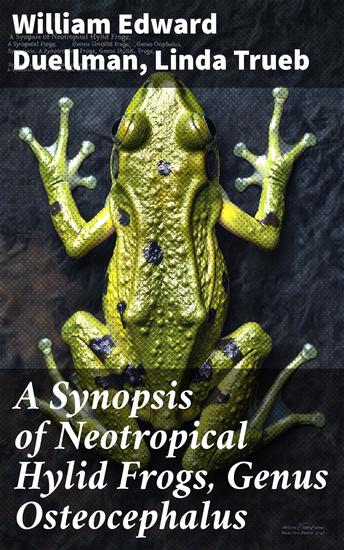
A Synopsis of Neotropical Hylid Frogs Genus Osteocephalus - Exploring the Diversity and Conservation of Neotropical Amphibians - cover

A Synopsis of Neotropical Hylid Frogs Genus Osteocephalus - Exploring the Diversity and Conservation of Neotropical Amphibians

William Edward Duellman, Linda Trueb

Editorial: Good Press

  • 0
  • 0
  • 0

Sinopsis

A Synopsis of Neotropical Hylid Frogs, Genus Osteocephalus offers an intricate exploration of the biodiversity and ecological narratives encapsulated within a single genus of Neotropical frogs. This anthology, deftly compiled by William Edward Duellman and Linda Trueb, fuses scientific rigor with literary finesse, unveiling a panorama of biological diversity and evolutionary adaptation. The collection is a strikingly comprehensive compendium that not only highlights the anatomical and behavioral characteristics of Osteocephalus species but also contextualizes their ecological significance within the broader tapestry of Neotropical ecosystems. Distinct works in the collection invite readers to reflect on the interplay between biology and environmental variability, conveying a narrative that is both urgent and enlightening in its implications for biodiversity conservation. Emerging from the combined efforts of Duellman and Trueb, each with a venerable reputation in herpetology, the anthology builds a cohesive dialogue centered around amphibian research and environmental change. With a scholarly framework enriched by decades of fieldwork and academic inquiry, the contributors illuminate the myriad ways Osteocephalus species adapt to their diverse habitats. By weaving together historical perspectives and contemporary scientific insights, the collection not only underscores the complexity of Neotropical ecosystems but also pays homage to the evolutionary ingenuity of its amphibious inhabitants. A must-read for anyone intrigued by the intricate dynamics of tropical biodiversity, this anthology offers a chance to delve deeply into the pulsating heart of Neotropical ecosystems, discovering the diverse narratives that inform our understanding of amphibian biology and conservation. Rich in empirical detail and thematic depth, A Synopsis of Neotropical Hylid Frogs, Genus Osteocephalus serves as both an educational resource and a catalyst for ongoing discussion about the stewardship of fragile ecological networks, making it an essential acquisition for scholars, ecologists, and natural history enthusiasts alike.
Disponible desde: 17/09/2023.
Longitud de impresión: 52 páginas.

Otros libros que te pueden interesar

  • Unthought - The Power of the Cognitive Nonconscious - cover

    Unthought - The Power of the...

    N. Katherine Hayles

    • 0
    • 0
    • 0
    N. Katherine Hayles is known for breaking new ground at the intersection of the sciences and the humanities. In Unthought, she once again bridges disciplines by revealing how we think without thinking—how we use cognitive processes that are inaccessible to consciousness yet necessary for it to function. Marshalling fresh insights from neuroscience, cognitive science, cognitive biology, and literature, Hayles expands our understanding of cognition and demonstrates that it involves more than consciousness alone. Cognition, as Hayles defines it, is applicable not only to nonconscious processes in humans but to all forms of life, including unicellular organisms and plants. Startlingly, she also shows that cognition operates in the sophisticated information-processing abilities of technical systems: when humans and cognitive technical systems interact, they form “cognitive assemblages”—as found in urban traffic control, drones, and the trading algorithms of finance capital, for instance—and these assemblages are transforming life on earth. The result is what Hayles calls a “planetary cognitive ecology,” which includes both human and technical actors and which poses urgent questions to humanists and social scientists alike. At a time when scientific and technological advances are bringing far-reaching aspects of cognition into the public eye, Unthought reflects deeply on our contemporary situation and moves us toward a more sustainable and flourishing environment for all beings.
    Ver libro
  • Nanotechnology Essentials - An Introduction to the Fundamental Concepts and Applications of Nanotechnology - cover

    Nanotechnology Essentials - An...

    Virversity Online Courses

    • 0
    • 0
    • 0
    Nanotechnology Essentials offers a comprehensive introduction to the dynamic field of nanotechnology, covering fundamental concepts, fabrication techniques, and practical applications. Designed to equip students with essential knowledge and skills, this course explores how manipulating matter at the nanoscale creates unique material properties that revolutionize various industries.Students will gain a solid foundation in nanomaterials, learning about their distinctive characteristics compared to bulk materials. The course covers key fabrication methods, including both top-down and bottom-up approaches, and introduces critical characterization techniques for analyzing nanostructures effectively.In-depth lessons showcase real-world applications of nanotechnology in electronics and medicine, such as advanced devices and targeted drug delivery systems. The course also addresses ethical, environmental, and safety considerations to promote responsible development and use of nanotechnology.Finally, learners will examine future trends and emerging innovations shaping the field, preparing them to engage with ongoing research and breakthroughs. By completing this course, students will develop valuable skills in nanomaterials characterization, fabrication, and application analysis, enabling them to contribute to scientific, industrial, or regulatory roles in the nanotechnology sector.
    Ver libro
  • Emergency Medicine - A Quick Reference for Life-Saving Procedures - cover

    Emergency Medicine - A Quick...

    Ava Westwood

    • 0
    • 0
    • 0
    In emergency medicine, the first moments of patient care are crucial. A structured approach to initial assessment and triage ensures that life-threatening conditions are identified and managed promptly. The goal is to stabilize the patient while prioritizing those who need immediate intervention. 
    The Primary Survey follows the ABCDE approach—Airway, Breathing, Circulation, Disability, and Exposure. This systematic evaluation helps in quickly identifying life-threatening issues. Airway assessment focuses on patency, identifying obstructions, and securing the airway if necessary. Breathing evaluation includes checking for respiratory distress, auscultating lung sounds, and providing oxygen or ventilation support. Circulation assessment involves monitoring pulse, blood pressure, and perfusion, with immediate fluid resuscitation or hemorrhage control as needed. Disability evaluation considers neurological status, including Glasgow Coma Scale (GCS) scoring. Exposure involves a full-body examination to detect hidden injuries while maintaining temperature regulation. 
    Once the primary survey stabilizes immediate threats, the Secondary Survey provides a more comprehensive assessment. This includes a detailed history using the AMPLE mnemonic—Allergies, Medications, Past medical history, Last meal, and Events leading to the illness or injury. A thorough head-to-toe physical examination follows, including imaging and laboratory investigations if needed. The secondary survey ensures that less obvious but critical injuries or illnesses are not overlooked.
    Ver libro
  • Renewable solutions in end-uses: Heat pump costs and markets - cover

    Renewable solutions in end-uses:...

    International Renewable

    • 0
    • 1
    • 0
    This report provides an overview of heat pump technologies and their applications, discusses building stock and the implications for the use of heat pumps in both new and old buildings and examines recent market developments.
    Ver libro
  • The Curanderx Toolkit - Reclaiming Ancestral Latinx Plant Medicine and Rituals for Healing - cover

    The Curanderx Toolkit -...

    Atava Garcia Swiecicki

    • 0
    • 0
    • 0
    Arranging ofrendas. Brewing pericón into a healing tea. Releasing traumas through baños and limpias. Herbalist and curandera Atava Garcia Swiecicki spent decades gathering this traditional knowledge of curanderismo, Mexican folk healing, which had been marginalized as Chicanx and Latinx Americans assimilated to US culture. She teaches how to follow the path of the curandera, as she herself learned from apprenticing with Mexican curanderas, studying herbal texts, and listening to her ancestors. In this book listeners will learn the Indigenous, African, and European roots of curanderismo. Atava also shares her personal journey as a healer and those of thirteen other inspirational curanderas serving their communities. She offers listeners the tools to begin their own healing—for themselves, for their relationship with the earth, and for the people. 


    The Curanderx Toolkit includes more than twenty-five profiles of native and adopted plants of Baja and Alta California and teaches you to grow, know, and love them. This book will help anyone who has lost connection with their ancestors begin to incorporate the herbal wisdom and holistic wellness of curanderismo into their lives. Take the power of ancient medicine into your own hands by learning simple herbal remedies and practicing rituals for kinship with the more-than-human world.
    Ver libro
  • The Shocking Truth about Virtual Reality - cover

    The Shocking Truth about Virtual...

    Zoey Fraisers

    • 0
    • 0
    • 0
    Virtual reality (VR) has long been a concept of science fiction, but today, it is a rapidly evolving technology shaping industries, entertainment, and even human interactions. From its early beginnings as a theoretical concept to the sophisticated headsets and immersive environments of today, VR has transformed from a novelty into a powerful tool that influences the way people work, learn, and socialize. While the promise of virtual worlds seems limitless, there are also significant concerns about its long-term effects on society, privacy, and even human psychology.  
    The origins of VR date back further than most people realize. The idea of creating artificial environments that simulate reality can be traced back to the early 20th century. Flight simulators in the 1920s provided the first taste of what would later become VR training programs. In the 1960s, innovators such as Ivan Sutherland and Morton Heilig developed early prototypes of head-mounted displays and immersive cinema experiences. However, technological limitations prevented these early experiments from reaching mainstream adoption. It wasn’t until the late 20th and early 21st centuries that computing power, graphics capabilities, and internet connectivity made VR a viable and widely accessible technology.  
    Breakthroughs in VR hardware and software have enabled increasingly realistic and engaging experiences. High-resolution headsets, motion tracking, and artificial intelligence now allow users to step into digital environments that respond dynamically to their movements and actions. Industries ranging from gaming and entertainment to healthcare and education have embraced VR as a revolutionary tool. Doctors use VR to simulate surgeries, businesses conduct remote meetings in virtual spaces, and educators transport students to historical landmarks without ever leaving the classroom.
    Ver libro