¡Acompáñanos a viajar por el mundo de los libros!
Añadir este libro a la estantería
Grey
Escribe un nuevo comentario Default profile 50px
Grey
Suscríbete para leer el libro completo o lee las primeras páginas gratis.
All characters reduced
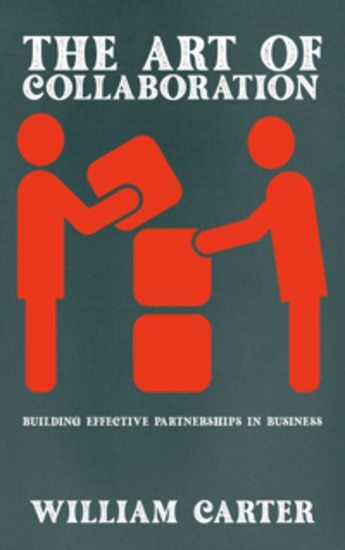
The Art of Collaboration - Building Effective Partnerships in Business - cover

The Art of Collaboration - Building Effective Partnerships in Business

William Carter

Editorial: Lulu.com

  • 0
  • 0
  • 0

Sinopsis

In an increasingly interconnected world, the ability to build and maintain successful partnerships is a crucial skill for any business leader. The Art of Collaboration: Building Effective Partnerships in Business provides a roadmap for creating powerful alliances that drive mutual growth and success.

This book explores the key elements of effective collaboration, from identifying the right partners and establishing trust to aligning goals and navigating potential conflicts. With insights from successful business partnerships across various industries, The Art of Collaboration offers practical strategies for cultivating relationships that are productive, resilient, and mutually beneficial.

Whether you’re an entrepreneur, executive, or team leader, this guide equips you with the tools needed to leverage the power of collaboration. Discover how to create partnerships that not only enhance your organization’s reach and capabilities but also foster innovation and lasting success.
Disponible desde: 16/10/2024.
Otros libros que te pueden interesar

  • The Innovation Mindset - A Proven Method to Fuel Performance and Results - cover

    The Innovation Mindset - A...

    Jennifer Kenny

    • 0
    • 0
    • 0
    Your team wants to change the world. Let them! 
    All humans have an innate drive to make great things. In The Innovation Mindset, Jennifer Kenny shows you exactly how to implement practices that will drive greater innovation, differentiate your products and solutions through better innovation, and maximize the innovation capacity of your team. 
    With her 25 years of experience in innovation practices that have driven measurable and sustainable results for customers, Kenny can prove that even the most complex technical industries—from robotics to medical research to international finance—can maximize success through empathetic innovation interventions. 
    Kenny’s Six Step Practice Model gives you a tangible ladder to climb by first discovering the innovative drive within yourself and then harnessing it to build a cooperative ecosystem designed to celebrate unplanned discoveries. 
    Her Three Levels of Innovation Capacity teaches you how innovation not only upscales the impact of your team but also the caliber and reach of your products and services. 
    Her revolutionary design-thinking and regenerative leadership frameworks give you the language and the road map to steer your business towards a buzzing, thriving future where “Eureka!” moments are the norm.
    Ver libro
  • Dim Sum Strategy - Bite-Sized Tools for Building Stronger Brands - cover

    Dim Sum Strategy - Bite-Sized...

    Peter Wilken

    • 0
    • 0
    • 0
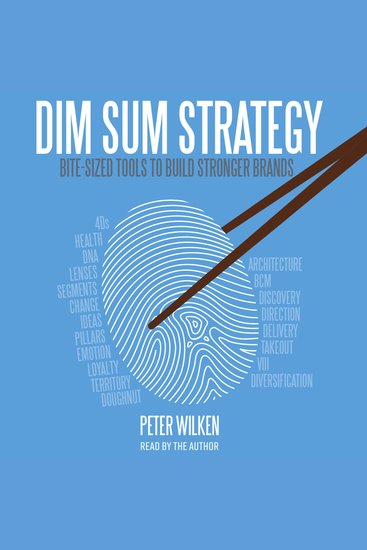
    In the past, brands were the sole domain of owners, advertisers and marketers. Strategies were crafted in smoke-filled boardrooms and rolled out with little to no input from consumers. 
     
    Times have changed. Today, consumers are the new owners. They have more information, more channels, more power and more choice but less time, less loyalty and less trust than ever before. Brands intersect every aspect of our lives, but the business of building brands is still misunderstood. 
     
    Dim Sum Strategy presents a carefully curated selection of proven strategic tools, with insights and anecdotes from three decades working with some of the world's leading brands at the world's top agencies. The book is structured to follow the author's proven Brand Centered Management(TM) process, with a smattering of different "tools" split into four parts: Discovery, Definition, Direction, and Delivery. Each tool is presented in bite-sized, standalone chunks; you can read the book in stepwise fashion or cherry-pick in whatever order you wish--just like a dim sum meal.
    Ver libro
  • Link & Leverage - Build Your Affiliate Empire from Zero—No Experience Needed - cover

    Link & Leverage - Build Your...

    Sierra Donovan

    • 0
    • 0
    • 0
    Link & Leverage: Build Your Affiliate Empire from Zero—No Experience Needed 
    Ready to break into the world of affiliate marketing but don’t know where to start? Link & Leverage is your ultimate beginner-friendly blueprint for building a profitable affiliate business from scratch—no tech skills, prior experience, or audience required. 
    Inside, you’ll discover step-by-step strategies to:Choose the right niche and high-converting offersBuild simple systems that work while you sleepDrive free and paid traffic to your affiliate linksGrow your online presence and scale your earningsAvoid common pitfalls that hold beginners back 
    Whether you're looking for a side hustle or dreaming of full-time freedom, Link & Leverage will help you take action, earn commissions, and build your affiliate empire—fast. 
    No fluff. No hype. Just real results.
    Ver libro
  • Beyond Quick Fixes - Addressing the Complexity & Uncertainties of Contemporary Society - cover

    Beyond Quick Fixes - Addressing...

    William B. Rouse

    • 0
    • 0
    • 0
    We seem to be stuck, staring at insurmountable challenges. The pandemic is the opening act for climate change, and we need to get much better at anticipating and preparing for these types of challenges. Simply rebuilding bridges once they fall, or houses once they are swept away, is both expensive and risks human lives. Anticipation and preparation costs more now, but is much less costly over time. 


    We have managed—or at least reacted to—the Aids epidemic (1981–2013), Internet bubble bursting (2001), the real estate bubble bursting (2007), the opioid epidemic (2017), forest fires on the West Coast (2018), and the coronavirus pandemic (2020). Very recently, we have experienced the fall of Afghanistan (2021), the latest earthquake and hurricane in Haiti (2021), and the attack on Ukraine (2022). 


    Beyond Quick Fixes steps back from business as usual to rethink how we can approach the complex challenges of contemporary society. Rouse retreats, initially, into the principals of design thinking rather than policy making; he rigorously reconsiders our typical modes of operation and explores alternative ways of thinking about complex problems and potential solutions. The result is an integrated approach to addressing complexity to assist leaders and advisors responsible for addressing these challenges.
    Ver libro
  • What the CEO Really Wants From You - cover

    What the CEO Really Wants From You

    R. Gopalakrishnan

    • 0
    • 0
    • 0
    There are many books on leadership and how to lead. What the CEO Really Wants from You addresses the one key question that is uppermost in the mind of any manager: What should he or she do to make the boss a partner rather than perceive the boss as an extractor of work or an adversary? As Paul Polman, CEO of Unilever, points out in his foreword, partnerships with others, but above all, with your direct boss and organization, are more important than ever before. Few people are so well qualified as R. Gopalakrishnan to guide us on this journey. This is a book that will be of immense value to all managers, and one that just might evoke pragmatic answers to the question of what the CEO really expects from the team.
    Ver libro
  • The Hanseatic League - Medieval Trade Network - cover

    The Hanseatic League - Medieval...

    Harris Ropes

    • 0
    • 0
    • 0
    The Hanseatic League, often simply referred to as the Hansa, emerged during the late Middle Ages as a powerful and influential commercial and defensive confederation of merchant guilds and market towns in northern Europe. Its origins can be traced back to the 12th century, a time when trade across Europe was expanding, and the need for security, consistency, and cooperation among merchants became more apparent. In this period of growing urbanization and shifting political structures, the groundwork was laid for what would become one of the most successful trade networks of the medieval world. 
    Before the League formally took shape, various Germanic merchants had already been engaged in trade across the North and Baltic Seas. These early trade routes connected regions like modern-day Germany, the Netherlands, Scandinavia, and the Baltic states. Merchant groups began forming guilds—organized associations that provided mutual protection, standardized trade practices, and a collective voice in foreign cities. These early guilds were critical in shaping the cooperative ethos that would later define the Hanseatic League. 
    The political and economic environment of medieval Europe also contributed to the League's formation. The decline of centralized imperial authority, particularly in the Holy Roman Empire, left towns and cities to manage their own economic affairs. This autonomy encouraged local leaders and merchants to seek regional alliances to protect trade interests and ensure the safe passage of goods and people. At the same time, the Crusades had opened new routes and markets, boosting the importance of northern European trade centers.
    Ver libro