Junte-se a nós em uma viagem ao mundo dos livros!
Adicionar este livro à prateleira
Grey
Deixe um novo comentário Default profile 50px
Grey
Assine para ler o livro completo ou leia as primeiras páginas de graça!
All characters reduced
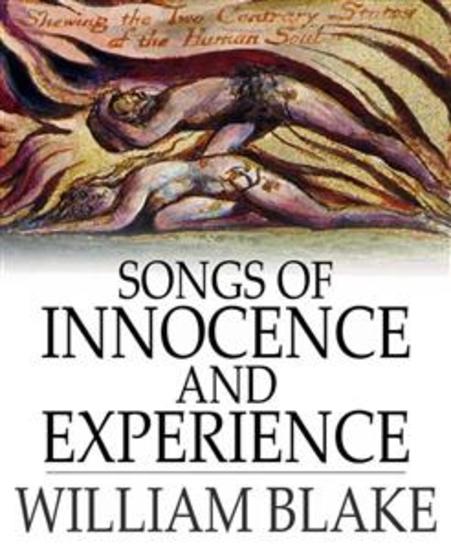
Songs of Innocence and Experience - cover
LER

Songs of Innocence and Experience

William Blake

Editora: BookRix

  • 0
  • 0
  • 0

Sinopse

Songs of Innocence and Experience is a collection of poems by William Blake in two phases. "Innocence" and "Experience" are definitions of consciousness that rethink Milton's existential-mythic states of "Paradise" and the "Fall." Blake's categories are modes of perception that tend to coordinate with a chronology that would become standard in Romanticism: childhood is a state of protected innocence rather than original sin, but not immune to the fallen world and its institutions. This world sometimes impinges on childhood itself, and in any event becomes known through "experience," a state of being marked by the loss of childhood vitality, by fear and inhibition, by social and political corruption, and by the manifold oppression of Church, State, and the ruling classes. The volume's "Contrary States" are sometimes signalled by patently repeated or contrasted titles: in Innocence, Infant Joy, in Experience, Infant Sorrow; in Innocence, The Lamb, in Experience, The Fly and The Tyger. The stark simplicity of poems such as The Chimney Sweeper and The Little Black Boy display Blake's acute sensibility to the realities of poverty and exploitation that accompanied the "dark satanic mills" of the Industrial Revolution'.
Disponível desde: 19/12/2023.
Comprimento de impressão: 23 páginas.

Outros livros que poderiam interessá-lo

  • A Doll's House - cover

    A Doll's House

    Henrik Ibsen

    • 0
    • 0
    • 0
    'Nobody in this house knows what I'm capable of.'
    With a comfortable home, successful husband and two beautiful children, Nora Helmer is the envy of many. But her happy home is built on false foundations. As long-buried secrets begin to surface, Nora wonders if what she has is the same as what she wants.
    Chris Bush's taut and gripping adaptation of Henrik Ibsen's classic play is a powerful exploration of friendship, betrayal, dependency and liberation. It premiered at the Crucible, Sheffield Theatres, in 2024, directed by Elin Schofield.
    Ver livro
  • Cupiditas: Evil's Root - cover

    Cupiditas: Evil's Root

    Michael Segedy

    • 0
    • 0
    • 0
    Cupiditas: Evil's Root is a sequel to Michael Segedy's political thriller, In Deep. The novel is set in South America. Like In Deep, it is full of twists and turns, romance and adventure, with dark underpinnings that show how powerful, ruthless political and corporate structures cast shadows over the lives of all of us. In this exciting mystery, you'll meet fascinating characters you'll never forget: Drug lords, mass murderers, a courageous old Peruvian general, and two young Americans brave enough to confront the greatest power on earth.
    Ver livro
  • Mexican Dinosaur - cover

    Mexican Dinosaur

    C.L. Martinez

    • 0
    • 0
    • 0
    Mexican Dinosaur is a poetic offering from C.L. "Rooster" Martinez and Write About Now Publishing. The collection of poems is a metamodernist take on the changing economic demographics of his San Antonio barrio, the confusion and desire to flourish within a hyphenated American identity, and the force of gravity that the push and pull of culture from both sides of a Mexican/American ethnicity has. In 2020, C.L published two previous works-A Saint for Lost Things (Alabrava Press) and As it is in Heaven (Kissing Dynamite Press), and received the San Antonio Individual Artists Project Grant in 2021.
    Ver livro
  • Complete Nonsense - cover

    Complete Nonsense

    Edward Lear

    • 0
    • 0
    • 0
    The full collection of Nonsense poems by the father of nonsense poetry, Edward Lear. Come with me and experience fantastical vignettes of unscrupulous individuals as only Edward Lear can present them. Come find yourself in indescribable predicaments with equally hilarious resolutions. Edward Lear has taken great pains for this to be fun for the whole family, and by Jove, I believe I have taken the same care in preparing it for you to laugh at, so come! Come one and all and enjoy the novelty that is Edward Lear's Complete Nonsense.
    Ver livro
  • My Land of Freedom - A poem of war and freedom - cover

    My Land of Freedom - A poem of...

    Ifeanyi Njoku

    • 0
    • 0
    • 0
    This poem is a powerful reflection on war, displacement, and the struggle for freedom. It tells the tragic story of a people who fought for liberation but were met with violence, loss, and eventual surrender. Likely referencing the Igbo experience during the Nigerian Civil War, it captures the pain of oppression and the resilience of those who endured it. 
    The poem begins with a contradiction: "In my land of freedom, I walked with fear." This highlights the irony of living in a place meant to be free but being consumed by anxiety. The people demand justice, yet their cries are silenced by violence. The line "Killing our brothers, and leaving us undone" conveys both physical loss and emotional devastation. 
    The imagery of "scorching soil" and "separated from families" paints a picture of suffering and displacement. War does not just take lives—it tears families apart and leaves hearts unable to thrive. The mention of "refugee camps" emphasizes how many were forced from their homes, left to question their identity: "Are we unlucky, to be Igbo?" This speaks to a deep sense of abandonment and injustice. 
    The poem also highlights betrayal, as leaders fail to protect their people. "Everyone was a soldier, in this war we couldn't win." This line captures the grim reality of a war where survival itself was a battle. Despite their bravery, they were up against overwhelming forces. 
    The final lines are heartbreaking: "We had to surrender, and say goodbye to our pride." This is not just a loss of battle but a loss of dignity. Yet, even in surrender, their story lives on. This poem is a tribute to resilience, a reminder of suffering, and a call to remember those who fought, even when the world turned away.
    Ver livro
  • The Slave Trade A Poem - Hugely influential activist and social reform poem - cover

    The Slave Trade A Poem - Hugely...

    Hannah More

    • 0
    • 0
    • 0
    Hannah More was born on February 2nd, 1745 at Fishponds in the parish of Stapleton, near Bristol. She was the fourth of five daughters. 
    The City of Bristol, at that time, was a centre for slave-trading and Hannah would, over time, become one of its staunchest critics.  
    She was keen to learn, possessed a sharp intellect and was assiduous in studying.  Hannah first wrote in 1762 with The Search after Happiness (by the mid-1780s some 10,000 copies had been sold). 
    In 1767 Hannah became engaged to William Turner.  After six years, with no wedding in sight, the engagement was broken off.  Turner then bestowed upon her an annual annuity of £200.  This was enough to meet her needs and set her free to pursue a literary career.   
    Her first play, The Inflexible Captive, was staged at Bath in 1775. The famous David Garrick himself produced her next play, Percy, in 1777 as well as writing both the Prologue and Epilogue for it.  It was a great success when performed at Covent Garden in December of that year.  
    Hannah turned to religious writing with Sacred Dramas in 1782; it rapidly ran through nineteen editions. These and the poems Bas-Bleu and Florio (1786) mark her gradual transition to a more serious and considered view of life. 
    Hannah contributed much to the newly-founded Abolition Society including, in February 1788, her publication of Slavery, a Poem recognised as one of the most important of the abolition period.   
    Her work now became more evangelical.  In the 1790s she wrote several Cheap Repository Tracts which covered moral, religious and political topics and were both for sale or distributed to literate poor people.  The most famous is, perhaps, The Shepherd of Salisbury Plain, describing a family of incredible frugality and contentment. Two million copies of these were circulated, in one year. 
    In 1789, she purchased a small house at Cowslip Green in Somerset. She was instrumental in setting up twelve schools in the area by 1800. 
    She continued to oppose slavery throughout her life, but at the time of the Abolition Bill of 1807, her health did not permit her to take as active a role in the movement as she had done in the late 1780s, although she maintained a correspondence with Wilberforce and others.  
    In July 1833, the Bill to abolish slavery throughout the British Empire passed in the House of Commons, followed by the House of Lords on August 1st. 
    Hannah More died on September 7th, 1833.
    Ver livro