


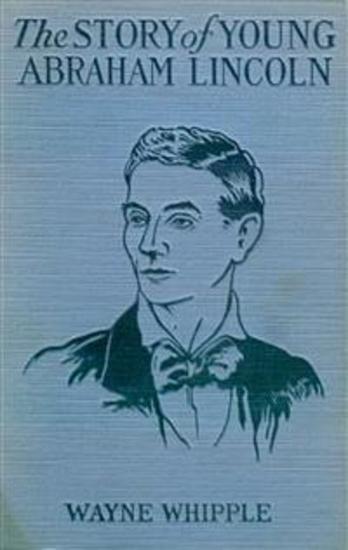
The Story Of Young Abraham Lincoln
Whipple Wayne
Editora: Author
Sinopse
The Story of Young Abraham Lincoln by Wayne Whipple

Language English
LoC Class E456: History: America: Civil War period (1861-1865)
Disponível desde: 16/03/2022.

Editora: Author
The Story of Young Abraham Lincoln by Wayne Whipple Language English LoC Class E456: History: America: Civil War period (1861-1865)

This audiobook is narrated by an AI Voice.
Reveal the invisible algorithmic systems making crucial decisions about your life without your knowledge, input, or ability to appeal their judgments. This essential audiobook exposes how automated decision-making determines what information you see, what opportunities you receive, what prices you pay, and how institutions treat you based on calculations you never see. Learn how credit algorithms, hiring software, insurance models, and content recommendation systems shape your life trajectory more than personal choices while remaining completely opaque. The narrator reveals the biases embedded in algorithmic systems that perpetuate discrimination while appearing objective and the accountability voids that prevent challenging automated decisions affecting your life. Discover how tech companies optimize engagement algorithms knowing they promote misinformation, outrage, and addiction while presenting themselves as neutral platforms. Understand why algorithmic transparency remains impossible to achieve given corporate secrecy, technical complexity, and regulatory failure that leaves citizens subject to systems they cannot examine. This audiobook draws from computer scientists, investigative journalists, and algorithm researchers documenting hidden systems that govern modern life. Learn strategies for recognizing algorithmic influence, minimizing harmful exposure, and advocating for accountability in automated decision-making. Essential listening for anyone living in the digital age who wants to understand the invisible forces shaping their reality and what limited options exist for reclaiming agency from automated systems.
Ver livro
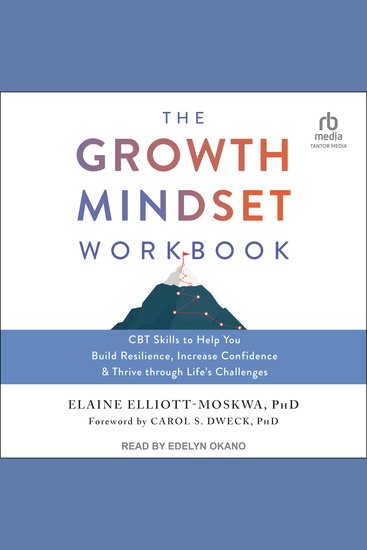
Do you ever feel like you're just not good enough, smart enough, or talented enough in certain areas? Do these beliefs keep you from seeking out new opportunities or challenges, because you're afraid of failing?  If so, you may be suffering from a "fixed mindset." In contrast, a "growth mindset" is the belief that you can increase your ability or develop your attributes—that you can adapt and learn from your mistakes. But how do you cultivate a growth mindset?


The Growth Mindset Workbook offers essential skills grounded in cognitive behavioral therapy (CBT) to change the way you think about your own talents and abilities. Based on the core principles outlined in Mindset by Carol Dweck, this workbook will help you shed unhelpful and self-limiting attitudes and beliefs, and replace them with a growth mindset that can increase resiliency, boost self-confidence, and form the foundation of a meaningful, values-based life.


The most important thing to remember is that a growth mindset can be learned, and doing so can positively impact how you think, feel, and act. If you're ready to say yes to life's challenges and maximize your potential, this step-by-step guide can show you the way.
Ver livro
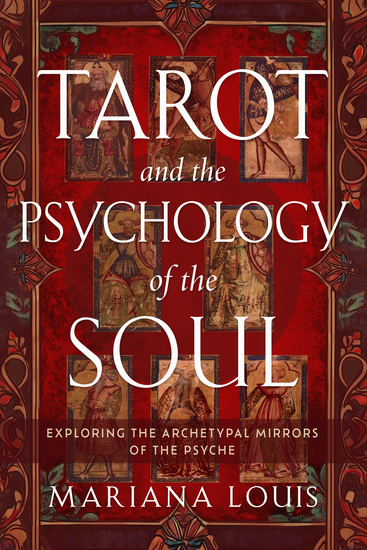
Tarot and the Psychology of the Soul is part classic guidebook, part provoking how-to, with a dash of stirring tarot philosophy. With a focus on inspiration and inclusivity for all tarot levels, it begins by establishing how we can view the cards as reflections of the psyche and walks readers through how to use the cards for inner work and shadow work.Though we turn to it for answers and solutions, the true power of the tarot is as a mirror. With the right approach, it reflects the tapestry of our psyches, illuminating both conscious will and unconscious longing. It teaches us to befriend our shadows, evoke our imaginations, and attune to the soul’s quiet directive: How am I meant to live?With a tone that is both scholarly and soulful, Mariana Louis guides tarotists—whether beginners or seasoned practitioners—through the archetypal approach. Alongside archetypal interpretations of the cards, she grounds readers in the foundations of depth psychology, inner work techniques, and methods of reading. The following topics are also covered:Psycho-spiritual meanings and approaches to the Major and Minor ArcanaA breakdown of how to apply all that the reader has learnedGuidance on how to prepare for readings and how the cards communicateMore than a manual for reading the cards, it is an initiation into their archetypal depth. Tarot and the Psychology of the Soul invites you to use the tarot as a living language of the psyche, helping you listen to your intuitive wisdom, embrace your wholeness, and awaken the answers waiting within.Ver livro
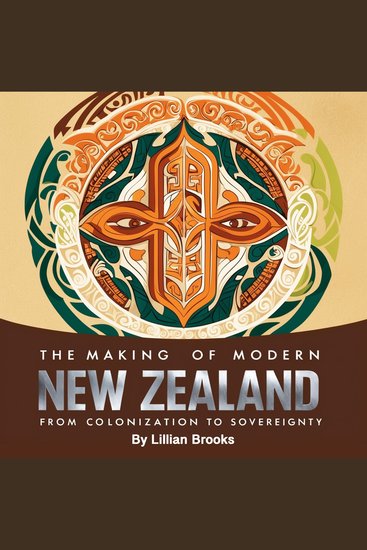
Before the arrival of Europeans, New Zealand, or Aotearoa, was inhabited solely by the Māori people, who had arrived from Polynesia over a thousand years earlier. Their ancestors navigated vast distances across the Pacific Ocean, using their advanced knowledge of stars, winds, and ocean currents. They eventually settled in Aotearoa, forming distinct tribal communities known as iwi, each with its own territory, social structures, and traditions.
The Māori society was organized around iwi (tribes), hapū (sub-tribes), and whānau (families). Each iwi had a paramount chief, or rangatira, who was responsible for making decisions that affected the entire tribe. The rangatira was supported by a council of elders, or kaumatua, who provided guidance based on wisdom and experience. The hapū, made up of extended families, was the primary unit of Māori society, with a strong emphasis on kinship and collective responsibility.
Māori were deeply connected to the land, or whenua, and believed that their ancestors, the atua, or gods, imbued the earth, sea, and sky with sacred energy. This connection formed the foundation of Māori spiritual beliefs, which revolved around whakapapa (genealogy), mana (spiritual power or authority), and tapu (sacredness). Their spiritual worldview tied their identity to the land and natural resources, and they saw themselves as stewards, responsible for the care and preservation of the environment.
Ver livro
Your environment is not neutral — it’s shaping your focus, creativity, and mood every second. How to Build Spaces That Think for You explores the psychology of design and how small, deliberate changes in light, sound, temperature, and layout can reprogram the way you think. This isn’t interior decoration; it’s cognitive architecture. Drawing from environmental psychology and neuroscience, it reveals how rooms can either drain your attention or amplify it — and how to make focus the default state.
From designing workspaces that sustain deep concentration to creating restorative zones that encourage recovery, this book offers a blueprint for aligning space with intention. The goal isn’t aesthetic perfection — it’s behavioral precision. Because when your environment supports your mind, discipline feels effortless and creativity becomes instinctive. You don’t just live in a space — you collaborate with it.
Ver livro
Every writer dreams of creating work that resonates—words that don’t just fill a page, but ignite change, stir emotions, and stay with readers long after the final line. In Ink to Impact, acclaimed writing coach Billy Grady guides you through the art and science of crafting language with purpose.
Whether you’re penning your first novel, building a brand, or shaping a message that demands attention, this book reveals how to:
 - Harness the power of story to connect with any audience
- Transform raw ideas into unforgettable prose
- Overcome self-doubt and write with fearless clarity
- Edit with precision to make every sentence shine
Part masterclass, part motivational manifesto, Ink to Impact is your roadmap to writing that matters—writing that moves people, opens minds, and leaves a lasting mark on the world.
Your words can change everything.
This is where it begins.
Ver livro





