


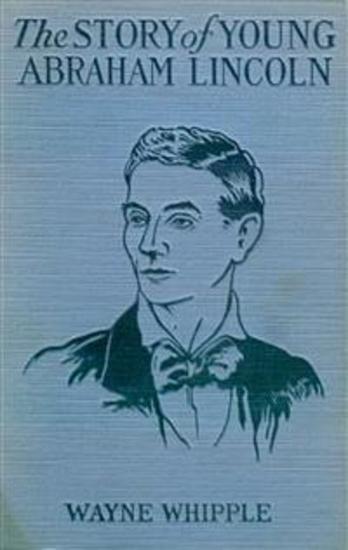
The Story Of Young Abraham Lincoln
Whipple Wayne
Editorial: Author
Sinopsis
The Story of Young Abraham Lincoln by Wayne Whipple

Language English
LoC Class E456: History: America: Civil War period (1861-1865)
Disponible desde: 16/03/2022.

Editorial: Author
The Story of Young Abraham Lincoln by Wayne Whipple Language English LoC Class E456: History: America: Civil War period (1861-1865)
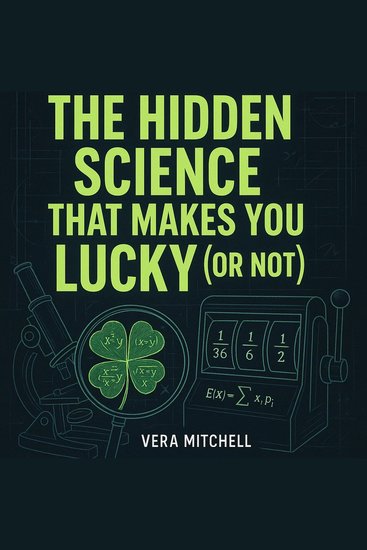
This audiobook is narrated by an AI Voice.
Explore the surprising scientific research behind luck and discover why some people seem consistently fortunate while others struggle despite equal effort. This fascinating audiobook reveals the psychological, behavioral, and environmental factors that create what we perceive as good or bad luck. Learn how lucky people think differently, notice opportunities others miss, and create circumstances that favor positive outcomes. The narrator presents groundbreaking studies showing that luck is not random but follows predictable patterns that anyone can learn to recognize and replicate. Discover the role of optimism, social networks, intuition, and openness to experience in generating fortunate circumstances throughout your life. Understand why superstitions persist and whether they actually influence outcomes through psychological mechanisms. This audiobook challenges common beliefs about fate and chance while providing evidence-based strategies to increase your luck quotient dramatically. Learn practical techniques used by consistently lucky individuals to maximize serendipity, recover quickly from setbacks, and transform apparent misfortune into unexpected advantage. Perfect for skeptics and believers alike, this exploration of luck science will change how you think about randomness, opportunity, and your personal ability to shape favorable outcomes in career, relationships, and life.
Ver libro

If you've experienced long-term or repeated trauma—such as childhood abuse or neglect, domestic violence, betrayal, or prolonged emotional abuse—you may struggle with intense feelings of sadness, anger, anxiety, shame, and distrust toward others. You should know that you aren't alone, your pain is real, and there are ways to improve your mental health and begin to heal. This compassionate and evidence-based workbook can help you get started.


This workbook offers an integrative approach for coping with complex post-traumatic stress disorder (C-PTSD) using cognitive behavioral therapy (CBT), acceptance and commitment therapy (ACT), dialectical behavior therapy (DBT), mindfulness, mentalization, and relational therapy. You'll learn the most effective strategies to manage symptoms, overcome painful memories, and build self-confidence. Most importantly, you'll find validation that your feelings aren't "crazy" or "outsized," and discover the skills needed to help you reclaim your life.


This empowering workbook will help you: identify and understand the root cause of your C-PTSD; overcome fear, hypervigilance, and avoidance; balance emotions before they interfere with daily life; and seek out and maintain relationships based in equality and respect.
Ver libro

Transnistria is a nowhereland hugging a narrow valley near the Black Sea. No bigger than Cornwall or Rhode Island, the unrecognised country is a Soviet museum long occupied by Russian ‘peace-keepers’. Its oligarchs in Adidas track suits hunt wild boar with AK-47s. Its young people train for revolution at the Che Guevara High School of Political Leadership. Its secret factories have supplied arms to African insurgents and electrical generators for Iran’s nuclear power programme. Yet its isolation and sliver-size belie the real threat it poses to the West, above all since Russia's invasion of Ukraine. ‘We know our people and how to treat them, ' bragged a local-boy-made-good oligarch. ‘And I tell you that the only way to get them to act or to change their ways is to point a gun at their heads, and threaten to shoot.’ ‘And if they still don’t change?’ I asked, shocked by his arrogant candour. ‘Then one pulls the trigger.’ Re-issued with a new Introduction, Back in the USSR is a snapshot in time - presented in a social realist style - and a chilling reminder of the fate that awaits the conquered.Ver libro
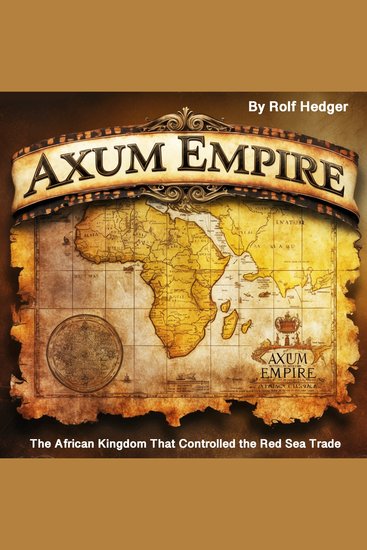
The Axum Empire was one of the most influential civilizations in ancient Africa, flourishing between the 4th and 7th centuries AD. It was located in what is today northern Ethiopia and parts of Eritrea, strategically positioned along the Red Sea trade routes. This placement not only allowed Axum to thrive economically but also made it a key player in global trade between Africa, the Middle East, and Asia. The kingdom of Axum’s rise to prominence marked a pivotal moment in African history, shaping the culture, economy, and politics of the region for centuries.
The origins of the Axum Empire are somewhat shrouded in mystery, but its establishment is often linked to the rise of the city of Axum (also spelled Aksum) around the 1st century AD. According to various historical accounts, Axum was originally a small kingdom that grew in power through trade, conquest, and political alliances. It eventually became one of the most advanced civilizations of its time, possessing advanced knowledge of agriculture, architecture, and metallurgy.
At its height, the Axum Empire was an extraordinary political and economic entity. The kingdom controlled an extensive territory that stretched from modern-day Ethiopia and Eritrea to parts of Sudan and Arabia. Axum became a major center for trade, exporting goods such as ivory, gold, frankincense, and myrrh, while also importing luxury goods from Roman, Indian, and Arabian merchants. The city of Axum itself was known for its monumental obelisks, palaces, and sophisticated urban planning.
Ver libro
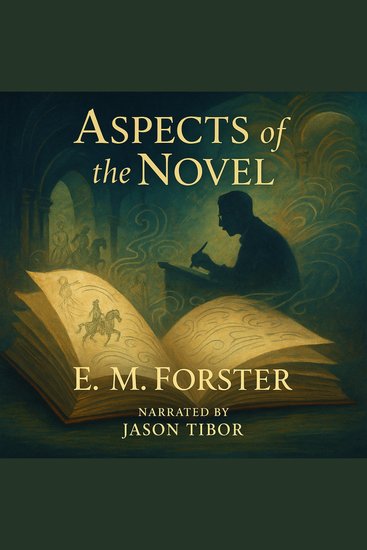
First published in 1927, Aspects of the Novel by E. M. Forster remains one of the most influential works of literary criticism in the English language. Based on a series of lectures delivered at Cambridge University, Forster explores the essential elements that define the novel — story, people, plot, fantasy, prophecy, pattern, and rhythm.
With wit, clarity, and intellectual warmth, Forster examines the craft of novelists from Jane Austen and Charles Dickens to Tolstoy and Dostoevsky, offering insights into what makes fiction come alive on the page. His timeless reflections challenge rigid forms of analysis, inviting readers and writers alike to approach the novel as both an art and an exploration of human experience.
This classic guide to understanding fiction is as engaging today as when it was first delivered, a must-listen for students of literature, aspiring writers, and lovers of storytelling.
Ver libro
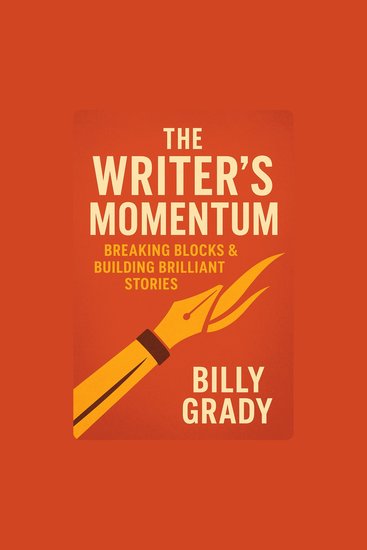
Your stories are waiting—but the words just won’t come. Whether you’re facing a blank page, a stalled draft, or a half-finished novel, The Writer’s Momentum is the push you need to break free and write with unstoppable energy.
Acclaimed writing coach Billy Grady shares practical tools and inspiring insights to help you:
 Shatter creative blocks and silence self-doubt
 Build habits that keep ideas—and words—flowing
 Shape unforgettable characters and gripping plots
 Edit with clarity to bring your best story to life
Equal parts motivational manifesto and step-by-step guide, this book will reignite your passion for storytelling and give you the confidence to finish—and love—every project you start.
Momentum isn’t magic.
It’s a practice.
And it starts the moment you turn the page.
Ver libro





