¡Acompáñanos a viajar por el mundo de los libros!
Añadir este libro a la estantería
Grey
Escribe un nuevo comentario Default profile 50px
Grey
Suscríbete para leer el libro completo o lee las primeras páginas gratis.
All characters reduced
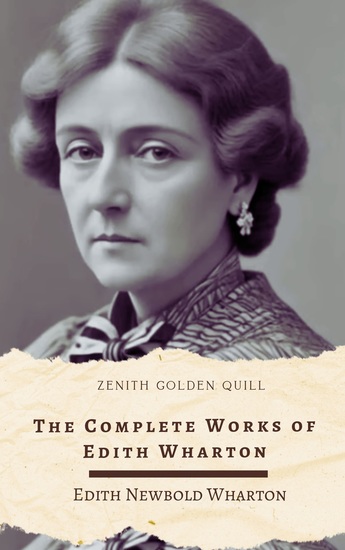
The Complete Works of Edith Wharton - Timeless Novels of Gilded Age Society Morality and Tragedy by the First Woman to Win the Pulitzer Prize - cover

The Complete Works of Edith Wharton - Timeless Novels of Gilded Age Society Morality and Tragedy by the First Woman to Win the Pulitzer Prize

Wharton Edith, Zenith Golden Quill

Editorial: Zenith Golden Quill

  • 0
  • 0
  • 0

Sinopsis

🏛️ Love, loss, and the illusions of high society—Edith Wharton captured it all.

The Complete Works of Edith Wharton brings together the full range of her literary brilliance, from the opulence of New York's upper crust to the crushing weight of emotional restraint. Wharton's novels blend biting social critique, psychological insight, and elegant prose to explore class, desire, and duty 🎩📚💔.

This comprehensive edition includes:

The Age of Innocence

The House of Mirth

Ethan Frome

The Custom of the Country

Summer, The Glimpses of the Moon, and more

Introductions, annotations, and reading guides

Perfect for fans of Jane Austen, Henry James, and Virginia Woolf, this beautifully formatted edition is a must-have for lovers of American and feminist literature.

"Wharton saw the truth of her time—and wrote it with devastating beauty." — The Atlantic
"A trailblazer whose work still resonates." — American Literature Quarterly

📘 Click Buy Now to explore the elegance and complexity of Wharton's literary world.
Disponible desde: 23/05/2025.
Longitud de impresión: 10181 páginas.

Otros libros que te pueden interesar

  • Two Tales From Oscar Wilde - cover

    Two Tales From Oscar Wilde

    Oscar Wilde

    • 0
    • 0
    • 0
    Oscar Wilde (October 16, 1854 - November 30, 1900) was an Irish poet and playwright. After writing in different forms throughout the 1880s, he became one of the most popular playwrights in London in the early 1890s. He is best remembered for his epigrams, plays, short stories, and his novel The Picture of Dorian Gray. The following includes the pieces "Poems In Prose" and "The Star Child."
    Ver libro
  • Pretty Ugly - cover

    Pretty Ugly

    Kirsty Gunn

    • 0
    • 0
    • 0
    Contradictions (both real and apparent), oppositions, enigmas, provocations, challenges——this is the kind of material that makes a life, and is the kind of material that, in fiction, one is never quite sure of. With Pretty Ugly, Kirsty Gunn reminds us again that she is a master of just such stuff, presenting ambiguity and complication as the essence of the storyteller's endeavour.
    The sheer force of life that Gunn is able to load these stories up with is both testament to her unrivalled skill and an exercise in what she describes as 'reading and writing ugly', in order to pursue the deeper truths that lie at the heart of both the human imagination and human rationality.
    So here we have all the strange and seemingly impossible dualities that make up real life——and pretty ugly it can be, as well as beautiful, hopeful, bleak, difficult, exhilarating. But never, ever dull.
    Ver libro
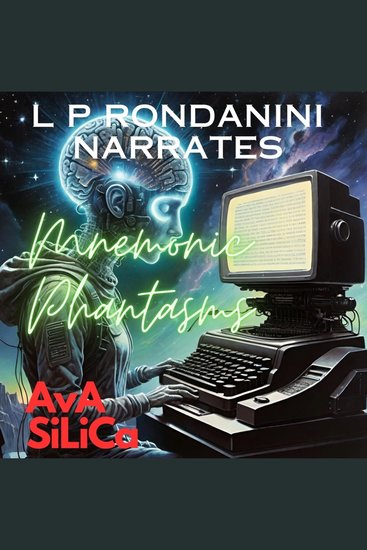
  • Mnemonic Phantasms - cover

    Mnemonic Phantasms

    AvA SiLiCa

    • 0
    • 0
    • 0
    Buckle Up for a Deliriously Uncanny Literary Ride 
    Have you ever wondered about the deep-sea depths of unorthodox, unclassifiable stories that most ghostwriters take to their graves unseen? The kind of tales that straddle realities and make you second-guess the line between fact and fabulist fiction? 
    If so, "Mnemonic Phantasms" is the deliciously twisted tell-all you've been waiting for. In this daring anthology, an anonymous ghostwriter exposes some of the most bizarre, mind-bending client requests they've encountered over decades of sculpting prose in the shadows. 
    From crafting alien abduction memoirs and decoding subterranean civilisation epics to channelling celebrity afterlife autobiographies and exorcising cult leader manifestos - no paranormal subject, interdimensional whisper, or eccentric megalomania is off limits. 
    With dizzying narrative dexterity and a masterful command of speculative psychosphere violation, "Ava Silica" (a soigné nom de plume) brings readers along for a wild ride. It's a no-holds-barred immersion into the most uncharted, unchartable territories where few ghostwriters dare to tread. 
    Part memoir, part uncategorisable omnibus, this one-of-a-kind volume boldly unveils every ghostwriter's darkest secret—that the most unbelievable assignments are also often the most demanding. Thanks to Silica's decision to shatter the civility cloaks of confidentiality, you, the reader, get to experience the delicious, disturbing psilocybin trip of sheer WTF?! First-hand.
    Ver libro
  • The Temple - cover

    The Temple

    H. P. Lovecraft

    • 0
    • 0
    • 0
    "The Temple" by H. P. Lovecraft is a chilling tale of isolation, madness, and the unknown depths of the ocean. Told through the diary of Karl Heinrich, a German U-boat captain during World War I, the story recounts his descent into paranoia and despair as his submarine crew encounters strange and unexplainable events.
    Ver libro
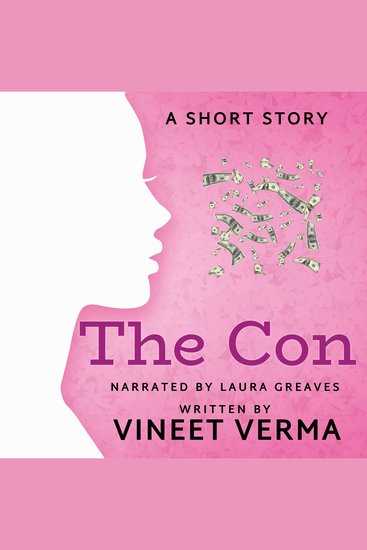
  • The Con - A short story - cover

    The Con - A short story

    Vineet Verma

    • 0
    • 0
    • 0
    Love. Lies. Money. 
    Elsa Gardner's career as a con artist has seen better days. After a string of failures, she's broke and racked with self-doubt when another con man, Eddie, enters her life, providing a ray of hope. He offers her an opportunity that could resolve her financial issues forever. But her heart has other plans, and soon she must make a difficult decision - risk following her heart or take the safe path, no matter what the cost. 
    A delightfully tangled web of deceit and trickery!
    Ver libro
  • A Chameleon - From their pens to your ears genius in every story - cover

    A Chameleon - From their pens to...

    Anton Chekhov

    • 0
    • 0
    • 0
    Anton Pavlovich Chekhov was born on 29th January 1860 in Taganrog, on the south coast of Russia.  
    His family life was difficult; his father was strict and over-bearing but his mother was a passionate story-teller, a subject Chekhov warmed to. As he later said; ‘our talents we got from our father, but our soul from our mother’.  
    At school Chekhov was distinctly average. At 16 his father mis-managed his finances and was declared bankrupt. His family fled to Moscow. Chekhov remained and eked out a living by various means, including writing and selling short sketches to newspapers, to finish his schooling. That completed and with a scholarship to Moscow University obtained he rejoined his family. 
    He was able to help support them by selling satirical sketches and vignettes of Russian lifestyles and gradually obtained further commissions. In 1884, he qualified as a physician and, although it earned him little, he often treated the poor for free, he was fond of saying ‘Medicine is my lawful wife, and literature is my mistress.’ 
    His own health was now an issue as he began to cough up blood, a symptom of tuberculosis.  Despite this his writing success enabled him to move the family into more comfortable accommodation.  
    Chekhov wrote over 500 short stories which included many, many classics including ‘The Kiss’ and ‘The Lady with a Dog’.  His collection ‘At Dusk’ won him the coveted Pushkin Prize when was only 26.  
    He was also a major playwright beginning with the huge success of ‘Ivanov’ in 1887.   
    In 1892 Chekhov bought a country estate north of Moscow. Here his medical skills and money helped the peasants tackle outbreaks of cholera and bouts of famine. He also built three schools, a fire station and a clinic.  It left him with less time for writing but the interactions with real people gained him detailed knowledge about the peasantry and their living conditions for his stories.  
    His most famous work, ‘The Seagull’ was received disastrously at its premiere in St Petersburg. It was later restaged in Moscow to highlight its psychological aspects and was a huge success. It led to ‘Uncle Vanya’, ‘The Three Sisters’ and ‘The Cherry Orchard’.  
    Chekhov suffered a major lung hemorrhage in 1897 while visiting Moscow. A formal diagnosis confirmed tuberculosis and the doctors ordered changes to his lifestyle.  
    Despite a dread of weddings the elusive literary bachelor quietly married the actress Olga Knipper, whom he had met at rehearsals for ‘The Seagull’, on 25th May 1901. 
    By May 1904 with his tuberculosis worsening and death imminent he set off for the German town of Badenweiler writing cheerful, witty letters to his family and assuring them his health was improving.  
    On 15th July 1904 Anton Chekhov died at Badenweiler.  He was 44.
    Ver libro